Grooming & Skincare
Best pineapple colognes: choose the finish, not just the fruit
Pineapple fragrances span crisp aromatics, mossy woods and creamy coconut. Our take: the supporting notes matter more than the tropical headline.
By The Good Cut Editorial Team
Published · 6 min read
Quick answerThe best pineapple colognes depend on what you want alongside the fruit: consider Polo 67 EDT for an aromatic profile, Nishane Hacivat for woods and moss, or Kajal Kolada for coconut sweetness. Sample on skin before buying.
Pineapple colognes give men a broader choice than the tropical label suggests. Alongside woody fragrances such as Creed Aventus and Nishane Hacivat, there are aromatic interpretations, coconut combinations and darker compositions involving tobacco and amber. Shopping by the fruit alone puts quite different fragrances in the same basket.
Our view: choose the finish first. The pineapple might persuade you to pick up a tester, but the woods, herbs, sweetness or musk will help decide whether you actually want to wear it. For a useful starting shortlist, we would compare Ralph Lauren Polo 67 EDT, Hacivat and Kajal Kolada: three distinct directions rather than three attempts at the same thing.
What happened
Pineapple has become a useful organising idea for fragrance shopping, but it is not a scent family with a fixed character. The bottles gathered under that description range from Nautica Blue eau de toilette to Hacivat extrait de parfum. Neither the shared fruit nor the concentration tells the whole story.
Start with these three directions
Polo 67 EDT puts pineapple and bergamot alongside sage, with vetiver and patchouli underneath. On that note structure, it is our suggested first sample for someone who already likes aromatic fragrances and wants to introduce fruit without heading straight towards coconut sweetness. That is a recommendation about where to begin, not a claim that every man will love it.
Hacivat takes the comparison towards grapefruit, jasmine, patchouli and cedarwood, with oakmoss and woody notes in the base. We would put it on the testing strip for readers more interested in the earthy side of the category. Pay particular attention to its later stages: liking pineapple does not automatically mean liking moss.
Kajal Kolada offers another route, combining pineapple and coconut with violet, lily of the valley and resins. Its note combination makes it the logical counterpoint to the two above. If the pleasure you are chasing is creamy tropical fruit rather than herbs or woodland, start your search here.
Where the other contenders fit
Creed Aventus combines pineapple with jasmine and patchouli, supported by notes including birch and cedarwood. Nautica Blue brings jasmine, sandalwood, musk and cedar into its fruity composition. D.S. & Durga Black Magenta, meanwhile, sets pink pineapple against pepper, tobacco and amber notes. Each gives you a different supporting cast to assess, rather than a simple ladder from basic to best.
For a broader approach to the counter, our guide to choosing a cologne beyond the sales pitch explains why personal preference is a better starting point than the character a bottle promises to turn you into.
The background
A pineapple note is a perfumer’s representation of a smell, not proof that the bottle contains pineapple juice or an extracted pineapple oil. Fragrance notes describe the impression a composition is intended to create. They are not interchangeable with the ingredient list printed on the packaging.
That distinction matters when comparing apparently similar scents. One pineapple accord may suggest sharp, freshly cut fruit; another may lean towards syrupy sweetness. The materials surrounding it can change that impression, so counting how many times pineapple appears in the marketing gets you nowhere particularly useful.
The opening is only the introduction
Top, heart and base notes are a shorthand for how a fragrance develops. More volatile materials tend to make their presence felt early, while less volatile ones can remain noticeable later. The transitions overlap; a perfume does not change acts at a precisely scheduled interval.
The drydown — the smell left as the opening recedes — deserves proper attention. A fragrance that initially seems juicy may become predominantly woody or musky. Give a skin sample several hours, checking it occasionally rather than keeping your nose pressed to your wrist. The opening sells the ticket; the rest has to justify staying.
Concentration also needs perspective. Eau de parfum and extrait generally indicate higher concentrations of fragrance materials than eau de toilette, but those terms are not a universal performance scale. The formula, application and wearing conditions all affect the result. Our guide to long-lasting fragrances for men tackles the distinction between persistence and sheer volume.
Nor does pineapple impose a summer-only rule. Temperature can affect how readily a fragrance evaporates, but an amber or woody composition need not be retired when the weather turns. We would adjust application to the room and occasion before assigning an entire note to one season.
What people are saying
A useful detail in fragrance creator Eau D’ Erica’s 2 March 2026 YouTube video is the explicit identification of Polo 67 Eau de Parfum, rather than the EDT. The video also discusses Absolu Aventus separately from Aventus. Those distinctions matter more at the till than another enthusiastic adjective about pineapple.
Shared names do not guarantee identical compositions with the strength dial turned up. An eau de parfum or a named flanker can use a different balance of notes. Check the complete product name on the sample and the bottle you order; a familiar-looking box is not enough.
The same video includes affiliate links and discount codes. That is useful commercial context, not a reason to dismiss fragrance commentary. Our position is straightforward: a creator can introduce you to a bottle, but a recommendation should not substitute for finding out how it smells on you.
The language of guaranteed compliments deserves particular caution. Nobody can promise how colleagues, dates or strangers will respond to a fragrance. A scent can be enjoyable without attracting comment, and attracting comment is not necessarily a triumph. Sometimes it just means you applied too much.
We would also resist treating price as a measure of pineapple realism. Cost does not tell you whether a perfume will match your idea of fresh fruit, nor whether its base will suit you. A carefully chosen sample is more informative than a grand claim about luxury.
What happens next
Build a small comparison rather than ordering every pineapple fragrance you encounter. Pick one aromatic option, one woody option and one sweeter option. That gives the test a purpose: discovering which direction suits you, not trying to memorise a department store’s entire fragrance floor.
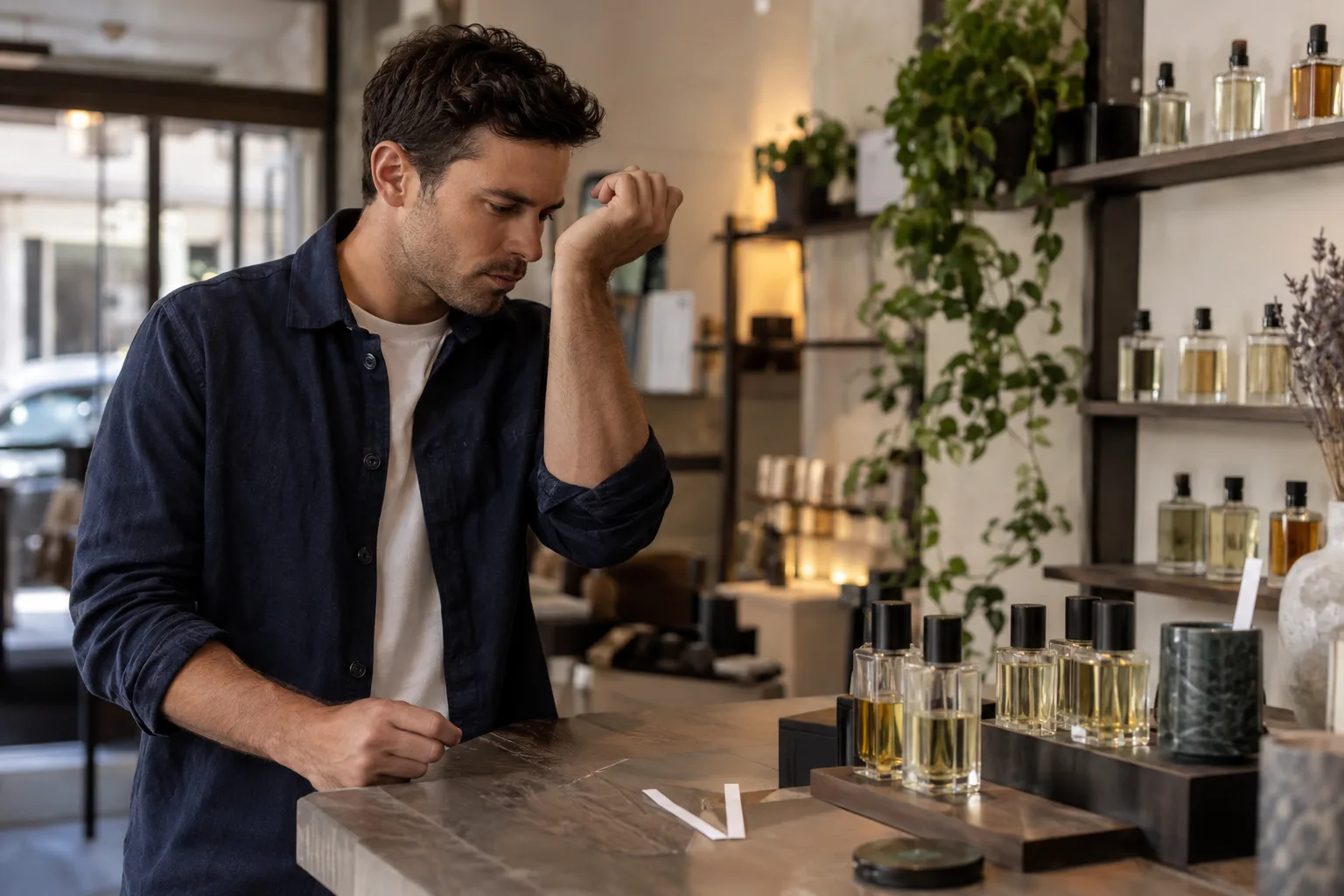
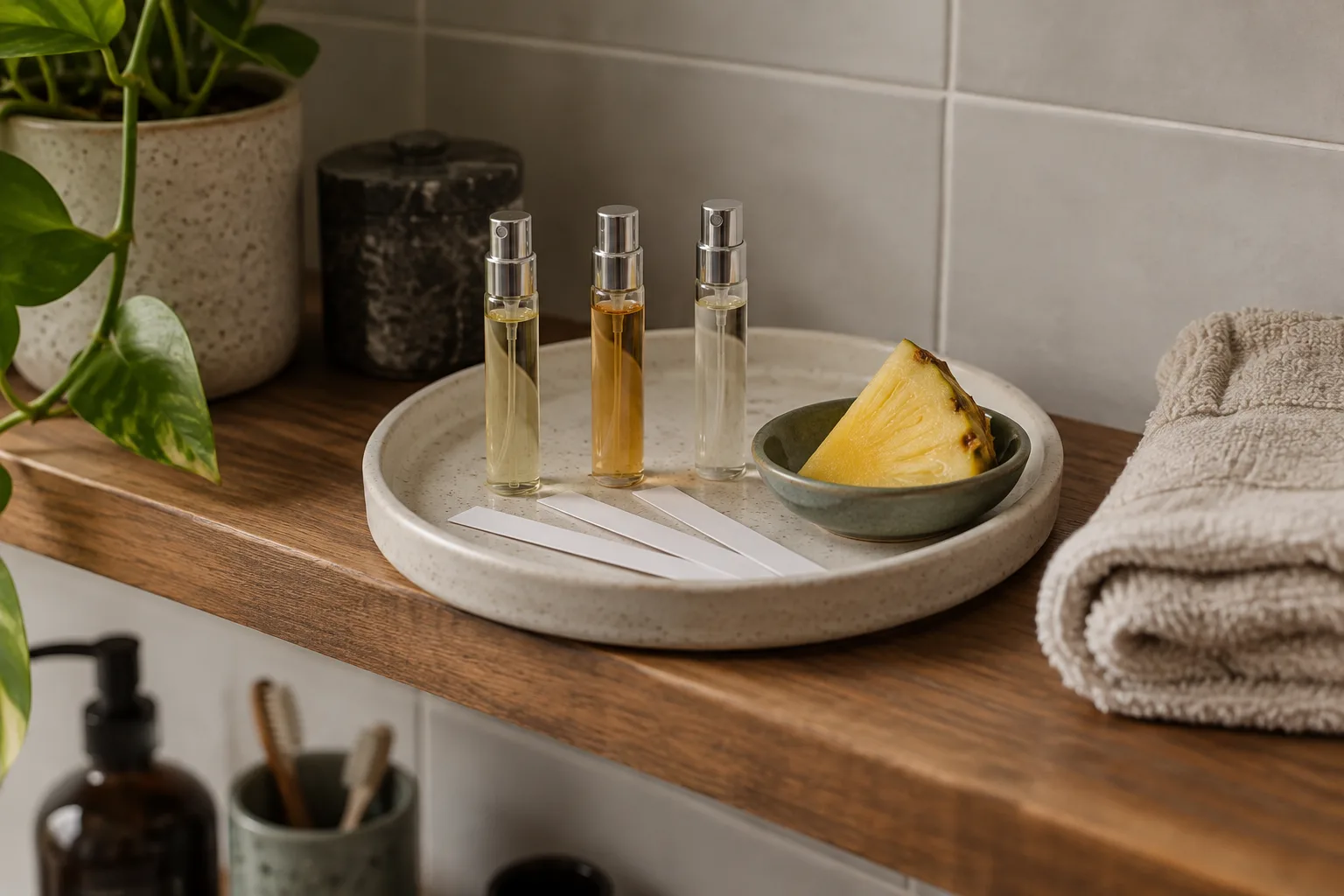
Use paper strips to narrow the field, then try the strongest contender on clean, unbroken skin. Test one at a time if you struggle to separate smells. Avoid applying fragrance to irritated or freshly shaved areas, and stop using a product if it causes a reaction.
Keep other scented grooming products out of the experiment. A strongly fragranced beard product can muddy the comparison; our explanation of beard oil versus beard butter helps separate their grooming jobs, neither of which requires choosing a competing perfume.
Make three brief notes: your first impression, what remains later, and whether you still enjoy it during an ordinary activity. A quiet evening at home or a normal working day tells you more about suitability than repeatedly smelling a strip beside the shop counter.
Before paying, compare the exact concentration, bottle size, price per millilitre and retailer’s terms. A larger bottle may offer better unit value while still being the wrong purchase. Our final filter is simple: buy the version you enjoyed through its development, not the one with the most persuasive opening.
Why this matters
For UK readers, the useful question is not which pineapple fragrance best suggests a beach holiday, but which one works through a commute, an office day or dinner indoors. Sample for those settings and keep application restrained in shared spaces. Spending more will not resolve uncertainty about sweetness, moss or coconut; wearing a sample will. Our guide to choosing a cologne that suits you offers a practical next step before committing to a full bottle.
Common questions
- what are the best pineapple colognes to sample first?
- Our starting shortlist is Polo 67 EDT, Nishane Hacivat and Kajal Kolada. They let you compare aromatic, woody-mossy and coconut-led directions rather than testing several fragrances with very similar profiles.
- does pineapple cologne always smell sweet?
- No, pineapple fragrances can also have aromatic, woody, mossy or spicy characteristics. The surrounding notes and the balance of the composition determine how sweet the overall fragrance seems.
- what does Nishane Hacivat have in it?
- Hacivat’s fragrance notes include pineapple, bergamot, grapefruit, jasmine, patchouli, cedarwood and oakmoss. These describe its scent profile, not a complete ingredient list.
- is Polo 67 eau de parfum the same as the EDT?
- They are different versions, so check which one you sample and buy. Concentration variants can change the balance of a fragrance rather than simply making an identical scent stronger.
- does eau de parfum last longer than eau de toilette?
- Not necessarily: the concentration label alone cannot guarantee longevity. Eau de parfum generally contains a higher concentration of fragrance materials, but the formula, application and wearing conditions also matter.
- can you wear pineapple cologne in winter?
- Yes, pineapple is not restricted to summer. Fragrances with woody or amber elements can suit cooler weather; adjust application to your surroundings rather than treating the fruit note as a seasonal rule.
- how should I test pineapple perfume before buying?
- Narrow your options on paper, then wear a favourite on clean, unbroken skin for several hours. Avoid competing scented products and judge the drydown as well as the first spray.
Sources
- FashionBeans: 5 Best Pineapple Colognes: Subtle Beach Vibes in 2026 | FashionBeans
- youtube.com: The Best Pineapple Fragrances for Men - Sexy, Juicy & Addictive! - YouTube
This article was written by The Good Cut using the sources listed above. Product mentions are editorial unless clearly marked as sponsored.