Grooming & Skincare
Beard oil vs beard butter: which does your beard need?
The useful difference is texture, not prestige: here’s how to choose a conditioner without turning your bathroom shelf into a grooming subscription.
By The Good Cut Editorial Team
Published · 5 min read
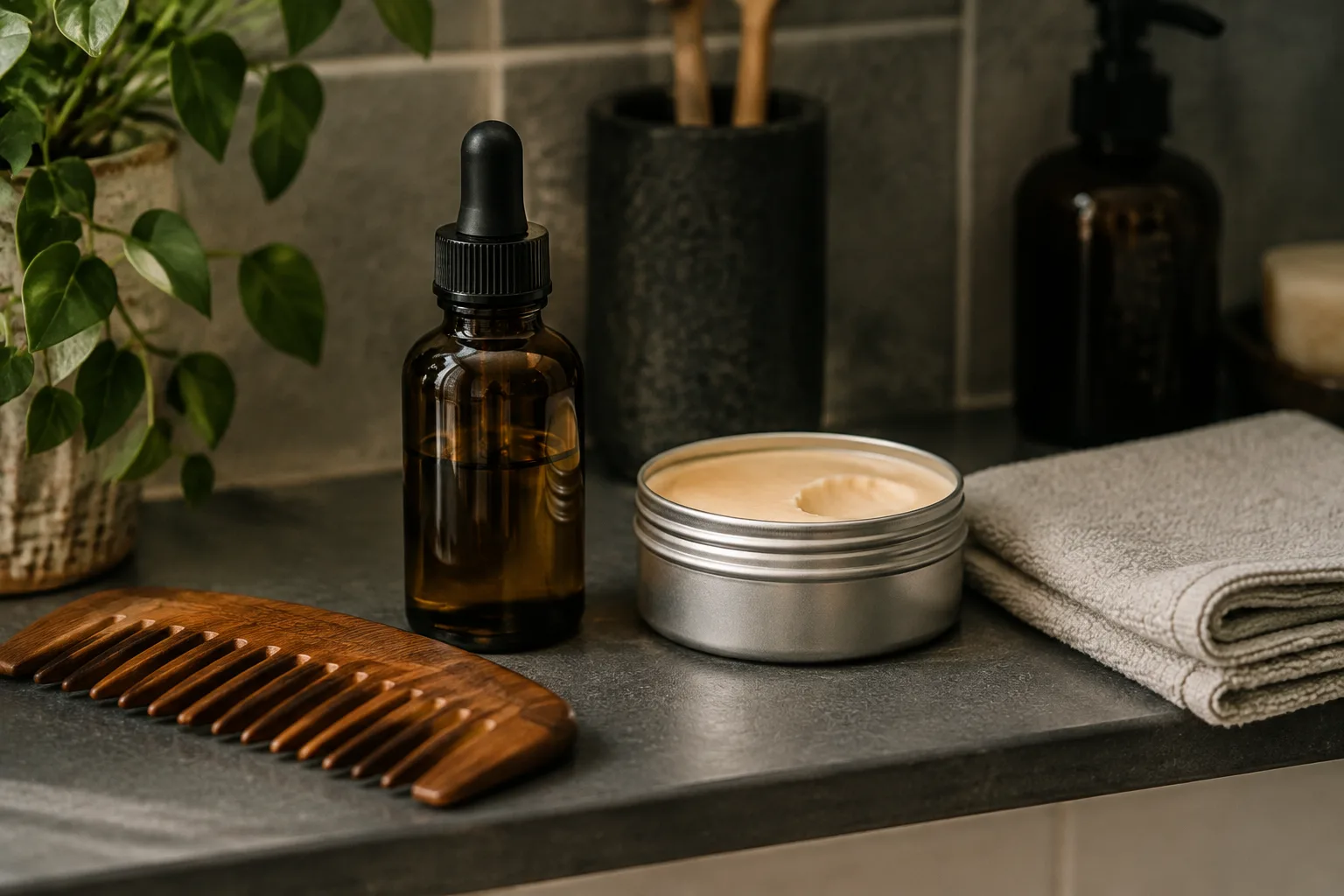
Quick answerBeard oil is a liquid conditioner that helps soften facial hair and reduce moisture loss from the skin beneath it. Beard butter is richer and better suited to smoothing coarse lengths; you can use both, but neither is essential for every beard.
Beard oil and beard butter occupy overlapping territory on the grooming shelf: both condition facial hair, both can leave it softer, and neither automatically earns a place in your routine. The distinction worth understanding is how their formulas behave on skin and through longer growth, rather than which one sounds more luxurious.
Our take is straightforward: buy for the problem you actually have. A lightweight liquid may suit a short beard and dry-feeling skin; a richer butter can help with rough lengths and stray hairs. Buying the matching pair before establishing either need is a fairly efficient way to spend money twice.
What happened
The beard-care choice now extends beyond a bottle of oil to butters, balms and creams, with names that suggest sharper boundaries than the formulas necessarily deliver. Oil and butter describe broad product types, not a guarantee of absorption speed, finish or performance. The ingredients and the amount you apply matter more than the front label.
A typical beard oil blends liquid carrier oils, often jojoba, argan, sweet almond or grapeseed. These lubricate hair and act as emollients on skin, helping it feel smoother. Oil can also help reduce moisture loss, but an oil-only formula does not supply water. Calling it hydrating is convenient shorthand, not the whole explanation.
Butter generally adds ingredients such as shea or cocoa butter to liquid oils, creating a richer consistency. Some versions contain wax; others do not. That extra body can help coat coarse hair and settle flyaways, although the degree of control depends on the formula. A wax-free butter should not be expected to perform like a styling wax.
This is where balm enters the conversation. Wax-containing balms generally offer more hold, making them a more sensible option when keeping a shape is the main objective. Our guide to what beard balm can do explores that neighbouring category. For this choice, separate conditioning from styling: softer hair is not necessarily hair that stays put.
The background
Oil-based beard grooming predates modern product ranges by centuries, as our history of beard oil explains. What has changed is the range of blends and fragrances available. A familiar ingredient in expensive packaging still needs to suit your face; heritage is interesting, but it is not a skin compatibility test.
Facial hair and the skin underneath need slightly different attention. Once hair has emerged from the follicle, it is a non-living fibre. Conditioning improves its surface feel and manageability rather than feeding it. Skin, meanwhile, has a protective barrier that can become uncomfortable when cleansing, weather or irritating products disrupt it.
That distinction makes application important. Smoothing oil over the outside of a dense beard may add shine while barely reaching the skin. Parting the growth with your fingers helps deliver a small amount underneath. Butter is often more useful through the lengths, where its richer coating can reduce a rough, wiry feel without unnecessarily loading the roots.
Length helps, but it is not the only test
A short beard offers less hair to coat, so a heavy application can quickly become excess product on the face. Longer growth gives a conditioner more surface area to cover, especially towards the ends. Still, length is only a clue: a coarse short beard may welcome a little butter, while fine, longer hair may feel weighed down by it.
Your existing skincare also counts. If a facial moisturiser keeps the skin comfortable beneath short growth, you do not need oil simply because you have stopped shaving. Likewise, skin that feels oily can still become irritated. Adding a richer product without checking your cleanser, shaving habits or fragrance exposure may miss the cause entirely.
What people are saying
In its grooming guidance, IMPACT Essentials recommends applying oil before butter and describes butter as an option for softness and light control. It also suggests once-daily application is usually sufficient. That is useful as a starting routine, rather than a prescription: product richness, beard density and your skin’s response should decide the frequency.
We would push back on the idea that the most complete routine is automatically the best one. Using two conditioners makes sense when each solves a separate problem. If one leaves your beard comfortable and manageable, another layer is optional. A matching fragrance is a preference, not evidence that the products need to work as a set.
Nor would we make morning oil and evening butter a rule. Either can fit the time you actually groom. Night-time butter may be convenient for someone who dislikes a freshly conditioned feel during the day, but bedtime does not give it special properties. Apply sparingly enough that most of it stays on the beard, not the pillow.
There is another claim worth treating carefully: natural does not automatically mean gentler. Fragrance, including essential oils, can irritate or trigger contact allergy in susceptible people. For reactive skin, we favour a straightforward fragrance-free option and cautious introduction of one new product at a time. Stop using it if irritation develops.
Itch also deserves better than an automatic recommendation for more oil. Shaving irritation, contact dermatitis and seborrhoeic dermatitis can all affect the beard area. Our guide to maintaining stubble without irritation covers the shorter-growth end of that problem. Persistent redness, soreness or scaling is a reason to speak to a pharmacist or GP, not keep increasing the dose.
What happens next
Start your next purchase with a quick check after your normal wash: does the skin feel tight, do the lengths feel rough, or is the outline simply untidy? Those are different complaints. Change one thing first, so you can judge its effect rather than trying to identify the useful product in a three-layer mixture.
Build the routine in small steps
Cleanse gently, rinse thoroughly and pat the beard until it is no longer dripping. Slightly damp hair is a practical starting point for spreading conditioner; there is no need to steam your face or attempt to open your pores. Aggressive washing can undermine the comfort you are trying to achieve afterwards.
For oil, follow the product directions and begin with only a few drops, using less for sparse growth. Spread it between your palms, work it towards the skin with your fingertips, then pass your hands through the hair. Check the finish before adding more. Noticeable slickness is a cue to reduce your next application.
For butter, warm a small dab between your hands and distribute it through the lengths. If using both, apply oil first, then reassess whether butter is needed. Finish with gentle detangling rather than repeated hard brushing; our guide to choosing and using a beard comb explains how to avoid unnecessary pulling.
Finally, keep expectations cosmetic. These products can improve softness, lubrication and the appearance of unruly hair, but they are not treatments for patchy growth. If the shape remains uneven despite conditioning, ask your barber to assess the outline and bulky areas before removing more length. Sometimes the missing product is a considered trim.
Why this matters
For UK readers, cold weather and heated rooms can make an already dry beard feel less comfortable, but the answer need not be a bigger grooming budget. Keep your cleanser gentle, choose one conditioner for the problem you notice, and adjust the amount before buying another jar. If you wear very short growth, our guide to comfortable stubble maintenance is a useful starting point. Ask your barber about shape and bulk; ask a pharmacist about persistent irritated skin.
Common questions
- what is the difference between beard oil and beard butter?
- Beard oil is a liquid blend, while beard butter usually combines oils with richer ingredients such as shea or cocoa butter. Both condition hair, but butter generally leaves a heavier coating and may offer gentle control.
- can i use beard oil and beard butter together?
- Yes, you can use both if your skin and beard lengths need separate attention. Apply a small amount of oil first, then add butter through the lengths only if needed.
- do i need beard oil for a short beard?
- No, beard oil is not essential for every short beard. If your usual moisturiser keeps the skin comfortable and the hair feels manageable, there is no need to add it.
- is beard butter better than beard oil for styling?
- Butter generally offers more control than oil, although hold varies by formula. For stronger shaping, a wax-containing beard balm is usually a better choice than either.
- should i use beard butter at night?
- You can use beard butter at night, but it is not a requirement. Apply it when convenient, using a small enough amount to avoid a greasy beard and product transfer to bedding.
- will beard oil stop an itchy beard?
- Beard oil may help if dryness is contributing to discomfort, but it will not address every cause of itching. Persistent redness, soreness or scaling warrants advice from a pharmacist or GP.
- does beard butter make your beard grow faster?
- Beard butter is a conditioner, not a treatment for faster or patchy growth. It can improve the feel and manageability of existing hair without changing your underlying growth pattern.
Sources
- The Gentleman's Journal: Beard Oil vs Beard Butter | Gentleman's Journal
- impactessentials.ca: Beard Oil vs. Beard Butter: Grooming Guide IMPACT Essentials
This article was written by The Good Cut using the sources listed above. Product mentions are editorial unless clearly marked as sponsored.