Grooming & Skincare
Winter aftershaves for men: what to wear now
Colder air loves woods, spice and leather. Here’s how to pick a winter fragrance, what’s on shelves now, and how to wear it properly in the cold.
By The Good Cut Editorial Team
Published · Updated · 6 min read
Quick answerYes—switch to richer, warmer notes in winter. Woods, tobacco, leather, spice and amber perform better in cold air, and a slightly stronger concentration helps longevity.
When the temperature drops, fragrance behaves differently. Fresh citrus and aquatic blends can fizzle out fast in the cold; woods, spice, leather and tobacco tend to cling, feel cosier and carry further. That’s why winter has its own unofficial scent code, and why it pays to rotate your aftershave with the season.
Think of it as kitting out your scent wardrobe much like you would your knitwear. Richer, denser compositions make more sense on a frosty commute or a long pub night, and a touch more concentration (and restraint) goes a long way. Here’s what’s working right now—and how to wear it well.
What happened
Brands are leaning into classic cold‑weather profiles across shelves this season, with woods, smoke and spice taking centre stage. You’ll find tobacco‑vanilla pairings, leather‑led blends and resinous woods prominently billed on product notes and packaging.
Examples currently on sale include tobacco‑spice‑vanilla mixes such as Tom Ford Tobacco Vanille, which pairs sweetness with earthy tobacco leaf, and tobacco‑spice options like Parfums de Marly Herod that list cinnamon and vanilla among the notes. These formulas speak to warmth and depth rather than summer freshness.
Leather‑forward choices are also around, from Maison Margiela’s Under the Stars, which frames leather with oud and woods, to almond‑leather blends like Arquiste Almond Suede that balance sweetness with a suede accord. These sit comfortably with heavier fabrics and darker tailoring in winter.
If you prefer woods without heft, Aesop Hwyl highlights airy hinoki‑style woods with frankincense and oakmoss, designed to feel outdoorsy rather than dense. At the bolder end, BOSS Bottled Absolu Parfum Intense emphasises incense, leather, patchouli and cedarwood for a dusk‑friendly profile with strong projection.
For sandalwood fans, Kilian Sacred Wood builds its structure around sandalwood (with cedar and spice in support) for a polished, evening‑leaning take on the theme. Elsewhere, Perfumer H’s forest‑inspired blend lists grapefruit, mandarin, pine needle and lavender over patchouli, tree moss, vetiver and amber for a colder‑morning mood.
Florals aren’t off the table either: rose paired with oud—like Horace Oud Rose—leans darker and more textured in winter, showing how a traditionally floral note can skew decidedly masculine once earthy woods are in the mix.
Price points run widely across the category. You can find mainstream winter‑leaning bottles around the £50–£70 mark, while luxury houses push north of £300 for higher concentrations, rarer materials or larger formats. That range makes sampling essential before you commit.
The background
Cold, dry air slows evaporation, so brighter top notes disperse quickly while heavier base notes—woods, resins, tobacco, leather and amber—linger. That’s why those families often feel more satisfying in December than a sheer marine or zesty cologne.
Concentration matters more in winter. Eau de parfum and parfum strengths typically carry better under coats than lighter eau de toilette, because there’s more aromatic material to bloom through scarves and knitwear. That doesn’t mean louder is better; it means fewer, smarter sprays.
Application is half the game. Hit warm, covered pulse points—chest under a jumper, the back of the neck beneath a scarf, inner elbow if you’re layering—as fabric traps scent and releases it gradually. Go easy on exposed wrists if you’re constantly washing hands.
Spraying clothing can help diffusion, but test on an inconspicuous seam first; darker resins, vanillic oils and mossy bases can stain or cling stubbornly to wool. A single mist into the lining of a coat is usually safer than a direct hit on cashmere.
Moisturised skin holds scent better than dry winter skin. A plain, unscented body lotion on pulse points gives perfume molecules something to grip, improving longevity without changing the fragrance profile. For more on formulations that last, see our guide to oil‑based colognes and why they endure.
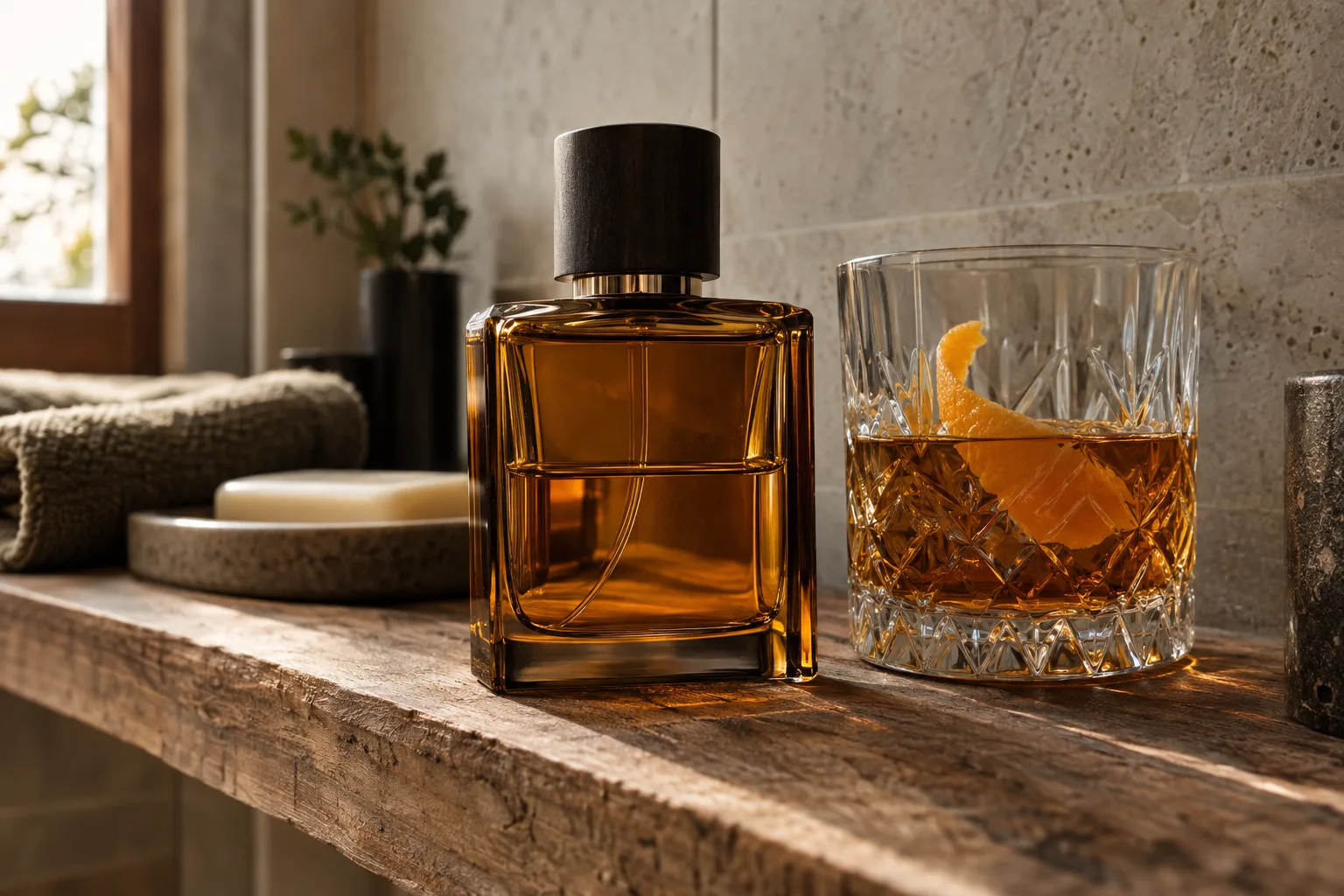
Note families that shine now include woods (cedar, sandalwood, guaiac), spice (cardamom, cinnamon, pepper), resin and incense (frankincense, myrrh), tobacco and leather, plus amber accords with labdanum and vanilla. Boozy twists—rum, whisky, cognac—also feel seasonally right; if that’s your lane, our picks of aftershaves with whisky and cognac notes are a useful starting point.
If you want structure without density, the classic moss‑patchouli‑citrus architecture of chypre can wear beautifully in cold air, offering bite and backbone without syrup. Our explainer on chypre colognes and what to try breaks down why it works.
Wedded to your breezy summer spritz? Keep it for daytime and dial the sprays back, then switch to something woodier after dark. If you need warm‑weather ideas for later, bookmark our summer fragrance shortlist for date night and come back in June.
What people are saying
Sweetness polarises. Vanilla, tonka and almond can feel plush in the cold, but two extra sprays indoors can tip into cloying, especially in heated offices or packed trains. One or two well‑placed shots is safer than a cloud around the collar.
Tobacco and leather remain crowd‑pleasers for winter nights because they read as plush and textured, yet they’re not foolproof; some versions skew smoky or tarry. If your office is scent‑sensitive, keep those for evenings and lean on woods and spice during the day.
Rose‑oud combinations are more common on men’s shelves now than a decade ago, and they’ve largely shed the “too floral” stigma. The oud anchors the rose, adding the dark, resinous weight that feels right for thick knits and overcoats.
Marketing stories this season often evoke firesides and forest walks, which matches what shoppers are asking for: warmth, calm and a bit of escapism. That’s reflected in note lists name‑checking incense, cedar, hinoki and moss across a wide range of launches and staples.
Value is part of the conversation, too. There are credible winter‑leaning options around the £60 mark, while luxury blends such as sandalwood‑heavy extraits push past £300. Whichever bracket you’re in, sample on skin and see how it dries down before buying.
Classic amber‑spice profiles remain in rotation because they wear like knitwear: familiar, comforting and effective. If you’re curious why heritage styles keep returning, our piece on nostalgic men’s fragrances making a comeback sets the context.
What happens next
Try before you buy. Ask for in‑store samples or small decants, wear them through a full day—out in the cold and inside with heating—and pay attention to the dry‑down after two to four hours. That’s the version most people will smell.
Build a small winter rotation: a soft woody‑spice for work, a richer leather or tobacco for nights, and a darker floral or incense for weekends. Two or three bottles cover most scenarios better than one blunt, nuclear option.
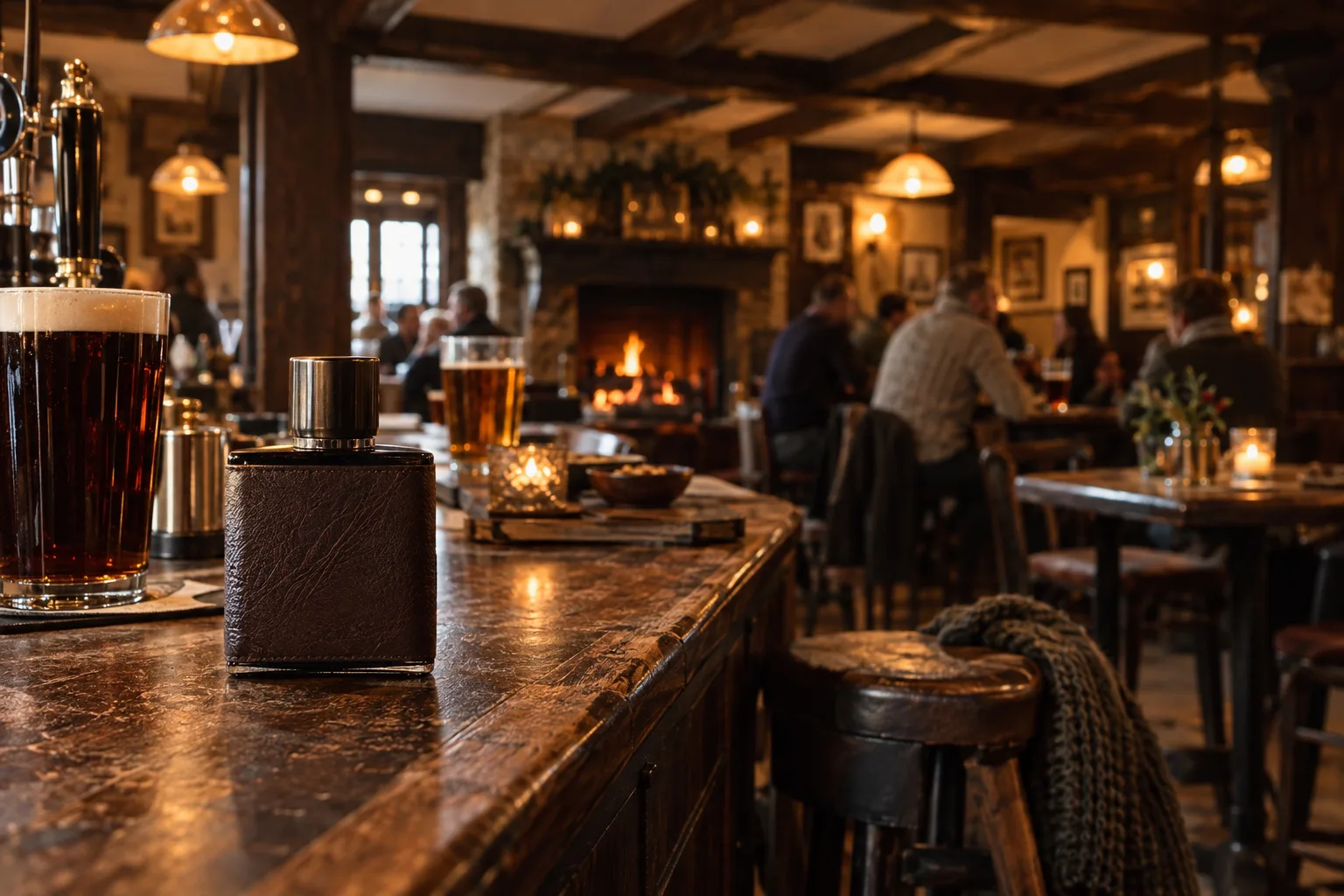
Adjust your technique as it gets colder. In sub‑zero snaps, an extra chest spray under layers makes sense; in a crowded bar, go one less on the neck. Aim for presence, not a force field.
Think gifting early. Winter is peak fragrance‑present season, and popular bottles can sell through quickly. Discovery sets are a tidy way to test profiles before committing to a full size, and they make safer gifts than guessing a 100ml blind.
Finally, look after your skin. Dry, tight winter skin sheds scent faster, so basic hydration keeps your aftershave honest. If you need a simple, effective base, our guide to the best men’s moisturisers right now has options for all skin types.
Related: Everyday colognes for men: what actually works in 2026
Why this matters
Winter in the UK means cold commutes, hot rooms and layers—conditions that can flatten light colognes but flatter woods, spice, leather and amber. A small rotation and smarter application beats overspraying one bottle. Test on skin, match the vibe to the venue, and keep skin hydrated for better longevity. If you like warmth with structure, explore mossy chypres or even oil‑based colognes for extra staying power.
Common questions
- should i switch cologne for winter
- Yes. Woods, spice, leather, tobacco and amber usually last and project better in cold air than light citrus and aquatics, so a winter rotation makes sense.
- what makes a good winter aftershave
- Heavier base notes like woods, resins, tobacco, leather and amber. They cling to skin and feel warmer and richer in cold, dry air.
- eau de parfum vs eau de toilette in winter
- Eau de parfum usually lasts longer and projects better under layers thanks to higher aromatic concentration. Lighter eau de toilette can fade faster in the cold.
- how many sprays should i use in winter
- Start with two to four sprays on covered pulse points—chest, back of neck, inner elbow—and adjust for venue. Add one more only in very cold conditions.
- can i spray aftershave on my scarf or coat
- You can mist the inside lining lightly, but test first. Dark, resinous notes can stain or cling to wool. Skin application is safer for most formulas.
- are sweet scents ok for men in winter
- Yes. Vanilla, tonka and almond can feel plush in cold weather. Keep sprays modest indoors to avoid cloying sweetness in heated spaces.
- what price should i expect for winter aftershaves
- You’ll find credible options around £50–£70, while luxury, high‑concentration or rare‑material blends can exceed £300. Sampling helps you spend wisely.
- how do i make fragrance last longer in cold weather
- Moisturise first, apply to warm, covered pulse points, and choose a higher concentration like eau de parfum or an oil‑based formula for staying power.
Sources
This article was written by The Good Cut using the sources listed above. Product mentions are editorial unless clearly marked as sponsored.