Culture & Lifestyle
Apple Music Hall: who’s playing and how to get tickets
Elton John leads the opening programme at Battersea’s new concert venue, where intimate gigs meet a global broadcast operation.
By The Good Cut Editorial Team
Published · 6 min read
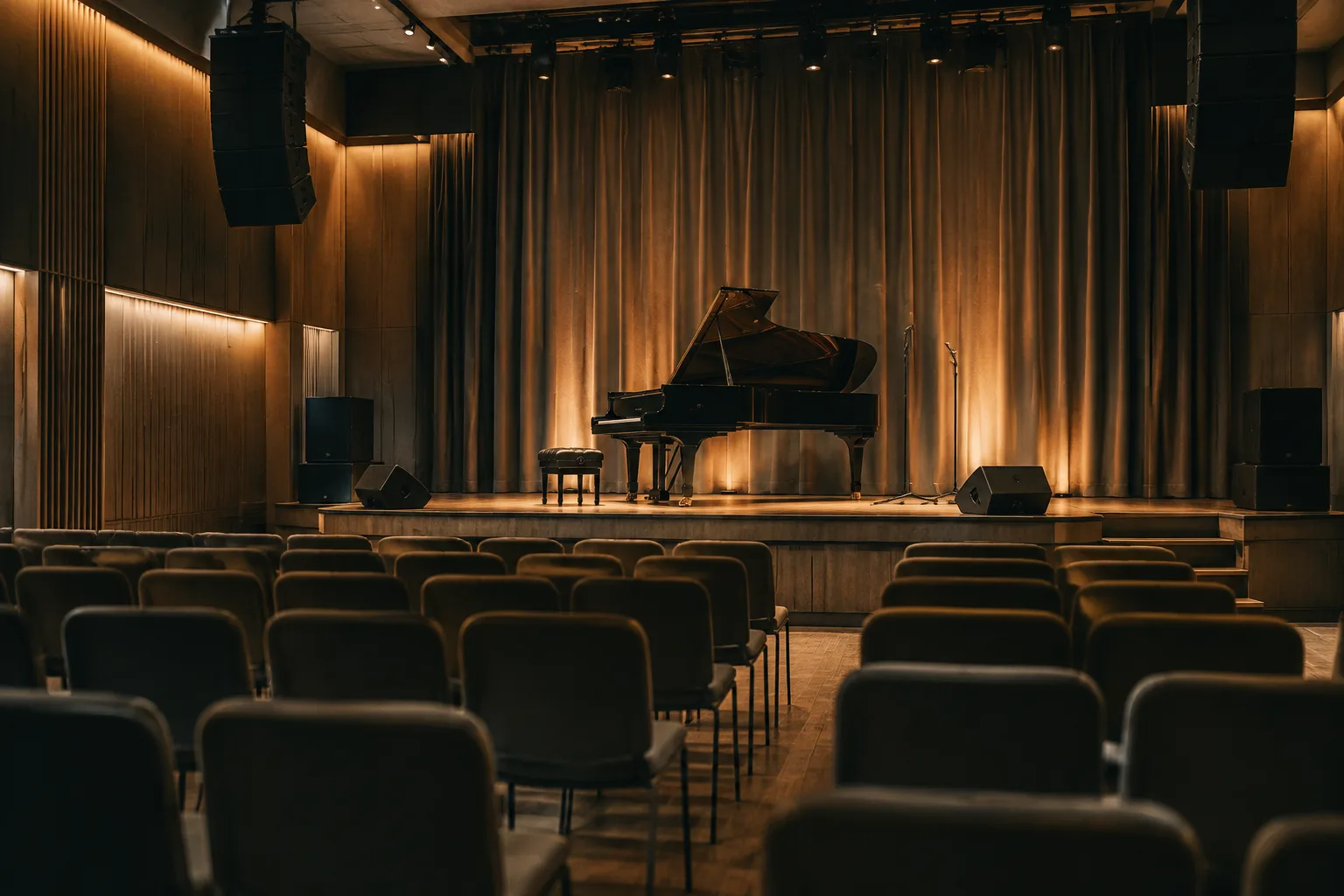
Quick answerApple Music Hall is a new London venue at Battersea Power Station, holding 600 standing or 300 seated. Elton John is scheduled to open it on 28 September 2026, with tickets for the first three shows on sale through Dice that morning.
Timeline
22 September 2026
Apple reveals its new concert venue at Battersea Power Station.
25 September 2026
The opening programme is announced, with Elton John leading a bill extending through the end of the year.
28 September 2026
Tickets for the first three shows are scheduled to go on sale at 9am, ahead of Elton John’s opening concert.
Elton John is scheduled to open Apple Music Hall at Battersea Power Station on Monday 28 September, launching a London venue that puts major artists in front of just a few hundred people. Charli xcx, Burna Boy and Troye Sivan are among the performers announced for its first programme, with every show also destined for a global livestream.
For fans, the immediate business is tickets: the first three shows go on sale through Dice at 9am that Monday. For British live music, the more interesting question is what follows the opening splash. We rate the prospect of ambitious performances in a compact room. Whether this becomes a useful addition to the gig circuit will depend on more than famous names and expensive speakers.
What happened
Apple has announced its first permanent live music venue, with capacity for 600 standing or 300 seated. Its programme through the end of 2026 also includes Baby Keem, Skye Newman, Arlo Parks and Chase & Status. That gives the launch a mix of pop, rap, electronic music and singer-songwriters rather than a single musical identity.
The booking operation involves independent UK promoter Communion One, which is supporting programming and promotion. That matters because a permanent venue needs more than occasional headline-grabbing appearances: it needs relationships with artists, touring teams and audiences who might come back for something less familiar.
A small audience, a substantial production setup
The stage measures 38 feet across and can be adapted for performances with the audience surrounding it. Backstage space can accommodate a touring crew of more than 60 people. The proposition is not simply to strip an arena artist’s show down to a microphone and a stool; there is room for substantial equipment and a full band.
A 48-speaker L-Acoustics spatial sound system is another central feature. Its purpose is to distribute sound around the audience, rather than rely only on a conventional left-and-right presentation. The hardware is promising, but speaker numbers alone cannot establish how a concert will sound. Mixing decisions, the performance and the occupied room will all matter.
The broadcast infrastructure is equally deliberate. Two recording and mixing studios, wiring for more than 16 cameras and a control room supporting iPhone video capture make this a production facility as well as a concert space. An upstairs mixing room can handle 800 input channels. The people watching remotely are part of the plan from the outset, not an afterthought served by a camera at the back.
The background
Apple’s involvement in London concerts predates this building. Its first iTunes Festival took place in 2007, and the series subsequently spent eight years at Camden’s Roundhouse. A permanent address changes the commitment: instead of arriving for a festival run, the company now has a room to programme and an operation to maintain.
Battersea also brings several functions together. Alongside the hall are Apple Music Radio broadcasting suites and spaces for interviews and promotional production. For visiting musicians, that creates the possibility of combining a performance, a radio appearance and other recording work in one stop. It is an efficient arrangement for a touring schedule, though efficiency is not the same thing as cultural importance.
The wider economics explain why a glossy opening can attract both enthusiasm and scrutiny. Music Venue Trust’s research covering 2025 put the average profit margin for UK grassroots music venues at 2.5 per cent, with 54 per cent recording no profit. Those figures describe businesses with little room to absorb a weak run of ticket sales or rising costs.
Musicians face their own financial squeeze. The 2023 Musicians’ Census found that nearly half of UK musicians earned less than £14,000 a year from music. A successful show involving an established star does not, by itself, change the conditions facing performers still building an audience.
Nor does a modest capacity automatically make a venue grassroots. The distinction is about function as well as size: giving developing acts regular opportunities is different from presenting internationally recognised performers to a deliberately limited audience. Both can produce worthwhile nights. They do different jobs, and treating them as interchangeable makes it harder to judge what support the wider circuit needs.
What people are saying
In interviews with GQ UK, Music Venue Trust founder and chief executive Mark Davyd characterised the hall primarily as a promotional performance facility, while Apple Music executive Oliver Schusser said the company had no plans for a second venue and wanted to complement existing touring activity. Their positions identify the central issue: not whether this room should exist, but what role it will actually play.
Zane Lowe, who has helped shape the project, has pointed to Apple’s history of staging concerts in defending the move. That is a reasonable answer to the suggestion that the company has appeared from nowhere. It does not settle questions about ticket access, programming breadth or the balance between a satisfying night in the room and a polished broadcast.
Our view is that corporate backing is not a musical verdict. A new venue does not need decades of battered posters to host a brilliant performance, and uncomfortable facilities are hardly proof of authenticity. Equally, immaculate finishes cannot manufacture the attachment that comes from memorable shows, considerate staff and a programme people trust.
There is also something worth protecting in the uncertainty of live performance. Our look at Harry Styles and Thom Yorke discussing self-doubt touches on the human vulnerability behind public success. We would rather this room leave space for spontaneity than make every appearance feel like a perfectly managed promotional appointment.
The most useful test is therefore additional opportunity. Does the hall enable performances that would not otherwise happen, introduce listeners to unfamiliar artists or generate worthwhile work for musicians and crews? Those would be tangible benefits. A starry launch establishes attention; a sustained programme must establish value.
What happens next
Tickets first, travel second
The immediate date for your diary is 28 September: Dice’s sale for the first three shows is scheduled for 9am local time. Check the individual event listing for the artist, price, ticket limit and entry conditions before buying. Do not assume that every act named in the year-end programme will be included in that first release.
For anyone travelling into London, secure admission before committing to non-refundable transport or accommodation. Check door times separately from performance times, along with the event’s standing or seating arrangement. If you need accessible provision, establish the booking procedure and available facilities directly rather than assuming that a small room will automatically meet your needs.
All performances in the announced programme are set to stream globally through Apple Music. For listeners outside London, that is the most immediately useful part of the model. Check each broadcast’s start time and viewing requirements; a livestream announcement should not be mistaken for a promise of unrestricted access or a permanent replay.
If you do get a ticket, dress for the gig rather than the corporate address. Comfortable footwear and a removable layer make sense in a standing crowd. Our take on wearable autumn/winter 2026 menswear trends offers ideas without requiring a new wardrobe, while our guide to cleaning white trainers without damaging them can handle the next morning’s less glamorous job.
Beyond opening week, watch the booking pattern. Repeat appearances, developing artists and genuinely distinctive performances will tell us more than the launch roster. We would welcome a hall that uses its resources to make adventurous shows possible. The strongest case for it will be a calendar that gives music fans something they cannot already get elsewhere.
Why this matters
For UK music fans, this is a chance to see major performers in a comparatively small room, with livestreams extending the audience beyond London. The practical move is to check individual ticket and broadcast listings rather than build plans around a headline name alone. Keep some room in your gig budget for local discoveries, too: the next act worth travelling for has to start somewhere. As our piece on Harry Styles and Thom Yorke’s self-doubt reminds us, a successful public career still has a human being behind it.
Common questions
- where is Apple Music Hall?
- Apple Music Hall is at Battersea Power Station in London. The development includes the concert venue, recording and mixing studios, radio broadcasting suites and spaces for promotional production.
- how many people does Apple Music Hall hold?
- Apple Music Hall holds 600 people standing or 300 seated. Check the individual event listing to establish which arrangement applies to your show.
- who is opening Apple Music Hall?
- Elton John is scheduled to perform the opening concert on Monday 28 September 2026.
- how do I get Apple Music Hall tickets?
- Tickets for the first three shows go on sale through Dice at 9am local time on Monday 28 September 2026. Check individual listings for prices, ticket limits and entry conditions.
- who is playing Apple Music Hall in 2026?
- The announced programme includes Elton John, Charli xcx, Burna Boy, Baby Keem, Skye Newman, Troye Sivan, Arlo Parks and Chase & Status. The programme runs through the end of 2026.
- can I watch Apple Music Hall shows online?
- Yes, all performances in the announced programme will be livestreamed globally on Apple Music. Check each show’s broadcast time and viewing requirements before making plans.
- what sound system does Apple Music Hall have?
- Apple Music Hall has a 48-speaker L-Acoustics spatial sound system. The venue also includes two recording and mixing studios and infrastructure for more than 16 cameras.
Sources
- GQ UK: With Charli XCX, Troye Sivan and Burna Boy, can Apple Music Hall win over the cynics? | British GQ
- variety.com: Elton John, Charli xcx, Burna Boy Set Shows at London's Apple Music Hall
This article was written by The Good Cut using the sources listed above. Product mentions are editorial unless clearly marked as sponsored.