Men's Style
How to clean white trainers without damaging them
Leather, canvas and suede need different treatment: our practical guide explains what to use, what to avoid and when to stop scrubbing.
By The Good Cut Editorial Team
Published · 5 min read
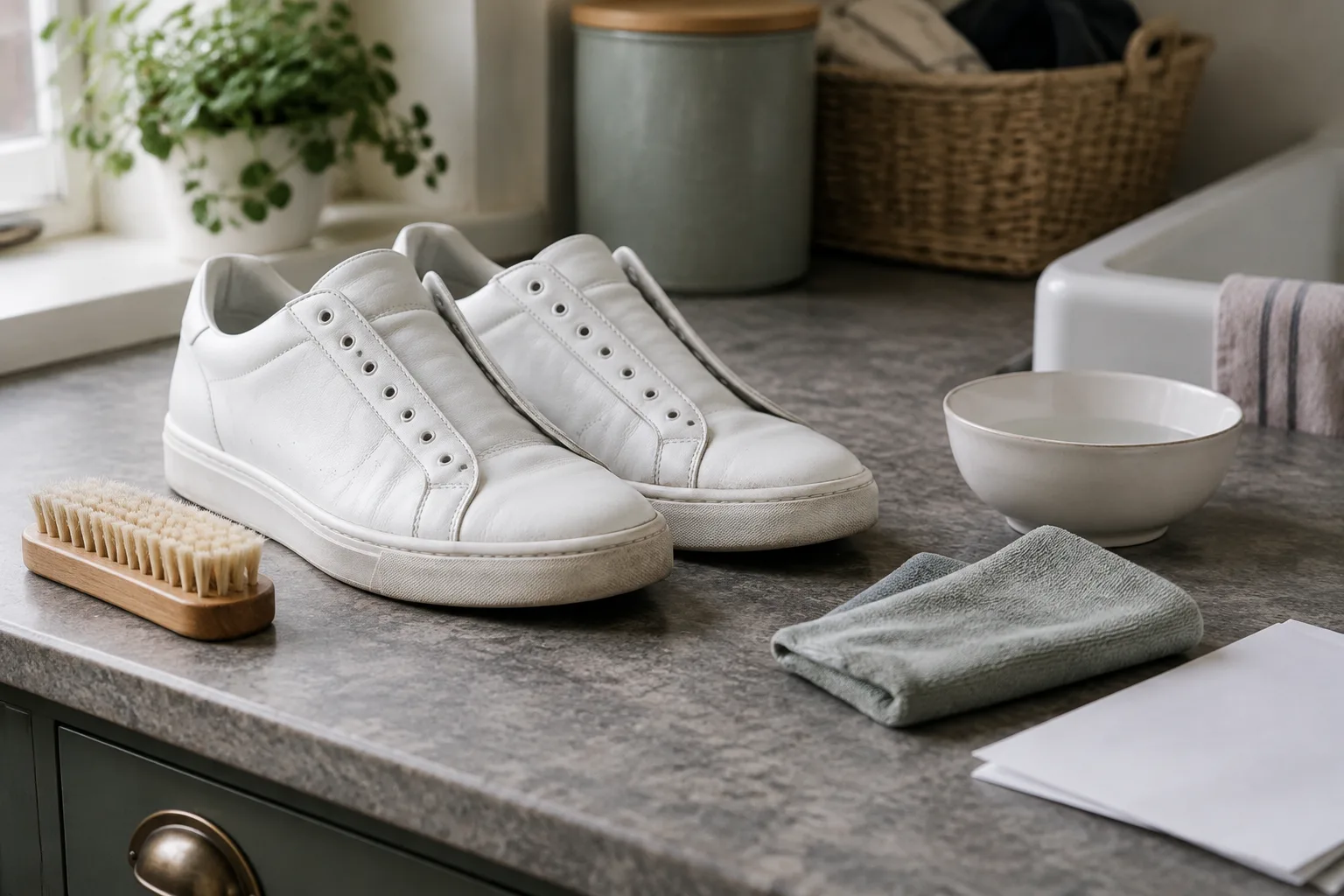
Quick answerTo clean white trainers, remove loose dirt first, then use a cleaner suited to each material with gentle pressure. Keep leather only lightly damp, use specialist products for suede, and air-dry shoes away from heat.
White trainers need a cleaning method matched to their construction, not simply a stronger stain remover. Clarks’ footwear-care guidance, updated on 31 December 2025, sets out separate approaches for leather, canvas, suede and mesh, alongside advice to avoid heated drying. That distinction matters when one shoe combines several materials.
Our recommendation is to start with the least aggressive treatment suitable for the surface. A washable textile panel does not make the whole trainer machine-safe; a mark on leather might be missing finish rather than removable dirt. Knowing the difference can save a perfectly wearable pair from an unnecessarily vigorous rescue attempt.
What happened
Clarks’ advice covers everything from cleaning laces to treating rubber soles, but its most useful point is about moisture. For leather, it recommends a lightly dampened cloth rather than a soaking; for suede, a dedicated suede-and-nubuck foaming cleaner. These are different jobs, even when both shoes started out the same shade of white.
The brand also describes several household cleaning mixtures. We would not make kitchen-cupboard experimentation the starting point. Finishes, dyes, trims and adhesives vary, so check your shoe’s care instructions first. Test any permitted cleaner on a small, inconspicuous area and let it dry before committing to the visible panels.
Start by deciding what actually needs attention. Is the upper dirty, or is a grey sole edge doing most of the damage? Are the laces stained while the shoe itself is fine? Targeted cleaning limits unnecessary wetting and makes it easier to judge whether a treatment is helping.
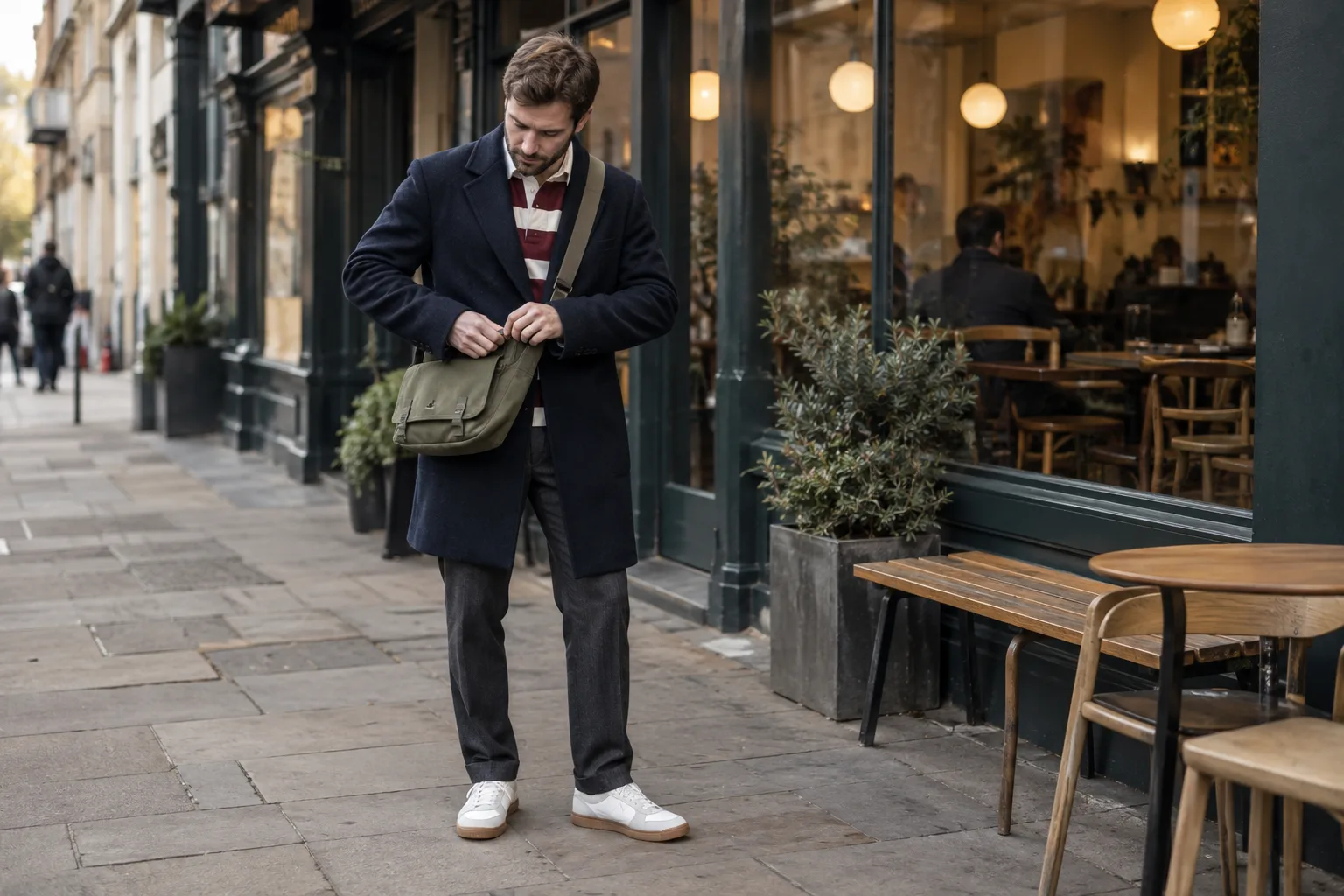
There is a styling argument here, too. We rate relatively clean, understated trainers with relaxed trousers and textured knitwear because they leave the clothes room to work. Our look at why Claudia’s wardrobe works for men explores borrowing outfit ideas; footwear maintenance is the less exciting business of keeping those combinations presentable.
The background
Dirt, wear and discolouration are different problems
Cleaning removes deposits; it cannot rebuild a scraped-off coating or repair a split. If a mark remains after a gentle clean, inspect it rather than automatically increasing pressure. On smooth white leather, a compatible recolouring cream may disguise superficial finish damage, but that is restoration, not washing.
Yellowing is another reason to pause. Detergent residue can leave discolouration, while ageing materials can change colour too. Repeated scrubbing will not necessarily reverse either problem. Remove remaining cleaner carefully and reassess once the shoe is dry, when you can judge its actual colour and condition.
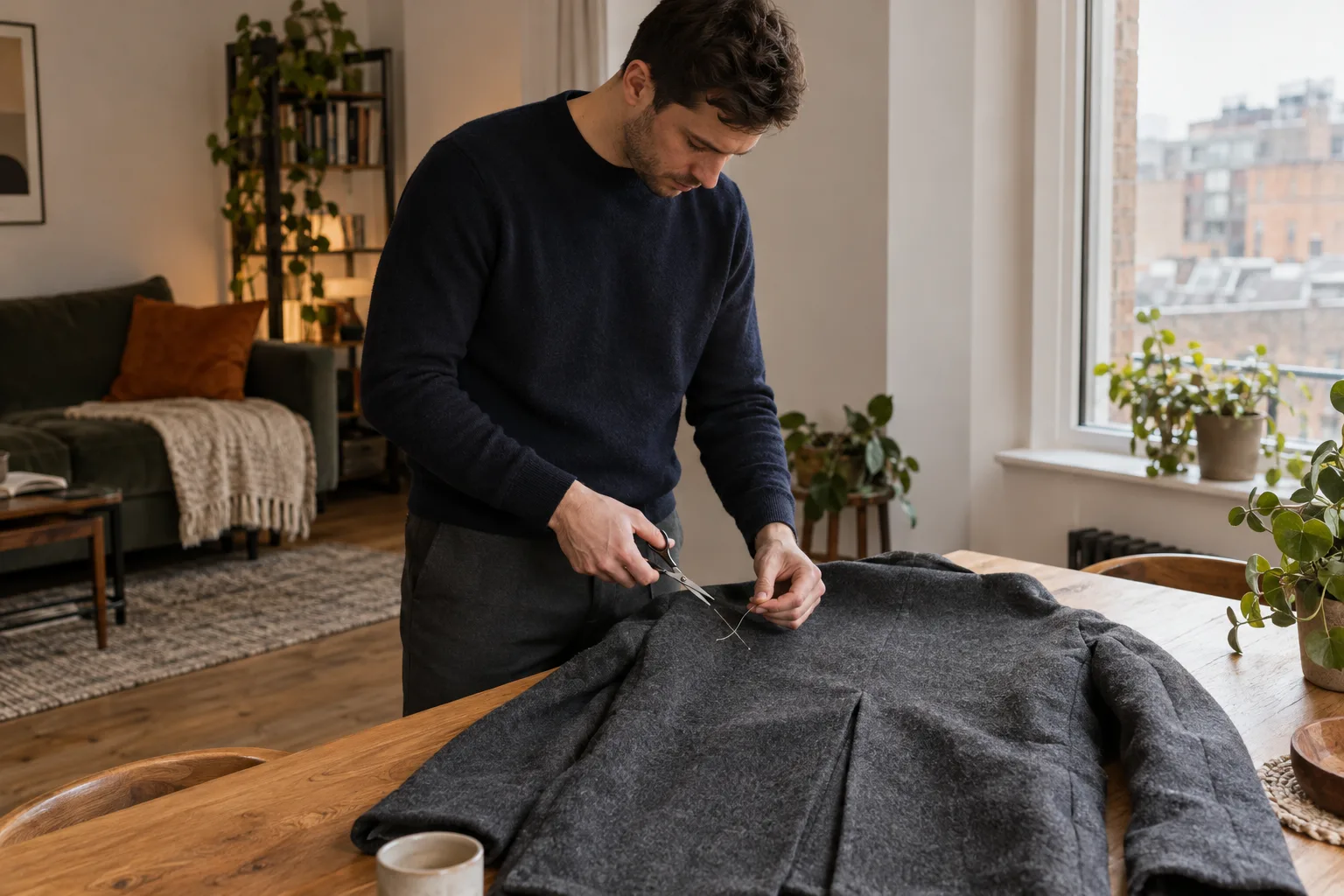
This is the same inspect-before-intervening approach behind our guide to coat vent tacking stitches and which threads to cut. A small maintenance task goes wrong surprisingly quickly when every visible imperfection gets treated as something to remove.
Separate the removable parts
Take out the laces and lift out removable insoles; leave glued-in footbeds alone. Brush away loose grit before introducing moisture, using a soft brush on the upper. Keep another brush for dirty sole edges so you are not carrying pavement grime onto clean fabric.
Wash laces separately in warm water with a little mild laundry detergent, then rinse thoroughly. Clarks suggests soaking them for at least 30 minutes for a hand wash. Let them air-dry before rethreading; replacing badly frayed laces is more sensible than trying to scrub them back into shape.
For insoles, follow their care instructions and avoid soaking absorbent foam. A lightly damp cloth and compatible mild cleaner can address surface dirt. Dry them fully before replacing them: a clean exterior does little for a trainer that is still damp inside.
What people are saying
Clarks recommends a diluted white-wine-vinegar solution for leather and bicarbonate-based treatments for some textiles. Our preference is a cleaner explicitly suitable for the shoe’s material, particularly on expensive or mixed-material pairs. That is a cautious buying recommendation, not a claim that every household method fails.
For rubber soles, the brand lists washing-up liquid and water among its options. It also suggests a melamine sponge, often sold as a magic eraser. The catch is abrasion: use one lightly on suitable, unpainted rubber, keeping it away from leather, printed details and glossy coatings. Test first.
Our approach to the upper
Smooth leather: use a soft cloth with a small amount of compatible cleaner, keeping moisture controlled. Wipe away loosened dirt and product residue with a clean, lightly damp cloth. Textured leather needs particular care around the grain; grinding a brush into it can damage the finish rather than improve the result.
Canvas: work with a soft brush and mild detergent solution if the care instructions allow it. Blot and wipe away residue without saturating the whole shoe. Canvas can tolerate more moisture than leather, but attached trims and glued components still need consideration. Do not assume a white textile is automatically bleach-safe.
Mesh and knit: support the fabric from inside while gently working on the surface. Avoid catching loops with a stiff brush or repeatedly attacking one spot. Remove cleaner with a damp cloth; a foam tongue or padded collar may hold moisture long after the outer mesh feels dry.
Suede and nubuck: begin with a suitable brush on dry material. For marks requiring cleaner, choose a product made for suede or nubuck and follow its directions. Clarks advises working gently with the grain and removing excess product. Avoid soaking these surfaces, and never borrow the abrasive sponge used on your soles.
What happens next
Drying deserves planning before you start washing. Choose a ventilated indoor space away from radiators and direct sun, and loosely fill the toe boxes with plain, unprinted paper. Change the paper if it becomes wet. Newspaper can transfer ink, which is an especially irritating souvenir on white footwear.
Do not set an arbitrary deadline for wearing them again. Padding, seams and insoles dry at different speeds, so check inside as well as outside. Heat is not a sensible shortcut: it can affect leather and adhesives. Leave the tumble dryer out of the operation entirely.
For machine washing, the shoe maker’s instructions take precedence over a general fabric-cleaning rule. Clarks permits a low-temperature delicate wash for many fabric trainers, but that is not blanket permission for yours. Only use a machine if the specific pair’s care guidance allows it; remove laces and removable insoles first.
Once dry, consider a protective spray approved for the material, following its ventilation and application instructions. Protection is not waterproofing, and reapplication intervals vary. Between cleans, deal with small marks and let worn shoes air properly rather than putting them straight into a closed cupboard.
Finally, separate cosmetic fatigue from structural failure. A faint mark need not trigger replacement; a splitting sole or damaged lining deserves a repair assessment. Before shopping our take on autumn/winter 2026 menswear trends, check whether the trainers already by the door simply need clean laces and some patient attention.
Why this matters
For UK wardrobes, white trainers have to negotiate damp pavements as well as office floors. The useful habit is checking what needs cleaning before committing the entire shoe to a wash. Keep a soft brush and clean cloth handy, and leave enough drying time before your next outing. As with knowing which coat vent stitches to remove, understanding the construction matters more than buying an elaborate kit. Aim for wearable and well cared for, not a finish that requires increasingly harsh treatment.
Common questions
- how do I clean white leather trainers?
- Use a soft cloth and a cleaner suitable for the leather, with minimal moisture. Remove dirt and cleaner residue gently, then air-dry away from heat. Test the product on an inconspicuous area first.
- can white trainers go in the washing machine?
- Only machine-wash trainers if their specific care instructions allow it. Some fabric pairs permit a cold or low-temperature delicate cycle, but leather and suede should stay out. Remove laces and removable insoles first.
- how do I clean white suede trainers?
- Start with a suitable suede brush on dry material. For remaining marks, use a suede-and-nubuck cleaner according to its instructions, working gently with the grain. Avoid soaking the shoe.
- can I use a magic eraser on white trainers?
- A melamine sponge can help on suitable, unpainted rubber soles, but it is abrasive. Test first and use light pressure. Keep it away from delicate uppers, printed details and glossy coatings.
- why have my white trainers turned yellow after cleaning?
- Leftover detergent can cause discolouration, although ageing materials can also yellow. Carefully remove remaining cleaner and let the shoes dry before assessing them. More scrubbing will not necessarily restore their original colour.
- how do I wash white trainer laces?
- Remove them and hand-wash in warm water with a little mild laundry detergent. Clarks suggests a soak of at least 30 minutes. Rinse thoroughly and air-dry before putting them back.
- can I dry trainers on a radiator?
- No: radiator heat can damage leather and affect adhesives. Air-dry trainers in a ventilated room away from direct sunlight, with plain paper loosely inside to help maintain their shape.
Sources
- The Gentleman's Journal: How to Clean White Sneakers | Gentleman's Journal
- clarks.com: How to Clean White Shoes, Sneakers & Boots - Clarks
This article was written by The Good Cut using the sources listed above. Product mentions are editorial unless clearly marked as sponsored.