Men's Style
Autumn/winter 2026 menswear trends: what’s worth wearing
GQ UK’s seasonal edit favours familiar clothes with more personality. Here’s how to separate genuinely useful updates from things best left on the rail.

By Tom Fairbairn, Barber Culture Writer
Published · 5 min read
Quick answerAutumn/winter 2026 menswear trends highlighted by GQ UK include roomy rugby shirts, German army trainers and soft messenger bags. For everyday wear, prioritise comfortable proportions, useful layers and bags that protect what you carry rather than copying a complete outfit.
Autumn/winter 2026 menswear is making room for more expressive everyday dressing, according to GQ UK’s seasonal edit. Alongside sharper boot shapes and Western-influenced belts, the magazine highlights an especially practical development: familiar sportswear and commuting staples are getting attention without being reinvented beyond recognition.
For men getting dressed for work, weekends and the journey between them, the useful question is what these clothes actually do. A softer bag might sit more comfortably against a coat; a heavier cotton top might replace a thin sweatshirt. Neither becomes a sensible purchase simply because it appears in a fashion forecast.
What happened
GQ UK’s selection brings together clothing and accessories rather than proposing one uniform for the season. Its broader observations include more conspicuous trousers and cardigans with prominent zips, giving men routes into the look through colour, shape or hardware. That leaves plenty of scope to choose one detail rather than assemble the entire display.
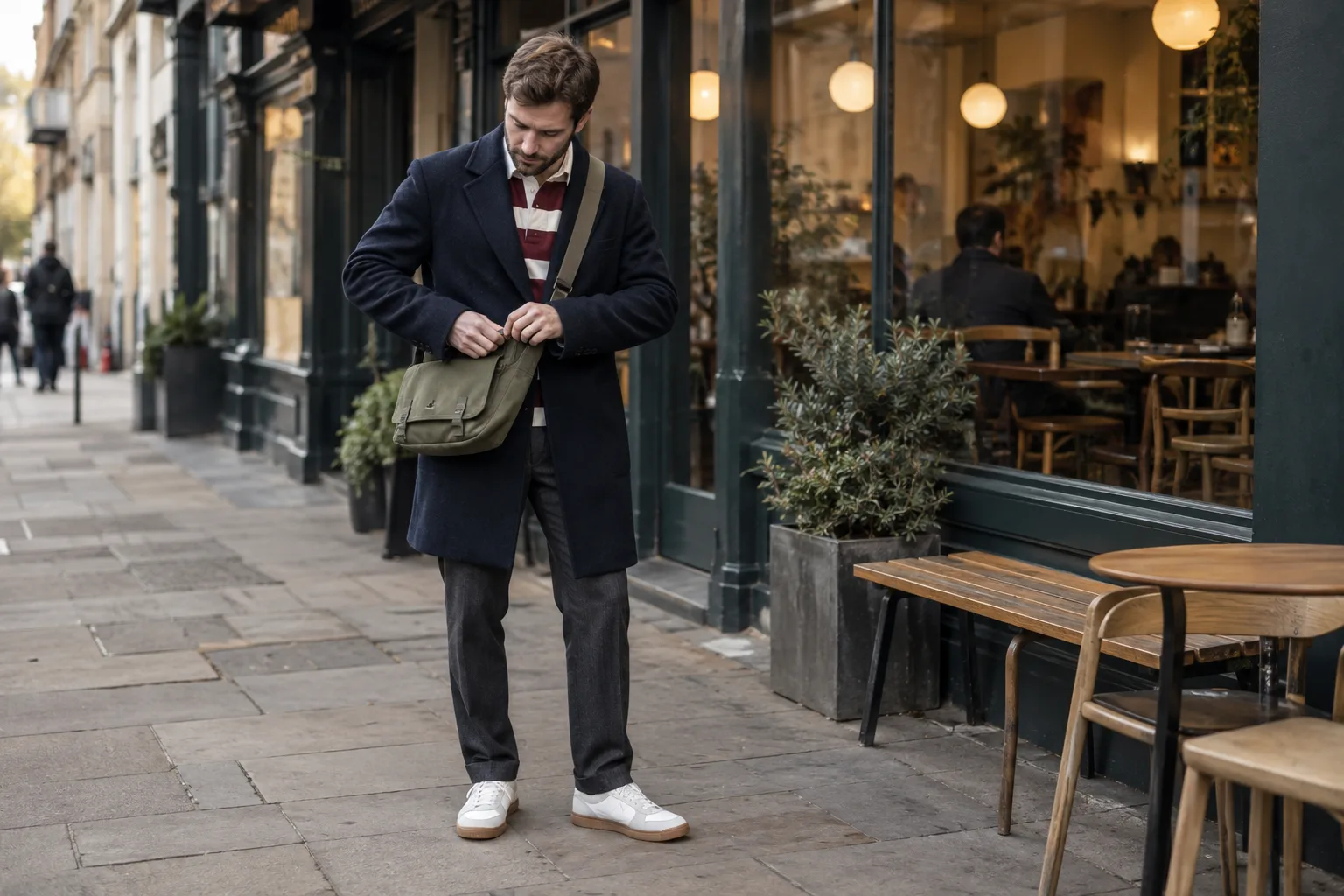
The most commute-friendly proposal is the soft messenger bag. The examples favour pliable leather, washed canvas and crinkled nylon, with a strap worn across the body and a closure over the contents. The defining feature is flexibility: this is a bag intended to settle against you rather than retain the outline of a document case.
That description needs a practical qualification. A flap or zip can cover the opening, but neither automatically makes a bag waterproof. Fabric treatments, seams and construction matter too. For a laptop-carrying commuter, a protective sleeve and the manufacturer’s weather-resistance information deserve more attention than an attractively slouchy product photograph.
Footwear offers a quieter proposition. GQ UK singles out German army trainers, whose familiar combination of leather, suede and a gum sole has a much slimmer profile than a chunky trainer. That reduced bulk changes the balance beneath trousers: the shoe becomes less of a visual anchor, making the hem particularly important.
The rugby shirt provides the stronger graphic element. GQ UK favours substantial cotton and a relaxed cut, often with stripes and a contrasting collar. Unlike a fine knitted polo, it brings a more robust texture to an outfit. Under a jacket, however, that extra fabric needs somewhere to go; tight armholes can turn relaxed sportswear into a wrestling match.
The background
These choices draw on established clothing traditions. Rugby shirts come from team sport, German army trainers from military physical training, and messenger bags from carrying things while keeping the hands free. Their appeal is partly that their purpose remains legible. You can understand the shape without needing a designer’s explanation.
A traditional cotton rugby shirt should not be confused with today’s technical match kit. Contemporary performance jerseys commonly use synthetic fabrics and closer fits suited to play. The fashion version discussed here borrows from an older sporting wardrobe, so a heritage appearance is not evidence of modern sports performance.
Likewise, the army trainer’s origins do not make every current interpretation suitable for exercise. A lifestyle shoe should be assessed for everyday comfort, not assumed to provide the support or cushioning required for a particular sport. Familiar military styling is a design reference, not a fitness specification.
The messenger bag also comes with a distinction worth keeping: soft construction and useful organisation are separate qualities. An unstructured outer can still contain compartments, a secure pocket and a padded section. Conversely, a handsome leather sack may leave keys, headphones and charging cables competing for the same dark corner.
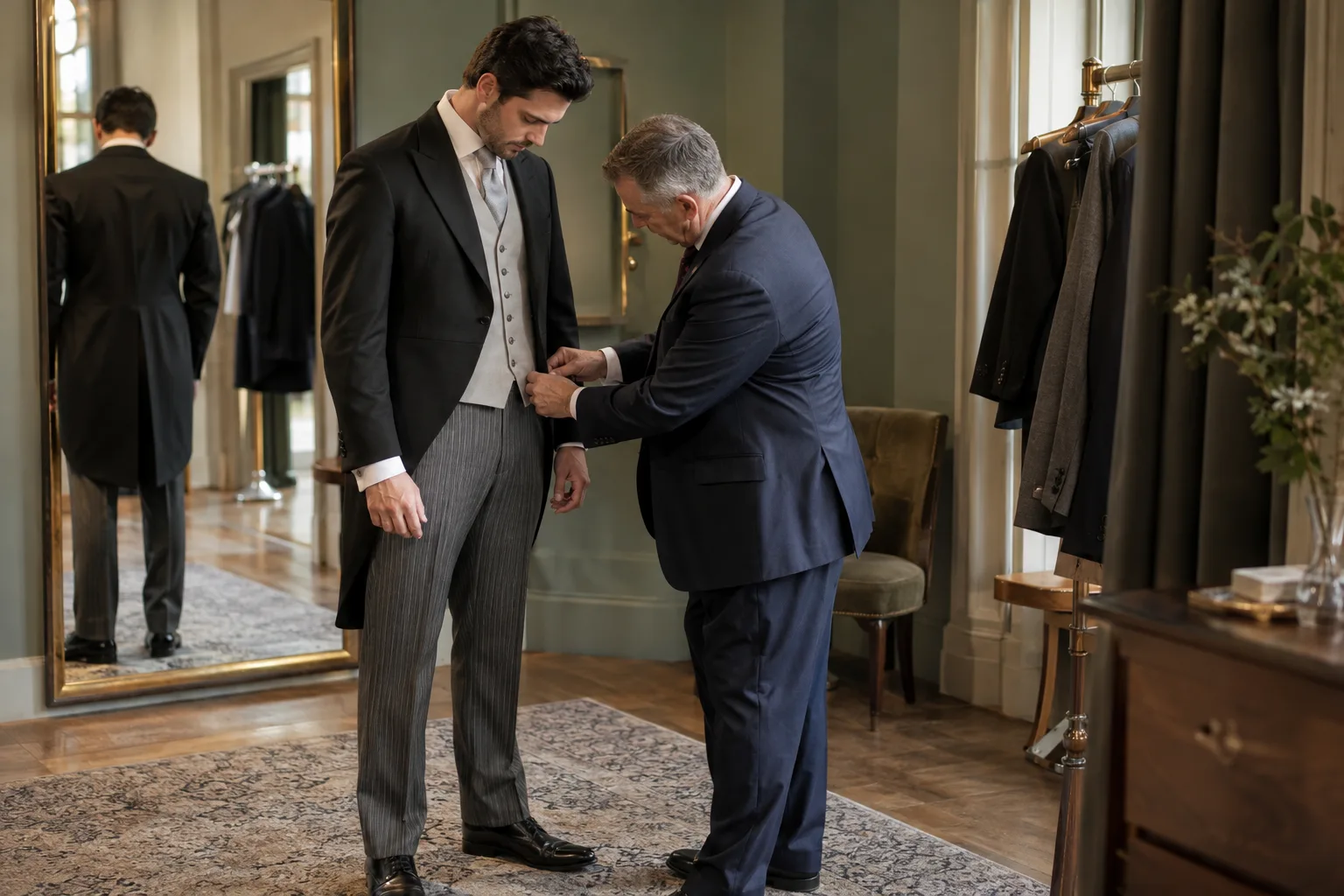
There is a dress-code boundary here. Relaxed trousers and trainers can work together where casual dressing is accepted, but that does not make trainers appropriate for every suit-wearing occasion. If an invitation specifies formal daywear, our guide to morning dress and what its dress code requires addresses a different set of rules. Seasonal fashion does not overrule the host.
What people are saying
The views in the supplied report come from GQ UK’s style team, with the three detailed recommendations attributed to Adam Cheung. His reasoning centres on everyday usefulness: substantial rugby shirts, understated trainers and bags with enough space for daily belongings. These are editorial judgements, not findings from consumer research.
That distinction matters when reading claims about what comes next. The report supplies no sales figures or survey results establishing that these pieces have displaced other options. A fashion editor can identify a compelling direction without proving mass adoption. Treat the selection as informed taste, not evidence that your existing wardrobe has suddenly expired.
The accompanying shopping choices also span markedly different price points. GQ UK lists army-style trainers at £105 and £620, and messenger bags at £145 and £1,800. Those are prices shown in its edit, rather than independently checked current offers. They demonstrate the breadth of the selection, not an entry fee for participating.
Our assessment is that each proposal needs a different test. Judge the rugby shirt by how it layers, the trainer by comfort and trouser proportion, and the bag by its loaded weight and access. Grouping them under one seasonal label can obscure those very different jobs. A good-looking purchase still needs to earn its place on a Tuesday morning.
What happens next
Test the outfit, not just the item
Start with the clothes you would actually wear alongside a purchase. Try a roomy top under your usual coat, then reach forward and sit down. The shoulder seams need not follow a fitted-shirt template, but pulling across the back or sleeves bunching inside outerwear are useful warning signs.
For low-profile trainers, take the trousers you expect to wear most. A wide hem can fold over and obscure a slim shoe; a very narrow opening produces a different silhouette altogether. Neither is automatically wrong. Check the combination standing and walking before deciding that the footwear—or the trousers—needs replacing.
At the neckline, inspect a zipped cardigan both open and closed. A collar that feels fine unfastened may rub once zipped up, particularly beneath outerwear. Look at the full effect around your face, too: our buzz cut guide to length and barber instructions is useful if you are already considering shorter hair, not a reason to change it for a jumper.
Buy for the life you have
Load a prospective messenger bag with the equivalent of your daily kit, where the shop permits it. Check strap adjustment over a winter coat, access to the closure and whether the bag swings when you walk. A cross-body strap frees your hands, but it still puts the load through one shoulder; heavy commuters may prefer their backpack.
Before paying, read the care label and inspect likely wear points: bag-strap attachments, zip operation, cuffs and shoe linings. Our guide to choosing a cologne without buying into a personality offers a useful parallel: choose for your preferences, not an advertised identity. The practical next step is a fitting-room test, not a wholesale wardrobe order.
Why this matters
For UK readers, the useful opportunity is to spend against a specific wardrobe problem: an awkward layer, uncomfortable shoes or a bag that leaves its contents exposed. Keep occasion dressing separate—our morning dress explainer covers the rules that a trend report cannot replace. Before shopping, identify where and how often you would wear the piece, then check it with what you already own. A purchase that survives that test has a better claim on your money than one that merely looks current.
Common questions
- what are the autumn/winter 2026 menswear trends?
- GQ UK highlights roomy rugby shirts, German army trainers and soft messenger bags. Its wider edit also points to more conspicuous trousers, pointed boots, Western-influenced belts and cardigans with prominent zips.
- how should a rugby shirt fit?
- The seasonal look favours a relaxed fit, but it should still work beneath your outerwear. Check that you can reach forward without pulling across the back and that the sleeves do not bunch uncomfortably inside your coat.
- what are German army trainers?
- German army trainers are low-profile shoes originating in military physical training. Their traditional appearance combines white leather, grey suede and a gum sole; modern fashion interpretations should not automatically be treated as exercise shoes.
- are messenger bags waterproof?
- A messenger bag is not necessarily waterproof, even if it has a flap or zip. Check the manufacturer’s specifications because fabric treatments, seams and construction affect weather resistance.
- can you wear German army trainers with trousers?
- Yes, German army trainers can work with trousers in settings where casual footwear is accepted. Try the combination before buying: a wide or long hem can conceal much of a low-profile shoe.
- what should I check before buying a messenger bag?
- Check its loaded comfort, strap adjustment, closure and internal organisation. Make sure it accommodates your daily belongings, and do not assume a soft exterior includes padding or protection for a laptop.
- do I need expensive clothes to follow menswear trends?
- No, a trend identifies a look rather than a required spending level. GQ UK’s edit itself spans different prices; fit, comfort, construction and compatibility with your existing clothes are more useful buying tests.
About the writer
Tom FairbairnBarber Culture Writer · Leeds
Spends more time in barbershops than is strictly necessary.
More from TomSources
This article is original reporting by The Good Cut based on the sources above. Last reviewed 8 October 2026. Product mentions are editorial unless clearly marked as sponsored.