Haircuts & Hairstyles
Buzz cut: how short to go and what to ask your barber
Beardbrand’s case for going short raises a useful question: which buzz cut actually suits your hair, your head and your appetite for maintenance?

By Eleanor Marsh, Senior Writer
Published · 5 min read
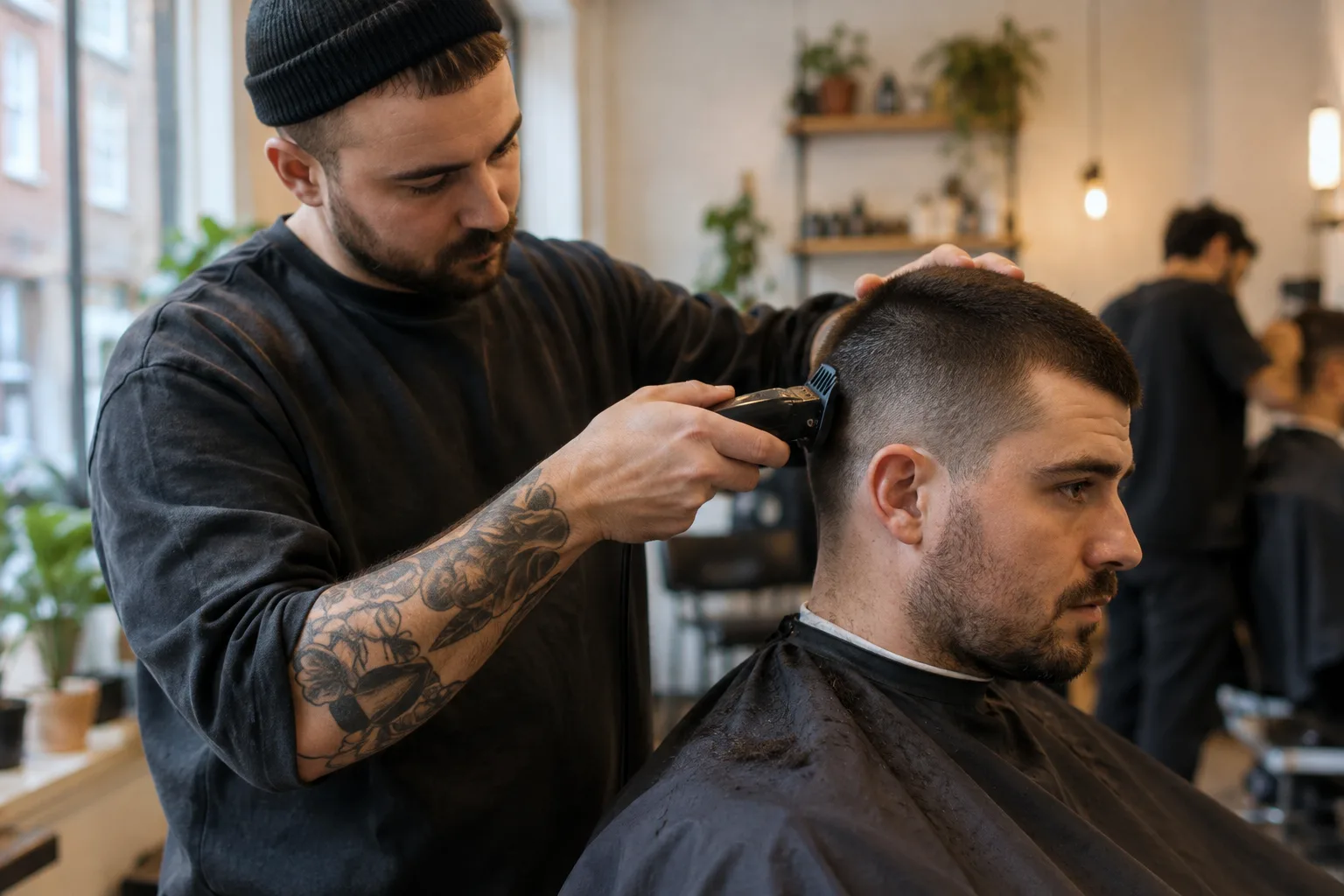
Quick answerA buzz cut is a very short, clipper-cut hairstyle, usually with an even length across the head. Start with a longer guard if you’re unsure, and ask your barber to assess your hairline, growth patterns and preferred upkeep before going shorter.
Beardbrand is making the case for the buzz cut as a deliberate style choice, rather than a haircut reserved for thinning hair or military service. Its 2026 guide argues that going short can simplify grooming and offer a change of image, while setting out several cuts that sit under the closely cropped umbrella.
The useful distinction for anyone booking a barber is that short does not mean one-size-fits-all. An even crop, a skin-faded buzz and a crew cut leave different amounts of coverage and create different silhouettes. Choosing between them matters more than deciding, in the abstract, whether you have the face for short hair.
What happened
Beardbrand’s article, written by Mike Lawson, combines an argument for cutting hair short with advice on clipper lengths, facial proportions and beards. It is a grooming guide, not research establishing a new trend: it supplies no booking figures or survey showing that more men are choosing buzz cuts in 2026.
Its strongest practical point is the reduction in daily styling. Hair clipped close to the scalp generally needs little arranging, and the shortest versions have no meaningful length to blow-dry into shape. Wind can still ruin your umbrella; it has rather less to work with on your head.
The financial argument needs more qualification. Using less styling product can reduce spending, but a sharply maintained fade may mean more frequent barber appointments than a longer, forgiving haircut. An even-length crop maintained at home has a different cost calculation from a fortnightly professional tidy-up. There is no universal saving.
Nor does shorter automatically mean better if your real frustration is with an awkward growing-out stage. Length can require changes to washing, conditioning and styling rather than abandonment. Our guide to what men should change when growing long hair covers that alternative before you trade several months’ growth for a few minutes with clippers.
The decision is therefore less about rejecting grooming and more about choosing which work you prefer. A buzz swaps much of the morning styling for attention to the cut’s outline, scalp condition and regrowth. That can be a sensible exchange, but it is worth making knowingly.
The background
Choose coverage before choosing a name
Barbershop terminology is not perfectly consistent, so a reference photograph and a length discussion beat a haircut name alone. Beardbrand describes the induction cut as an all-over clipper cut without a guard, the burr as a guarded crop, and the butch as a longer, even-length version.
On many common clipper systems, a number one leaves roughly 3mm, a two around 6mm, a three around 10mm and a four about 13mm. Equipment and blade settings vary, so ask your barber to confirm the actual length. The number is a starting point, not a universal measurement.
A crew cut changes the proportions by keeping the top longer than the sides and back. A buzz cut fade adds a graduated transition down the sides, potentially reaching bare skin. These details affect the outline: the top may be extremely simple, while the sides demand considerably more precision.
Coverage also depends on hair density, thickness and its contrast with your skin. The same guard can produce visibly different results on two heads. Curl pattern may remain apparent at a longer guarded length but become much less visible when clipped very close. Bring a photograph with comparable hair, not just an appealing jawline.
Think in proportions, not rigid face-shape rules
Beardbrand offers recommendations organised by face shape, including caution around very high, tight sides on longer faces. Treat these as styling suggestions rather than restrictions. Removing width at the sides can make the top appear more prominent; retaining some side coverage produces a less severe contrast.
A beard changes the overall proportions too. Extra length beneath the chin can make a face appear longer, while fullness at the cheeks adds width. You need not grow a substantial beard to balance a crop: maintaining an even five o’clock shadow offers a subtler way to keep definition around the jaw.
What people are saying
The more subjective part of Lawson’s argument concerns confidence and reinvention. He presents a drastic haircut as a way to reconsider the importance placed on hair. That may resonate with someone tired of checking every reflection, but it is an interpretation of the experience, not a guaranteed psychological benefit.
Beardbrand also discusses whether short hair changes how attractive or masculine someone appears. The article acknowledges that there is no clear answer to preferences for short versus long hair. That uncertainty matters: a haircut cannot promise a better dating life, and individual taste is more useful here than sweeping claims about what women want.
Its suggestion that buzzing can make scattered grey hairs less conspicuous deserves similar care. Reducing length may make individual silver strands harder to distinguish, but the result depends on colouring, density and how much grey is present. Clippers do not change pigment, and an extensively grey crop will still look grey.
There is also a practical distinction between making thinning hair look more uniform and concealing hair loss. Close clipping can reduce the contrast between longer strands and sparse areas, but it does not restore density or change the hairline. A barber can help with appearance; new, sudden or patchy loss warrants advice from a GP.
What happens next
Make the first appointment a consultation
Before the clippers come out, ask your barber to look at your crown, hairline, growth direction and any scalp features you would prefer to keep covered. Cowlicks, scars and changes in density become more visible as coverage decreases. None automatically rules out a buzz, but each can influence the chosen length.
For a first attempt, start longer than your eventual target. You can inspect a number four before deciding to try a three; the reverse requires waiting. Agree on the sides separately, including how high any fade should rise and whether you actually want exposed skin. Those are decisions, not automatic extras.
At home, an even guarded cut is more straightforward than a fade, but the back still needs checking. Work with clean clippers, follow the manufacturer’s instructions and inspect from several angles. Repeatedly pressing harder over a stubborn patch is not a substitute for understanding the direction in which the hair grows.
Replace styling effort with scalp care
Keep washing according to your scalp’s needs, rather than assuming short hair means no cleansing. If exposed skin feels dry, a suitable moisturiser may help. Our explanation of beard balm uses beyond facial hair explores its uses and limitations; you do not need to repurpose a beard product simply because it is already on the shelf.
For exposed scalp outdoors, use broad-spectrum sunscreen with at least SPF 30 and consider a hat. Reapply according to the instructions, particularly after swimming or sweating. Decide, too, how much regrowth you can happily tolerate: the closer and more sharply defined the original cut, the sooner small changes become noticeable.
Related: Ed Sheeran’s buzzcut: what he’s said about the change
Why this matters
For UK readers, the useful takeaway is to book the haircut you can maintain, not simply the shortest one in the reference photograph. Tell your barber how often you want to return, how much scalp you are comfortable showing and whether your beard is staying. If you are still weighing a crop against keeping your length, our advice on growing long hair without fighting it helps separate a genuine preference for short hair from frustration with your current routine.
Common questions
- what is a buzz cut?
- A buzz cut is a very short hairstyle made with clippers, usually at an even length across the head. Variations can include tapered or faded sides.
- what buzz cut number should i start with?
- Start with a longer guard, such as a number four, if you are unsure. On many clipper systems this leaves about 13mm, allowing you to assess the coverage before going shorter.
- what is the difference between a buzz cut and a crew cut?
- A traditional buzz cut is even in length, while a crew cut keeps more hair on top than at the sides and back. The crew cut gives your barber more scope to adjust the silhouette.
- is a buzz cut low maintenance?
- A buzz cut requires little daily styling, but it still needs washing, scalp care and trimming. A precise skin fade usually demands more upkeep than an even crop allowed to grow out.
- does a buzz cut hide thinning hair?
- A buzz cut can make the contrast between longer hair and sparse areas less obvious, but it cannot restore density or alter your hairline. New, sudden or patchy hair loss warrants advice from a GP.
- does a buzz cut hide grey hair?
- A close crop may make scattered grey strands less noticeable, depending on your hair colour and density. It does not change hair pigment, so substantially grey hair will still appear grey.
- do i need sunscreen with a buzz cut?
- Use broad-spectrum sunscreen with at least SPF 30 on exposed scalp outdoors, and consider wearing a hat. Follow the reapplication instructions, particularly after swimming or sweating.
About the writer
Eleanor MarshSenior Writer · Edinburgh
Hairstyle trends and the stories behind them.
More from EleanorSources
This article is original reporting by The Good Cut based on the sources above. Last reviewed 8 October 2026. Product mentions are editorial unless clearly marked as sponsored.