Men's Style
Best T‑shirts for big guys in 2026: fits, cuts and sizes
Our men’s style desk on the tees that actually flatter bigger builds — from smart fit tricks to fabrics and sizes that now run far beyond XXL.
By The Good Cut Editorial Team
Published · 6 min read
Quick answerGo for midweight cotton or cotton‑blend tees with a straight or relaxed fit, sleeves to mid‑bicep, and a slightly longer hem. Dark, solid colours, split hems and V or open crew necklines usually flatter bigger builds and reduce cling.
If you’ve ever stood in a changing room doing the hop-and-shimmy to unpeel a too-tight tee, you’ll know the struggle is real. The good news: 2026 is the year the T‑shirt aisle finally catches up with bigger builds. Size runs are widening, cuts are smarter, and there are far more options that look sharp without feeling like Lycra cosplay.
Across the market, sizes now stretch beyond the old XXL ceiling, and more brands are building tees around real bodies — broader shoulders, fuller chests and stomachs, longer torsos — rather than scaling up a skinny block. Here’s what’s changed, why it matters, and how to pick a tee that does the heavy lifting for you.
What happened
-
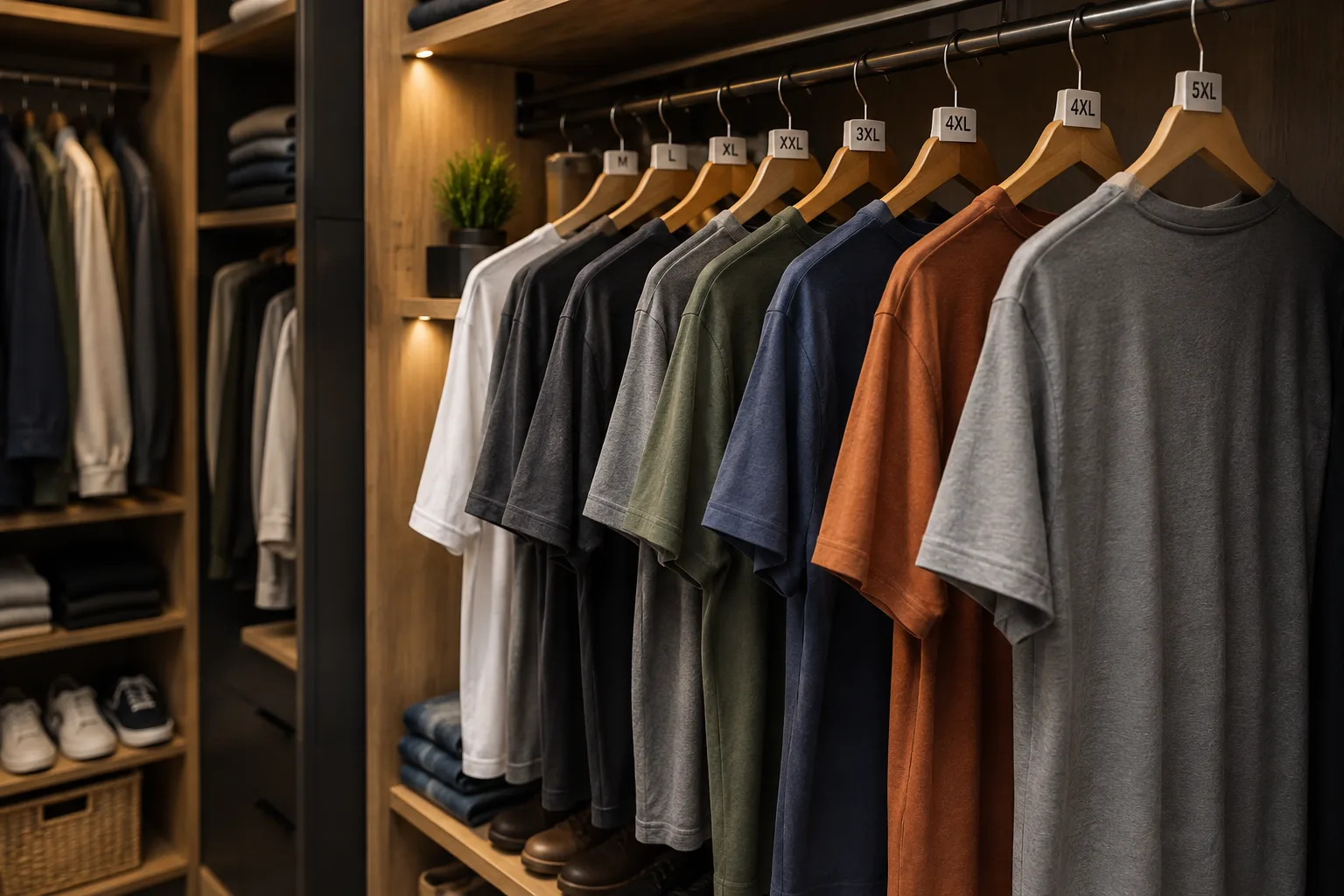
Size ranges have expanded. You can now find core tees running to 5XL and 6XL in mainstream lines, with specialist big-and-tall players going further to 8XL. That breadth was rare even a few years back.
-
Length choice is improving. Instead of one length for all, more labels offer short, regular and long hems, and some even design shorter variants that stop billowing while still covering the waistband.
-
Fabrics are better tuned to bigger builds. Heavyweight and midweight cotton jerseys are showing up in everyday tees because they drape cleanly, resist cling and feel substantial without being sweaty. Where movement is vital — chest and sleeves — small amounts of elastane are being used to keep shape and comfort.
-
Details are becoming fit tools, not afterthoughts. Split side hems help tees fall neatly over the hips. Slightly longer back hems stop ride-up when you sit. Wider ribbed necks avoid that strangled look and reduce stretching.
-
Choice exists at every price. Budget basics push deep size runs and colour ranges, designer lines now list up to 5XL, and there are dedicated brands building patterns for larger and taller men with thoughtful tweaks like shorter body options and more tailored sleeves.
-
Beyond short sleeve. Long-sleeve tees in heavier cotton are widely available in extended sizes, which is handy if you prefer arm coverage or want a smarter base under overshirts.
The background
Finding a tee for a bigger frame used to mean choosing between tight and tent. The fit issues are predictable: too much cling on the stomach, sleeves that bite the upper arm, hems creeping up, and necks that feel throttling by lunchtime. Each problem has a fix if you know what to look for.
Fabric and weight
-
Aim for midweight to heavyweight cotton jersey. Fabrics around that middle ground drape better than flimsy knits, masking minor lumps and handling movement without transparent stretch marks.
-
Add a little stretch. Cotton with 3–5% elastane helps sleeves and chest flex without warping the silhouette. Structured knits like pique also hold shape well while breathing.
-
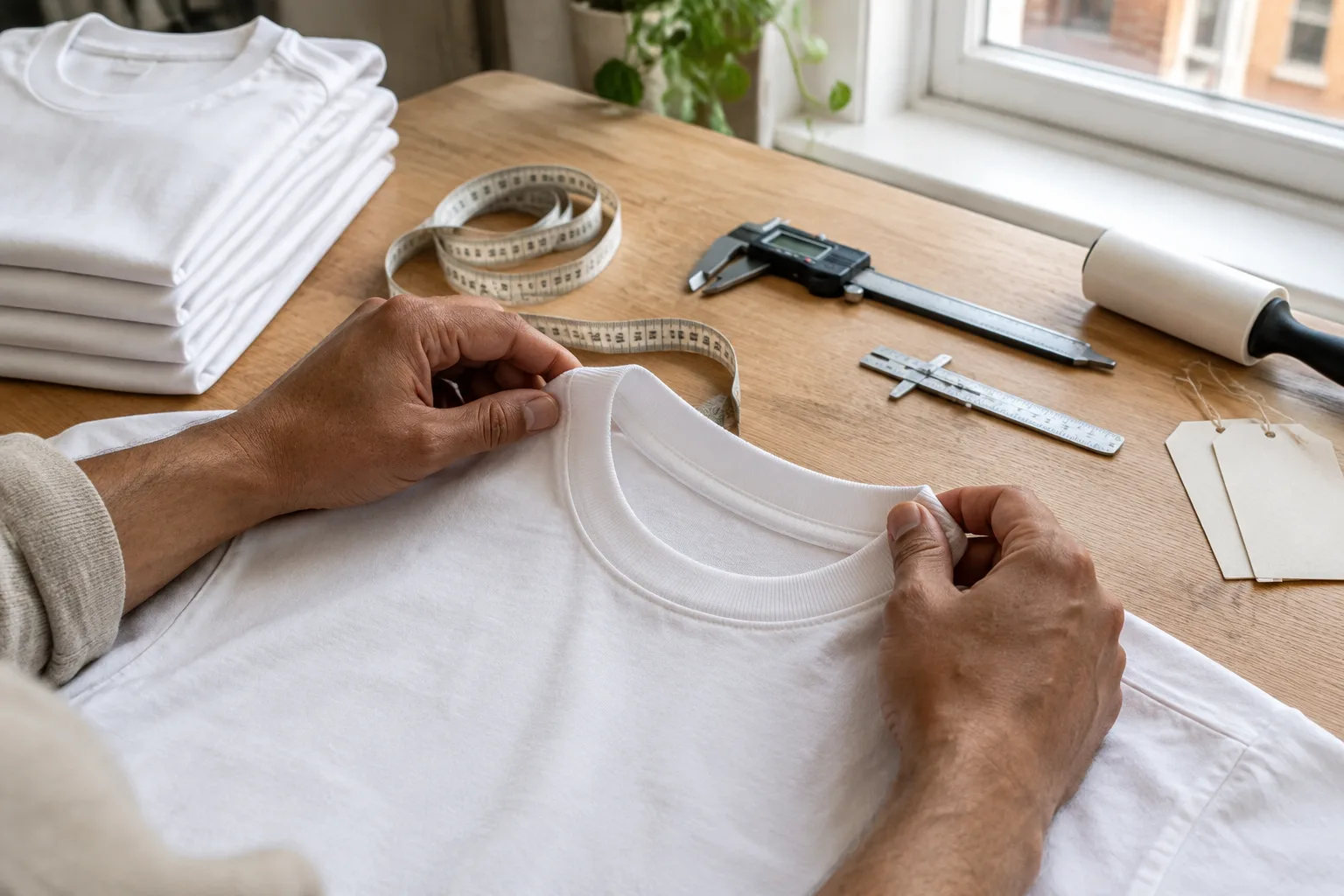
Check for pre-shrunk or garment-dyed notes. It’s a simple way to avoid surprise post‑wash shrinkage and twisting at the side seams.
Fit and block
-
Straight or relaxed beats boxy. You want a clean line through the torso with a bit of ease — not a square block that balloons at the waist.
-
Length matters. A hem that lands mid fly — roughly covering the belt and an inch or two more — is the sweet spot. Many brands now let you pick short, regular or long lengths.
-
Sleeves to mid‑bicep. That length visually balances broader chests and shoulders. Look for sleeves with a little room, not strangling your upper arm.
-
Smart necklines. A V‑neck or a crew with a slightly wider, softer rib opens the chest and lengthens the neck. Avoid super-tight collars that ride up.
-
Use hems to your advantage. Split side hems or gently curved hems sit more neatly over hips and bellies than stiff, square cuts.
Styling that works
-
Keep colours simple. Dark and solid tones slim visually and pair with everything. If you love a graphic, pick one that sits high and central so it doesn’t distort.
-
Pair with the right denim. Straight or tapered jeans that skim, not squeeze, will always read cleaner than skinnies that bunch. See our guide to men’s jeans fits that actually work now.
-
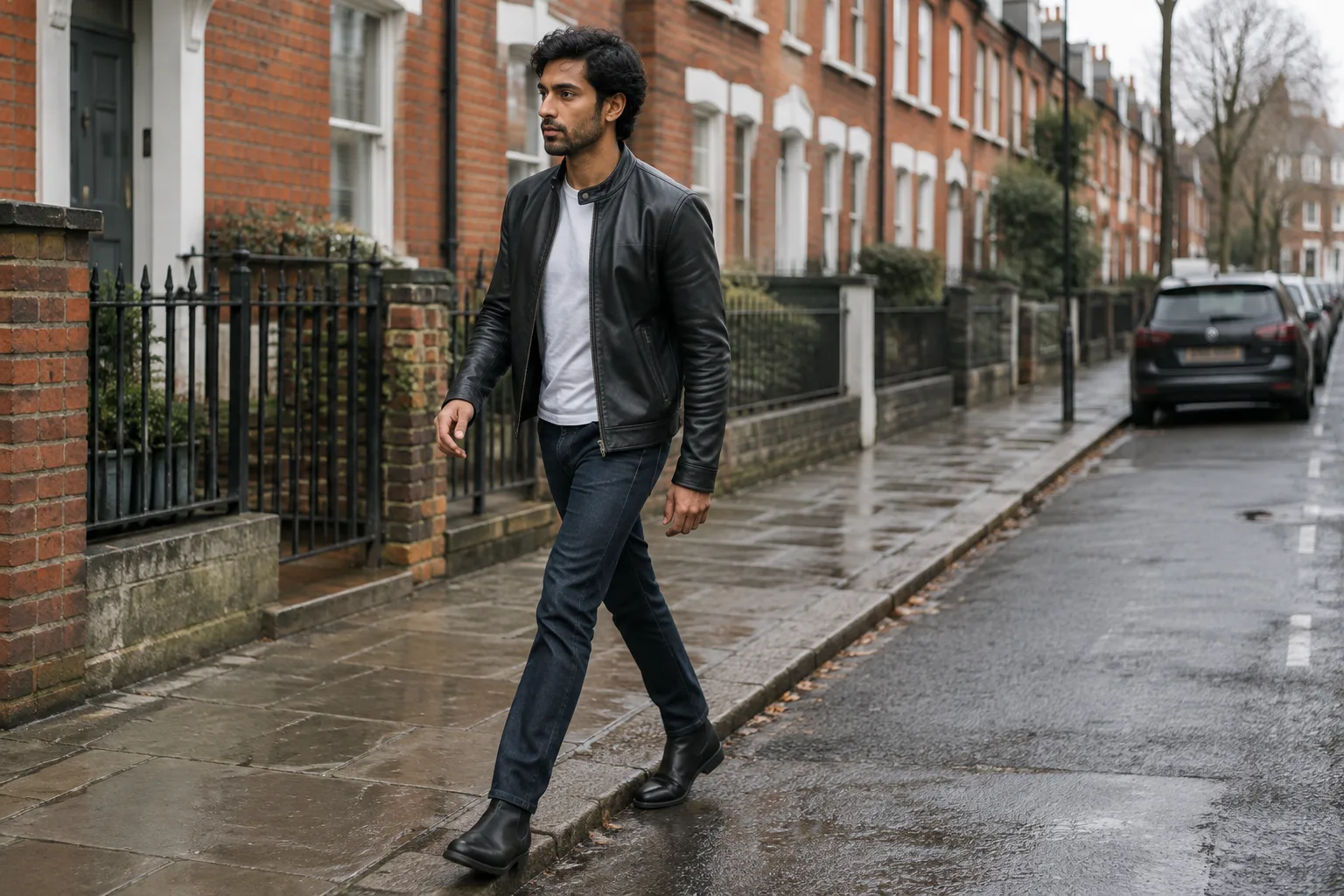
Layer for structure. A chore jacket, overshirt or leather jacket puts lines and pockets where you want them, taking attention off the midsection. If you’re refreshing outerwear, start with men’s leather jackets: the styles to know.
-
Don’t fear white. A thicker white tee with a proper fit is crisp, not clingy. If you’re hunting specifics, our look at the best white T‑shirts for men covers fabrics and cuts that behave.
-
Mind care labels. Some performance knits and stretch blends prefer hang-drying to preserve shape — a small trade-off for better drape and durability.
What people are saying
Retail signals are clear: demand is there. Extended size runs are no longer hidden in obscure subpages; they sit alongside the core range, with the same colours and fabric upgrades. Long lengths and short lengths are called out in size pickers, not buried in footnotes.
Specialist brands now cut tees specifically for larger and taller men, with pattern tweaks you feel immediately — shorter front lengths that still cover, closer-fitting sleeves that don’t flap, and shoulders scaled for breadth rather than relying on body width to compensate.
Budget lines have quietly become a lifeline for guys who need beyond 3XL, offering sizes to 6XL and broad colour menus, while premium houses list up to 5XL without changing the fabric story. That parity of design and cloth means you choose on taste and budget, not just what fits.
There’s also a move towards midweight year‑round tees rather than super-light summer knits. Heavier cotton sits smoother over the torso and washes better, which is why you’ll see “heavyweight” badges attached to everyday basics now, not just to heritage workwear.
Finally, multi-buy packs in stretch cotton are supplying an unshowy solution for chesty gym-goers who need a bit of give Monday to Friday. They’re not skin-tight compression tops; they’re regular tees that move properly through the shoulders and arms.
What happens next
Expect fit specificity to grow: multiple lengths as standard, clearer sleeve measurements, and size charts that focus on body and garment dimensions, not vague S‑XXXL ranges. That makes online ordering less of a gamble, especially in extended sizes.
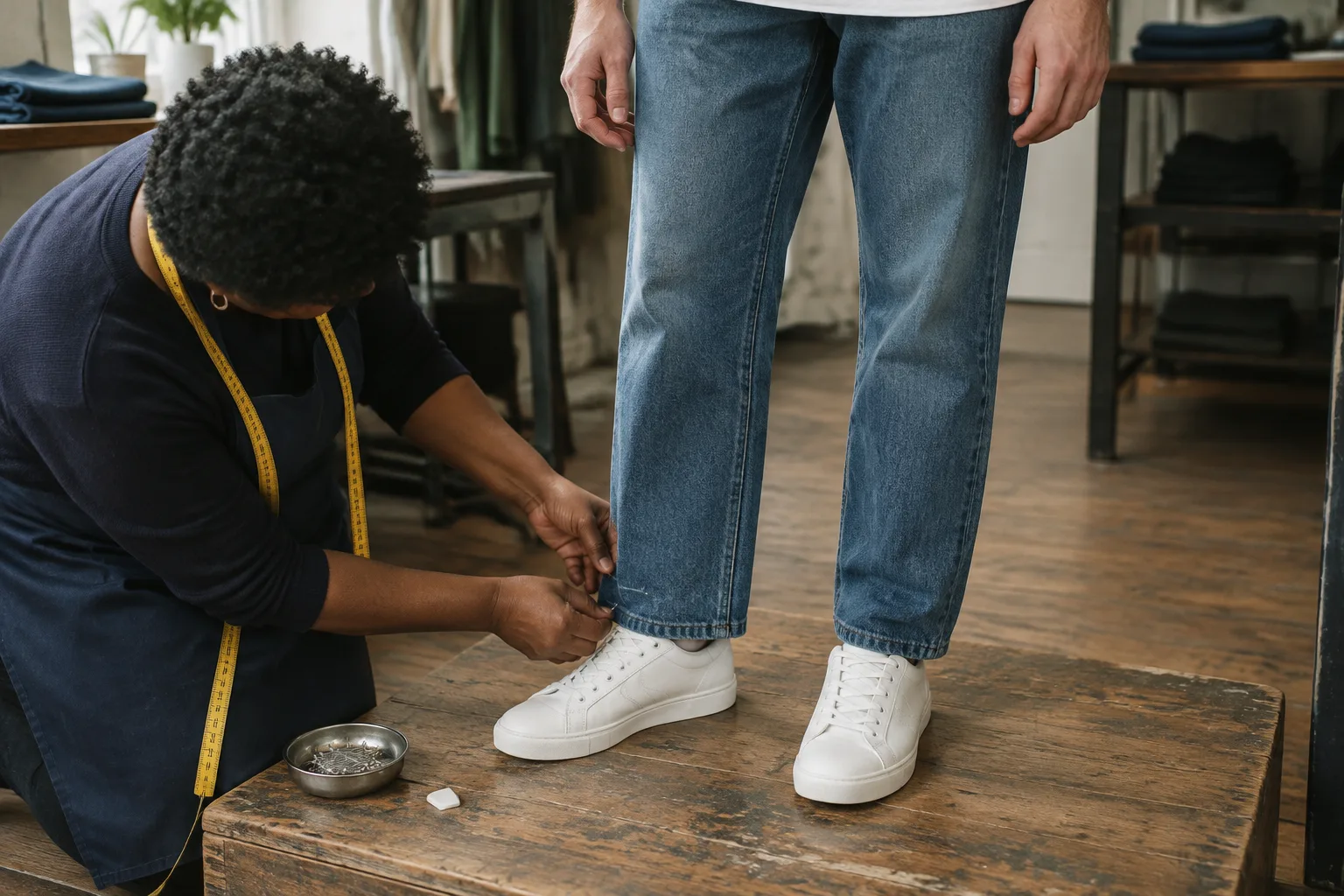
For now, measure what matters — chest, stomach and preferred back length — and compare to the garment measurements, not just your usual lettered size. If you’re between lengths, choose the longer hem and get a local alteration if needed; it’s an easy, inexpensive tweak.
When you’re refreshing your rotation, build a small core: a dark crew in midweight cotton, a thicker white tee, a V‑neck for under tailoring, and a long‑sleeve option for cooler months. Rotate with structured layers and trousers that skim, not grip. If you’re suiting up soon, anchor it with options from our guide to the best navy suits for men for clean lines top to toe.
Care-wise, wash cool, reshape while damp and either air-dry flat or hang from the hem to avoid shoulder bumps. If shrinkage worries you, prioritise pre‑shrunk or garment‑dyed cottons and avoid over‑tumble‑drying.
The bigger trend is simple but welcome: fit is no longer an afterthought for bigger bodies. With sizes reaching up to 5XL–6XL in the mainstream and beyond in specialists, you can choose the tee you actually want — and have it fit the way it should.
Why this matters
For UK readers, the upshot is choice. You can now prioritise cut and fabric over compromise sizing: try midweight cotton, a straight or relaxed block, sleeves to mid‑bicep and a hem that covers the belt. Build around two dark tees and a thicker white option, then add structure with overshirts or a leather jacket. If you’re updating trousers too, pair wisely with the right men’s jeans fits to keep the silhouette clean.
Common questions
- what are the best t shirts for big guys
- Pick midweight cotton or cotton‑blend tees with a straight or relaxed fit, sleeves to mid‑bicep, and a slightly longer hem. Dark, solid colours, split hems and V or open crew necklines flatter bigger builds.
- should big guys wear v neck or crew neck t shirts
- Both work. A V‑neck visually lengthens the neck and opens the chest; an open, not tight, crew does the same. Avoid very tight collars that ride up.
- what fabric weight is best for big guys t shirts
- Midweight to heavyweight cotton drapes cleaner and clings less than very light jersey. It smooths the torso and looks sharper through repeated washes.
- how long should a t shirt be on a big guy
- Aim for a hem that covers the belt and reaches roughly mid fly. Many brands now offer short, regular and long lengths so you can choose precisely.
- do any brands make t shirts above 3xl
- Yes. Mainstream ranges often reach 5XL or 6XL now, and specialist big‑and‑tall labels extend further to around 8XL in some lines.
- how do i stop a t shirt clinging to my stomach
- Choose midweight cotton, avoid super‑thin knits, and look for straight or relaxed blocks with split hems. A small elastane content helps drape without strain.
- what sleeve length suits a bigger build
- Sleeves that land around mid‑bicep balance broader shoulders and upper arms. They should sit with ease, not pinch or flare excessively.
- how do i avoid shrinkage in cotton t shirts
- Look for pre‑shrunk or garment‑dyed cotton, wash cool, reshape while damp and air‑dry. Limit tumble‑drying, which accelerates shrinkage and twisting.
Sources
This article was written by The Good Cut using the sources listed above. Product mentions are editorial unless clearly marked as sponsored.