Men's Style
Men’s leather jackets: the styles to know and how to pick
From biker to overshirt, here’s the leather jacket landscape in 2026 — what each style does, what to buy and how to wear it well.
By The Good Cut Editorial Team
Published · Updated · 6 min read
Quick answerThe core men’s leather jacket styles in 2026 are biker, café racer, bomber/aviator, field and overshirt. Choose by fit, leather type and how it slots into your everyday wardrobe.
Leather jackets never really leave the conversation; they just change shape. In 2026 they’re everywhere again — from pared‑back café racers to chunky shearling aviators — with brands pushing both heritage patterns and modern spins like leather overshirts and coach jackets.
Price and provenance matter more than ever. Good hides and solid construction aren’t cheap, and there’s growing scrutiny on tanning and sourcing. Vintage is surging because it’s greener, already broken‑in and, for many, simply looks better.
What happened
The big story is breadth. The classic biker, café racer, bomber/aviator and field jacket still anchor menswear, but leather has moved into newer lanes: puffers, coach jackets, varsity silhouettes and even hoodies. That mix means there’s a leather option for most wardrobes, whether you dress casual‑workwear or tailored‑minimal.
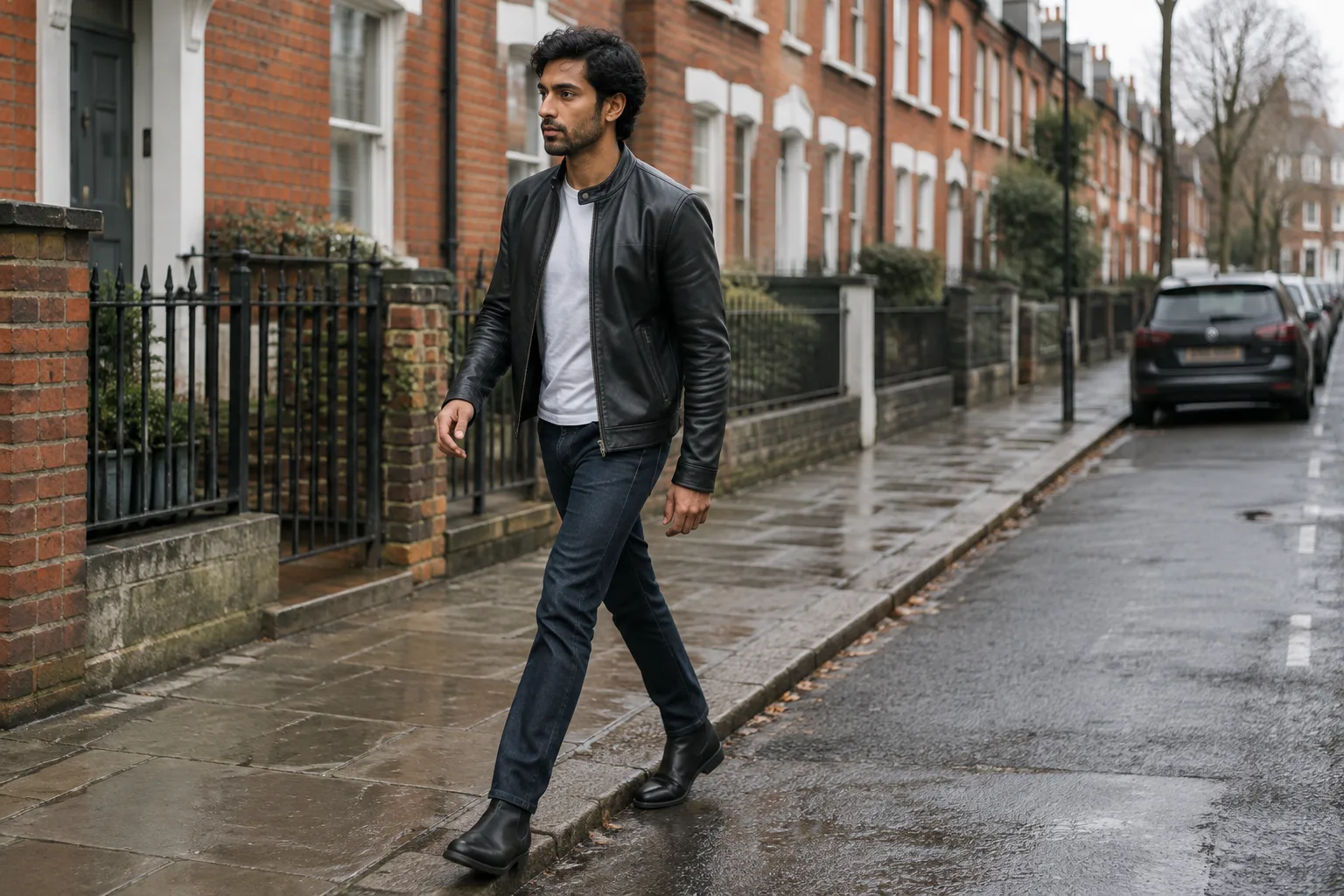
The biker remains the icon — cropped, asymmetrical zip, belt, epaulettes — and still telegraphs rebellious energy. It’s high impact and best kept simple: a plain tee, dark denim and boots. If you want the attitude without all the hardware, the café racer trims it back to a straight zip, small band collar and clean front, which is why it’s many men’s first successful leather jacket.
Bombers and aviators speak to aviation roots. Bombers typically use ribbed cuffs and hem, often with a round collar; aviators switch to shearling collars and linings for real cold‑weather clout. If you run hot, pick a bomber with a simple lining; if you barely feel your fingers till April, shearling earns its space in the wardrobe.
The British‑leaning field jacket takes leather into smarter territory. Think four front pockets, a storm‑ready closure and sometimes a waist belt — a design that can sit over knitwear at the weekend or over tailoring midweek. It’s one of the few leathers that doesn’t jar with suiting.
Newer forms broaden your hand. Overshirts in leather give you a lighter, layer‑friendly option that works with weekend sweats or pleated trousers. Leather puffers add street warmth and a bit of flash; coach jackets swap cotton twill for hide and instantly feel more substantial; varsity jackets lean into collegiate nostalgia with more leather used across body and sleeves than the old cloth‑body versions.
The background
A quick materials primer makes choosing far easier. Cowhide is the all‑rounder: tough, ages well, and the benchmark for most classic jackets. Horsehide is tougher again and wears in slowly, suiting those who want armour‑level durability. Goatskin resists abrasion well and can be cost‑effective, though grain can look less refined. Lambskin is the soft, luxurious option that drapes beautifully but marks more easily and isn’t built for a decade of hard knocks. Calfskin splits the difference: finer grain and comfort, usually at a higher price.
Fit follows function. Motorcycle‑born designs (racers, belted bikers) tend to be shorter and slimmer to avoid bunching on the bike. Vintage‑pattern bombers are boxier and shorter, great if you prefer room through the torso or wear higher‑rise trousers. Modern fashion‑led pieces often land in a balanced, regular fit that’s easiest to style daily.
Construction quality shows up in the details. Larger panels with fewer seams cost more to make and look cleaner. Good leather matching across panels avoids jarring shade shifts. Action backs and thoughtful linings add comfort and warmth where needed, and sturdy zips and snaps stand up to years of use.
On cost, you generally pay for hide quality, pattern complexity, origin and hardware. Affordable jackets often use lamb or goat to keep prices down and comfort up, while premium cow or horse with big panels, heavy hardware and made‑in‑USA/EU pedigree push into four figures. If the budget’s tight, brands offering multiple fits can help you land a better silhouette without immediate alterations.
Sustainability is part of the decision. Some labels now emphasise hides that are by‑products of the food industry and cleaner tanning, but the greenest route remains buying vintage — no new animal, minimal additional footprint, and the patina everyone tries to fake.
If you’re new to leather, build around pieces you already wear. A café racer over a great white tee and dark denim is nearly fool‑proof — start with a tee you actually rate, not a gym leftover; our guide to the best white T‑shirts for men is a handy shortlist. Going smarter? A leather field jacket can replace a mac on dry days and works with flannels and a roll neck.
Britain’s outerwear heritage also explains why the leather field jacket feels so natural here: it shares DNA with waxed cotton classics we’ve charted in our piece on the wax jacket’s history, just translated into hide for a dressier, weightier feel.
What people are saying
Ask around menswear circles and a consensus emerges: the café racer is the easiest entry point because it’s minimal, close‑fitting and modern. Stylists often steer bigger builds toward bomber patterns, where the ribbed hem and roomier chest balance proportions without a trip to the tailor.
Fit mistakes are what trip guys up. Sleeves that swallow your hands, shoulders that bite, or a hem hitting mid‑fly will kill the look fast. Try on with the layers you’ll actually wear — T‑shirt for racers, a medium‑weight knit for bombers — and raise your arms; if it binds across the back, size up or look for an action back.
Colour is a practical call more than a moral one. Black reads sharper and more urban; brown leans heritage and pairs well with denim, chambray and boots. If you already rotate black footwear and darker denim, black will slot in; if your wardrobe is navy, ecru and earth tones, brown tends to behave better.
Warmth is about lining more than leather. Shearling is a furnace; quilted or Thinsulate‑type linings add usable insulation without bulk; unlined or thinly lined racers are true three‑season pieces with the right knit underneath. If your winters are mostly wet and windy rather than brutal, a lined bomber may beat a full shearling.
Care is simple but non‑negotiable. Hang on a wide‑shouldered hanger, brush off grit, let it dry naturally if soaked and condition sparingly to prevent drying and cracking. Skip heavy oils that can darken hides; a light cream once or twice a year usually suffices.
If your style skews relaxed, leather overshirts and coach jackets layer neatly over sweats without shouting. For that lane, our guide to the best tracksuits for men will help you get the fit right under a leather top‑layer.
What happens next
Expect two parallel tracks to continue: faithful reissues of heritage patterns and bolder fashion‑led shapes that lean into varsity, puffer and hoodie territory. The pull of nostalgia isn’t going anywhere, and neither is the demand for transparency around hides and tanning.
For shoppers, the smart play is to pick one archetype that does the heavy lifting — usually a café racer, bomber or field — and wear it relentlessly for a season. Note where it excels or annoys you, then consider a second, more specialised piece if needed. If sustainability is top of mind, start at the vintage rail; the right find will already have the patina you’re trying to earn.
Finally, remember that leather looks better when the rest is dialled. Clean hair and a matte product keep things modern without crunch — if you need a refresher, our best hair clay for men breakdown covers finish by hair type — and a simple tee, straight‑ish jeans and unfussy shoes let the jacket do the talking.
Related: Men’s jeans fits: the six styles that actually work now
Related: Best T‑shirts for big guys in 2026: fits, cuts and sizes
Related: The best jeans for your body type: a practical guide
Why this matters
For UK readers, this is about buying once and wearing often. Pick the leather jacket that suits your build and climate — café racer for clean lines, bomber or aviator for warmth, field for smart‑casual — and pair it with staples you already own. If in doubt, start with black or dark brown and a great white tee; our guide to the best white T‑shirts will help you nail the base layer. Vintage remains the greenest route and gets you instant character, so don’t skip the second‑hand rail.
Common questions
- what are the main types of men’s leather jackets
- The core styles are biker, café racer, bomber, aviator (shearling), field jacket and modern options like leather overshirts, coach jackets, puffers and varsity.
- which leather is best for a men’s jacket
- Cowhide is the durable benchmark. Horsehide is tougher, goatskin is hardy and value‑friendly, lambskin is soft and drapey but marks easier, and calfskin balances comfort and price.
- how much should i spend on a leather jacket
- Quality leather rarely comes cheap. Expect serious money for good hides and construction, with budget options often using lamb or goat to keep prices down.
- what’s the difference between a bomber and an aviator jacket
- Bombers typically use knitted cuffs, hem and a simple collar. Aviators add shearling collars or full shearling linings for extra warmth and bulk.
- is a café racer easier to wear than a biker jacket
- Usually yes. A café racer’s clean front and small collar make it simpler to style than an asymmetrical, belted biker with heavy hardware.
- are vintage leather jackets worth buying
- Yes. Vintage reduces environmental impact, costs less than many new options and arrives with a lived‑in patina you can’t fake.
- how do i care for a leather jacket
- Hang on a wide hanger, keep it dry, brush off dirt and condition lightly once or twice a year. Avoid heavy oils and direct heat.
- what colour leather jacket should i buy first
- Pick what matches your wardrobe: black reads sharp and urban; brown suits denim and earthy palettes. Both are versatile if the fit is right.
Sources
- Esquire UK: The Best Men's Leather Jackets to Buy in 2026
- stridewise.com: 5 Best Men's Leather Jackets I've Worn (plus alternatives) | Stridewise
This article was written by The Good Cut using the sources listed above. Product mentions are editorial unless clearly marked as sponsored.