Men's Style
Best white T‑shirts for men: the 2026 buying guide
Weights, fits, fabrics and four benchmark options — here’s how to buy the right white tee in 2026.
By The Good Cut Editorial Team
Published · Updated · 6 min read
Quick answerIn 2026, the best white T‑shirts use midweight 160–220gsm fabrics, clean crew necks and either classic or boxy fits. Expect UK prices from about £25 to £100.
If you wear one thing more than any other, it’s probably a plain white tee. In 2026 the humble basic isn’t so basic: cuts are sharper, fabrics heavier and necklines cleaner, so a T‑shirt finally looks intentional on its own — not just like something you slept in.
Across the market, you’ll find four useful benchmarks that show where quality now sits and what you get for your money. Sunspel’s Classic T‑Shirt is a Supima cotton staple listed at around £95. CDLP’s Midweight T‑Shirt blends Tencel lyocell with Pima cotton at a sturdy 220gsm for about £100. COS sells a Regular T‑Shirt three‑pack in 160gsm organic cotton for £55. Arket’s Midweight Cotton Tee lands at 170gsm for £25. Each takes a different route to the same destination: a cleaner drape, better opacity and a collar that keeps its shape.
What happened
The white T‑shirt has quietly had an upgrade. Brands are moving towards midweight cloth in the 160–220gsm pocket, which hangs better, resists twisting and doesn’t go see‑through under sunlight. That extra weight also creates crisper lines at the shoulder and hem.
Silhouettes have split into two camps: a classic straight fit and a slightly boxier shape with more room through the body. The latter often comes with a shorter hem so it sits right without tucking, solving the longline problem that plagued wardrobes a few years back.
Crew necks are running higher and thicker, with chunkier ribbing that lays flat and stays tidy after repeated washes. That detail is small but decisive, framing your face and stopping collars from flaring out after a few spins.
Fabric choice is broadening. Cotton is still king — with Supima and Pima prized for longer fibres and softness — but lyocell blends are now common because they drape well, feel cool and handle moisture better. CDLP’s 220gsm lyocell/Pima blend is a textbook example of how structure and softness can co‑exist.
Value hasn’t vanished. Multi‑buy packs like COS’s three‑pack keep the cost per wear low, which matters if you’re wearing white tees most days and want a rotation for wash days. A steady stack extends garment life and helps each shirt recover between wears.
For UK wardrobes, all this means fewer compromises. A 170gsm tee like Arket’s can double as a winter baselayer and a spring standalone. A heavier 200gsm‑plus option carries itself with denim, chinos or tailored trousers without needing a jacket.
The background
The white T‑shirt began as underwear and naval issue before graduating to icon status in the 1950s, when screen idols put it front and centre. That shift cemented a formula that still works: clean crew neck, hem on the hip, sleeves catching the upper arm.
From there, details evolved. Supima cotton — an American extra‑long staple variety — brought durability and a silkier hand feel compared with standard cotton. Pima offers a similar long‑staple benefit, while organic cotton reduces pesticide use at farm level without changing day‑to‑day wear drastically.
Lyocell, often branded as Tencel, is regenerated cellulose with a smooth handle and naturally good moisture management. In tees it lends drape, resists creasing and adds a subtle sheen. At 200gsm or above, it reads premium without looking shiny.
Weight is your quick cheat sheet. Around 140–155gsm feels light and works best as an undershirt. 160–180gsm is the sweet spot for daily wear. 200–240gsm gets you that structured, boxy silhouette and stronger opacity — ideal for a standalone top.
Fit still rules. A classic cut should sit on the shoulder point, skim the torso and finish roughly mid‑fly. Boxier options give more air through the body with a slightly shorter length so the proportion stays modern. If you’re backing tailoring, a crisp tee under a covert coat is a time‑honoured move — our look at why the covert overcoat is trending again explains why it works.
Care makes or breaks a white tee. Separate whites, pre‑treat underarm zones, and use oxygen‑based bleach rather than chlorine for brightening. Wash cool to protect fibres and elastane in ribbing, then reshape and air‑dry flat or on a hanger to keep the hem straight and collar neat.
De‑yellowing is fixable. A paste of bicarbonate of soda and water can lift body‑oil stains before a normal wash, and a periodic oxygen‑bleach soak helps maintain brightness without wrecking the fabric.
What people are saying
Ask around menswear circles and the same buying cues come up: neck rib that doesn’t wave, shoulder seams that hit the bone rather than droop, and a hem that doesn’t demand a permanent tuck. Those basics decide whether a tee looks sharp or like laundry day.
Common pitfalls are easy to avoid. Super‑light cotton goes translucent outdoors; longline hems throw your proportions; flimsy collars lose shape within weeks. Move to midweight cloth, pick a higher ribbed neck, and check length against trousers you actually wear.
Rotation beats rinsing. Owning three to five near‑identical tees spreads wear and reduces wash frequency, which helps collars and hems stay crisp. Multi‑packs make that strategy painless and keep your daily cost under control.
Pairing is straightforward. With sportier fits, a white tee anchors track‑top or jogger silhouettes nicely — our guide to buying tracksuits for the fit, not the badge has the context. For off‑duty grooming balance, a clean neckline puts your beard line and texture on show; a quick tidy with one of the best beard trimmers right now pays off.
Hair product matters with a minimal outfit. A matte clay gives texture without shine competing with the tee’s clean lines; we’ve mapped choices by hair type in our best hair clay for men breakdown. Finish the look with a scent that suits simplicity — think unfussy classics from our list of nostalgic men’s fragrances worth wearing now.
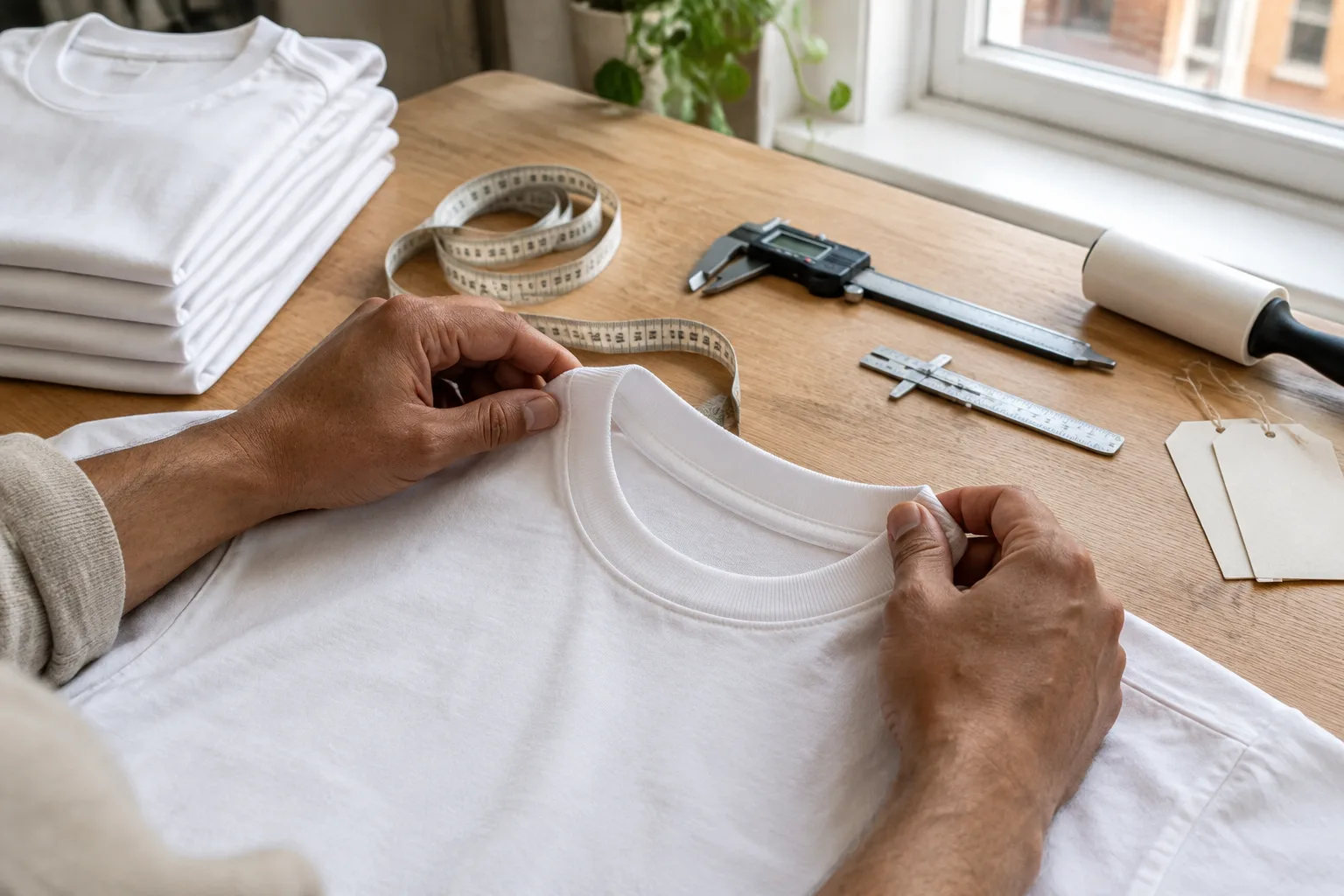
If you’re unsure on sizing, measure a tee you love. Pit‑to‑pit, shoulder width and back length give you a reliable spec sheet to compare across brands, avoiding guesswork with “boxy” or “classic” labels that vary widely.
What happens next
Expect more traceable cotton, recycled blends and lyocell creeping further into everyday basics. Heavier midweights will stick around because they simply look better on the body, and brands will keep refining collars for longevity — small change, big difference.
For most men, two weights cover everything. A 160–170gsm tee handles layering and office‑casual days; a 200–220gsm tee is your standalone with denim or pleated trousers. If you lean smarter, a structured tee under soft tailoring is a no‑brainer when a shirt feels too stiff.
Buy in multiples when you find your fit. Whites love rotation; your cost per wear plummets, and you avoid the panic wash before a night out. Factor in a little shrinkage margin, wash cool from day one, and you’ll keep silhouettes true to size.
As for the store shelf right now, those four benchmarks are useful: Sunspel’s Supima classic for heritage softness; CDLP’s 220gsm blend for modern drape; COS’s three‑pack for value rotation; Arket’s 170gsm for an affordable daily driver. Different routes, same goal — a white tee that earns its keep in 2026.
Related: Wax jacket history: how Britain’s wet‑weather icon took over
Related: Men’s leather jackets: the styles to know and how to pick
Why this matters
A great white T‑shirt plugs into nearly every UK wardrobe — from layering under a covert overcoat to anchoring relaxed weekend fits. Know your weights, pick a collar that holds, and buy a small rotation. Then style it with grooming dialled in and smart casuals or tracksuits that fit properly.
Common questions
- what weight gsm is best for a white t-shirt
- For daily wear, 160–180gsm balances opacity and comfort. Go 200–220gsm for a structured, standalone look, and 140–155gsm if you want a light undershirt.
- how much should a good white t-shirt cost in 2026 uk
- Expect roughly £25–£100 depending on fabric and brand. High‑street midweights start around £25, multi‑packs are strong value, and luxury long‑staple or lyocell blends reach £95–£100.
- is lyocell good for white t-shirts
- Yes. Lyocell (often branded Tencel) adds soft drape, moisture management and crease resistance. In midweight blends, it keeps structure while feeling cool against the skin.
- how should a white t-shirt fit men
- Shoulder seams on the shoulder point, sleeves hitting mid‑bicep, body skimming without clinging, and hem around mid‑fly. Boxy cuts run shorter with more room through the torso.
- how do i keep a white t-shirt white
- Separate whites, pre‑treat underarms, wash cool, and use oxygen‑based bleach when needed. Air‑dry to protect collars and hems, and store away from direct sunlight to prevent yellowing.
- are multi-pack white t-shirts worth it
- Yes, for rotation and value. Multi‑packs keep cost per wear low and let each tee rest between washes, which helps preserve collar shape and fabric.
- what’s the difference between pima and supima cotton
- Both are long‑staple cottons known for softness and durability. Supima is a trademarked American subset of extra‑long staple cotton with strict quality standards.
- can i wear a white t-shirt with tailoring
- Definitely. Choose a cleaner, higher crew neck and a midweight fabric so the tee holds shape under a jacket or overcoat without looking flimsy.
Sources
This article was written by The Good Cut using the sources listed above. Product mentions are editorial unless clearly marked as sponsored.