Haircuts & Hairstyles
How to grow long hair: what men should change first
Beardbrand’s growing-out guide makes the case for changing your routine, but its advice on shampoo, styling products and ingredients needs some context.

By Daniel Okafor, Grooming Editor
Published · 6 min read

Quick answerTo grow long hair, keep enough length between cuts, limit breakage and adapt washing and styling to your hair and scalp. Hair typically grows around 1cm a month, so reaching shoulder length from a short cut usually takes more than a year.
Men growing their hair out should rethink the routine that suited their short cut, according to a Beardbrand guide by Mike Lawson. Drawing on two attempts at longer hair, Lawson argues that understanding its natural behaviour matters more than trying to force it into a particular look.
The useful distinction is between growing hair and keeping the length you grow. Products cannot turn an ordinary growth cycle into express delivery, but gentler handling and appropriate conditioning can reduce breakage. Some of the guide’s broader claims about washing and ingredients, however, need separating from its author’s personal experience.
What happened
Lawson’s account describes a familiar growing-out problem: he wanted straight, flowing hair, but his own developed waves and volume. Attempts to control it with products and straightening ended in frustration and a haircut. His second attempt worked better, he writes, once he stopped treating his natural texture as something to correct.
That is a useful starting point for choosing a target hairstyle. A photograph shows somebody else’s curl pattern, density and styling, not a guaranteed destination for your own hair. Take reference pictures to a barber, but ask which elements are realistic: the length, the outline, the parting or the way it sits around the face.
The timescale also deserves honesty. Beardbrand puts average growth at roughly half an inch a month; a sensible general guide is around 1cm monthly, with individual variation. Getting from a short cut to shoulder length generally takes more than a year, and the starting length makes a substantial difference.
Curls complicate that visual judgement because the strand bends rather than hanging straight down. Hair can gain length without appearing to move much closer to your shoulders. Assess it in its usual dry state when deciding on a style, rather than assuming its stretched length is how it will look day to day.
There is also a commercial context: Beardbrand sells grooming products and recommends its own range in the piece. Lawson’s experience is useful first-person advice, but it is not a comparative product test or evidence that a particular purchase is necessary.
The background
Learn what your hair actually needs
Three characteristics help explain why identical routines produce different results. Curl pattern describes the shape of the strand; strand thickness distinguishes fine hair from medium or coarse hair; density describes how closely hairs are packed across the scalp. You can have fine strands and plenty of them, or coarse strands with lower density.
The numbered hair-typing system referenced by Beardbrand groups hair broadly into straight, wavy, curly and coily categories. It can provide useful vocabulary, but it is not a complete care prescription. Different patterns can appear on the same head, while colouring, heat damage and scalp condition also affect what works.
Growth takes place in the follicle beneath the skin. The visible shaft is keratinised material, so trimming its end cannot speed up activity at the root. A trim can remove split or weathered ends and improve the outline, but every centimetre cut away is length you will need to grow again.
Separate scalp cleaning from conditioning
Shampoo primarily cleans the scalp and removes oil, dirt and product residue. Conditioner helps lubricate the lengths, reducing friction and making detangling easier. An oily scalp and dry ends can exist together; treating the entire head as either greasy or dry can leave one problem unresolved.
Lawson describes using conditioner daily and shampoo roughly every three or four days. That is his routine, not a timetable everyone should copy. Fine hair, regular exercise, heavy styling products or a scalp condition may call for different washing frequencies. Daily shampooing is not inherently wrong if your scalp needs it and tolerates the formulation.
Conditioner washing, often called co-washing, suits some people, but ordinary conditioner is not necessarily an effective cleanser. Purpose-made cleansing conditioners differ too. If roots feel coated or the scalp becomes uncomfortable, reassess the routine rather than extending the gap between shampoos on principle.
For dry lengths, a leave-in conditioner can provide slip without being rinsed away. Rich balms may feel heavier, particularly on fine hair. Our guide to using beard balm beyond your beard considers that crossover; use a product suited to the job rather than assuming all conditioning products are interchangeable.
What people are saying
The testimony here is Lawson’s, not a survey of barbers or a clinical finding. His account makes a convincing case against repeating a short-hair routine unquestioningly, but several recommendations are better treated as options than rules.
Take his preference for lighter hold. Long hair worn loose often benefits from movement, and a heavy application of pomade can make it feel coated. Yet strong-hold gel is not automatically a mistake: it can help define curls. Some gels form a firm cast while drying that can be gently scrunched once fully dry.
Beardbrand also suggests salt spray for volume and texture. It can create grip, but hair that already feels rough or dry may not welcome more texture. Start with a small amount and judge the result after drying. A spray that gives fine, straight hair useful body may leave another head of hair feeling less manageable.
The guide’s blanket warnings about silicones and sulphates need more qualification. Silicones can improve slip and reduce friction; sulphates are cleansing ingredients used in many shampoos. Suitability depends on the whole formula, how frequently it is used and individual tolerance. Neither a higher price nor a natural-ingredient claim guarantees better results.
Finally, Lawson credits growing a beard with making his awkward hair stages feel easier. That is a styling preference, not a growth aid. If you take that route, facial hair needs its own upkeep; our guide to choosing a beard comb explains why the tool’s design matters alongside its material.
What happens next
Make the next appointment about shape
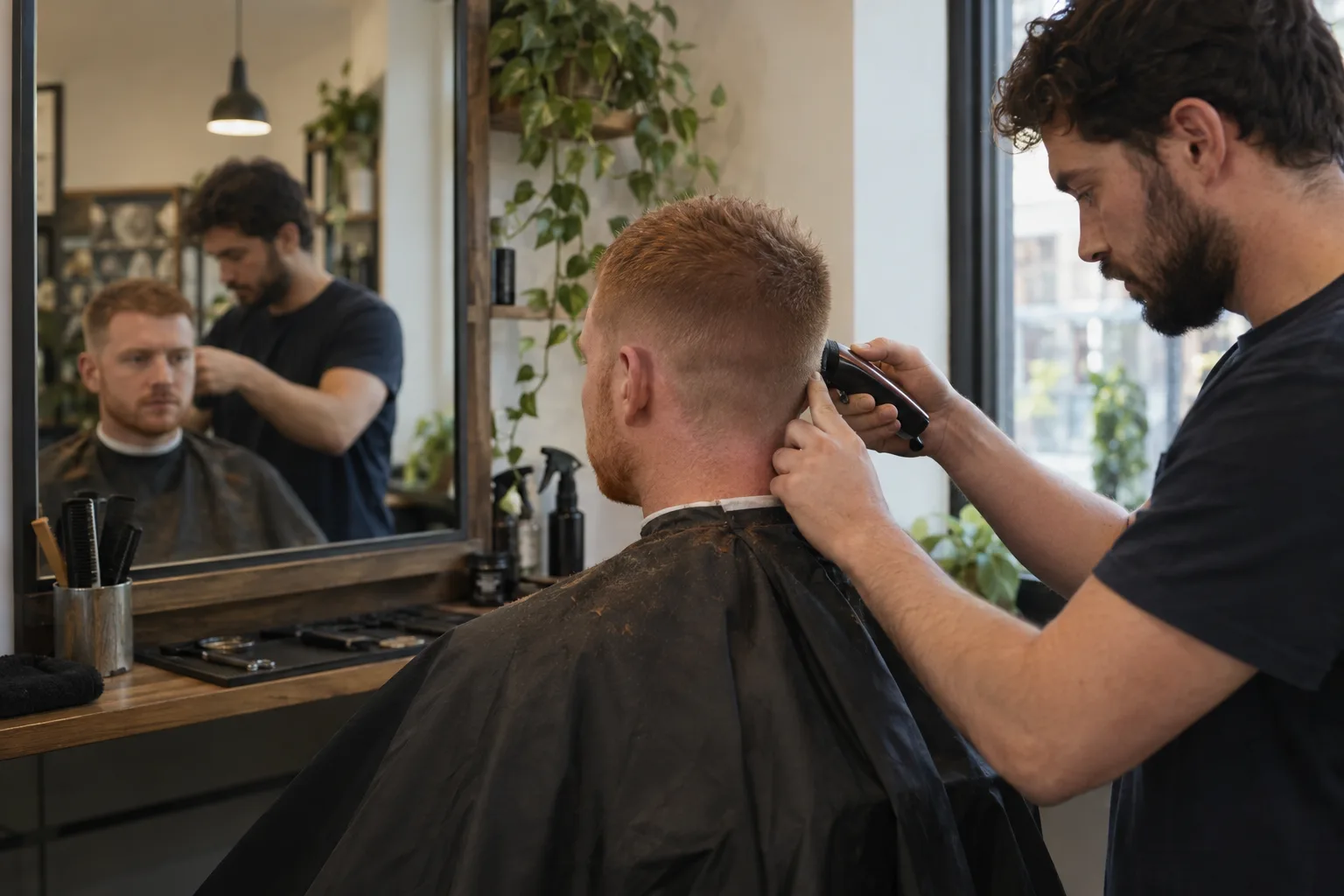
Tell your barber you are growing your hair long before the scissors come out. Explain which areas you want to preserve and ask what actually needs cutting. A shape adjustment might address a bulky outline without taking the same amount off everywhere. Bringing a photograph of the intended destination helps make that discussion concrete.
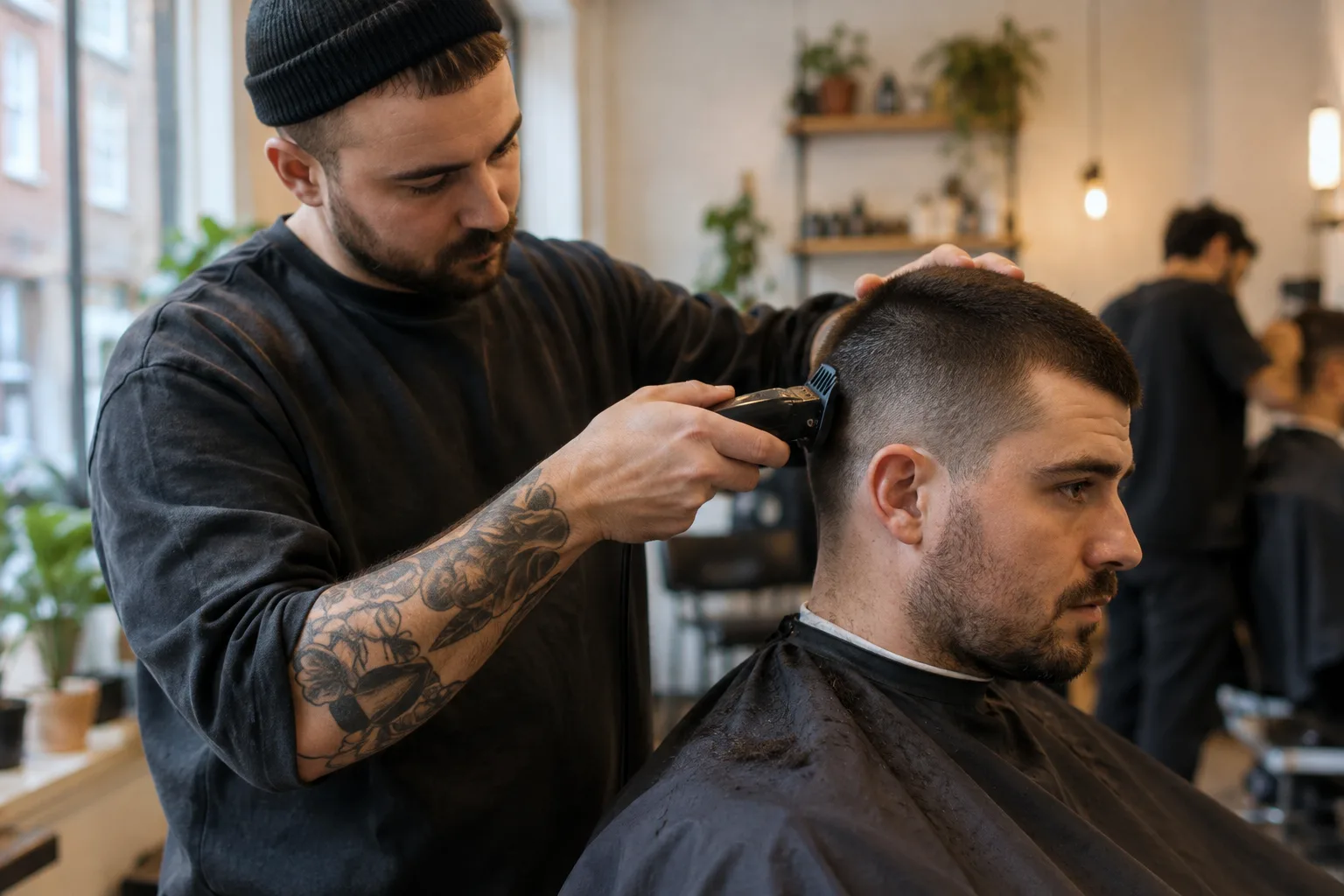
There is no universal interval for maintenance cuts. Book according to the condition of the ends and the shape you can live with, rather than automatically repeating your short-hair schedule. If you started with closely clipped sides and a longer top, expect an uneven transition: those sections began at different lengths.
Between appointments, reduce avoidable wear. Detangle carefully from the ends upwards rather than pulling through knots from the roots. Conditioner can help provide slip, especially for curls. Blot or gently squeeze out water instead of vigorously rubbing with a towel, and avoid repeatedly fastening longer hair into a tight style.
If you use a hairdryer, keep excessive heat out of the routine and use a suitable heat protectant. A dryer can help guide an awkward fringe or parting; repeatedly using high heat to erase your natural texture introduces a different maintenance commitment. Choose a finish you can reproduce on an ordinary morning.
For a neater overall appearance while the hair changes shape, facial hair is optional. A controlled stubble length is one alternative to a full beard; our guide to getting a consistent five o’clock shadow covers that approach without turning it into another growing project.
Change one part of your routine at a time so you can identify what helps. Persistent itching, redness, sudden shedding or patchy loss deserves advice from a pharmacist or GP rather than another styling purchase. Those are scalp or hair-health concerns, not simply the price of getting through an awkward length.
Related: Buzz cut: how short to go and what to ask your barber
Related: Ed Sheeran’s buzzcut: what he’s said about the change
Why this matters
For UK readers moving on from regular short back-and-sides appointments, the practical change is the brief you give your barber. Agree which length stays, which areas need reshaping and how much daily styling you will realistically do. Spend on a routine that suits your scalp before filling the bathroom with specialist products. If a tidier beard helps the overall look, our guide to choosing a beard comb offers a useful starting point, but facial hair remains a choice, not an entry requirement.
Common questions
- how long does it take men to grow shoulder-length hair?
- Growing from a short cut to shoulder length usually takes more than a year. Scalp hair typically grows around 1cm monthly, but your starting length, growth rate and curl pattern affect the timescale and visible progress.
- does trimming hair make it grow faster?
- No, trimming does not speed up growth at the root. It removes length and can tidy damaged ends or improve the shape while the rest grows.
- how often should men wash long hair?
- Wash according to your scalp, activity and product use rather than a fixed long-hair rule. Daily shampooing can suit some people; others need it less often. Dry ends do not necessarily mean your scalp needs less cleaning.
- can i wash my hair with conditioner instead of shampoo?
- Conditioner washing suits some routines, but it does not reliably replace shampoo for everyone. Ordinary conditioner may not remove accumulated oil or styling residue effectively, and purpose-made cleansing conditioners vary.
- are silicones and sulphates bad for long hair?
- Neither ingredient group is automatically bad for long hair. Silicones can improve slip, while sulphates provide cleansing. The complete formulation, frequency of use and your hair and scalp’s response matter more than a blanket ban.
- can i use strong-hold gel on long curly hair?
- Yes, strong-hold gel can help define long curls. Some gels dry into a firm cast that can be gently scrunched when fully dry; strong hold does not necessarily mean a permanently stiff finish.
- what should i tell my barber when growing my hair out?
- Tell your barber you want to preserve length and discuss exactly which areas need reshaping. Bring a reference photograph and agree what can realistically work with your curl pattern, density and daily styling routine.
About the writer
Daniel OkaforGrooming Editor · Manchester
Tests the products so you don't have to, from pomades to SPF.
More from DanielSources
This article is original reporting by The Good Cut based on the sources above. Last reviewed 8 October 2026. Product mentions are editorial unless clearly marked as sponsored.