Haircuts & Hairstyles
Faux hawk haircut: the wearable punk cut, explained
How the faux hawk works in 2026, who suits it, and the versions worth asking your barber for.
By The Good Cut Editorial Team
Published · Updated · 6 min read
Quick answerA faux hawk keeps the back and sides short with a longer, textured top shaped into a soft ridge. Ask your barber for a fade or tapered sides and leave enough length on top to style upward.
Call it the mohawk’s more civilised sibling: the faux hawk carries attitude without the office drama. It’s defined by short back and sides and a longer, textured top, but the edges are softer and the height is optional. Here’s how to ask for it, style it, and make it suit your face.
Crucially, the faux hawk is a shape, not one fixed haircut. You can go tight and faded, keep things mid and wearable, or push the length up top and disconnect the sides for something bolder. The right version depends on your hair type, face shape and how much time you’ll give it each morning.
What happened
This is the practical state of play for faux hawks in UK chairs right now: shorter sides, length through the centre, and texture doing the heavy lifting. You’ll want enough top length to nudge upwards into a ridge, but not so much that it flops by lunch.
The low‑fade version
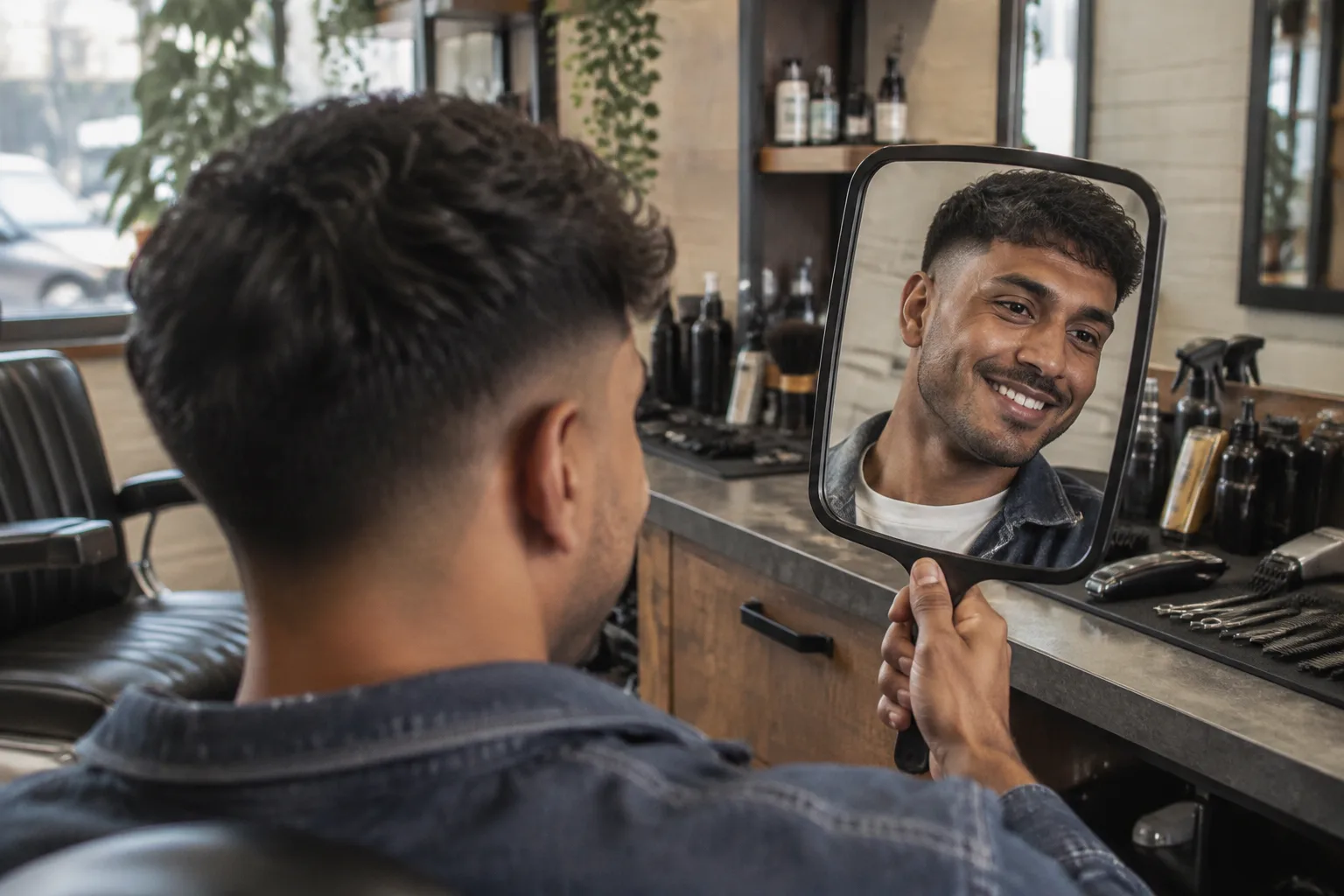
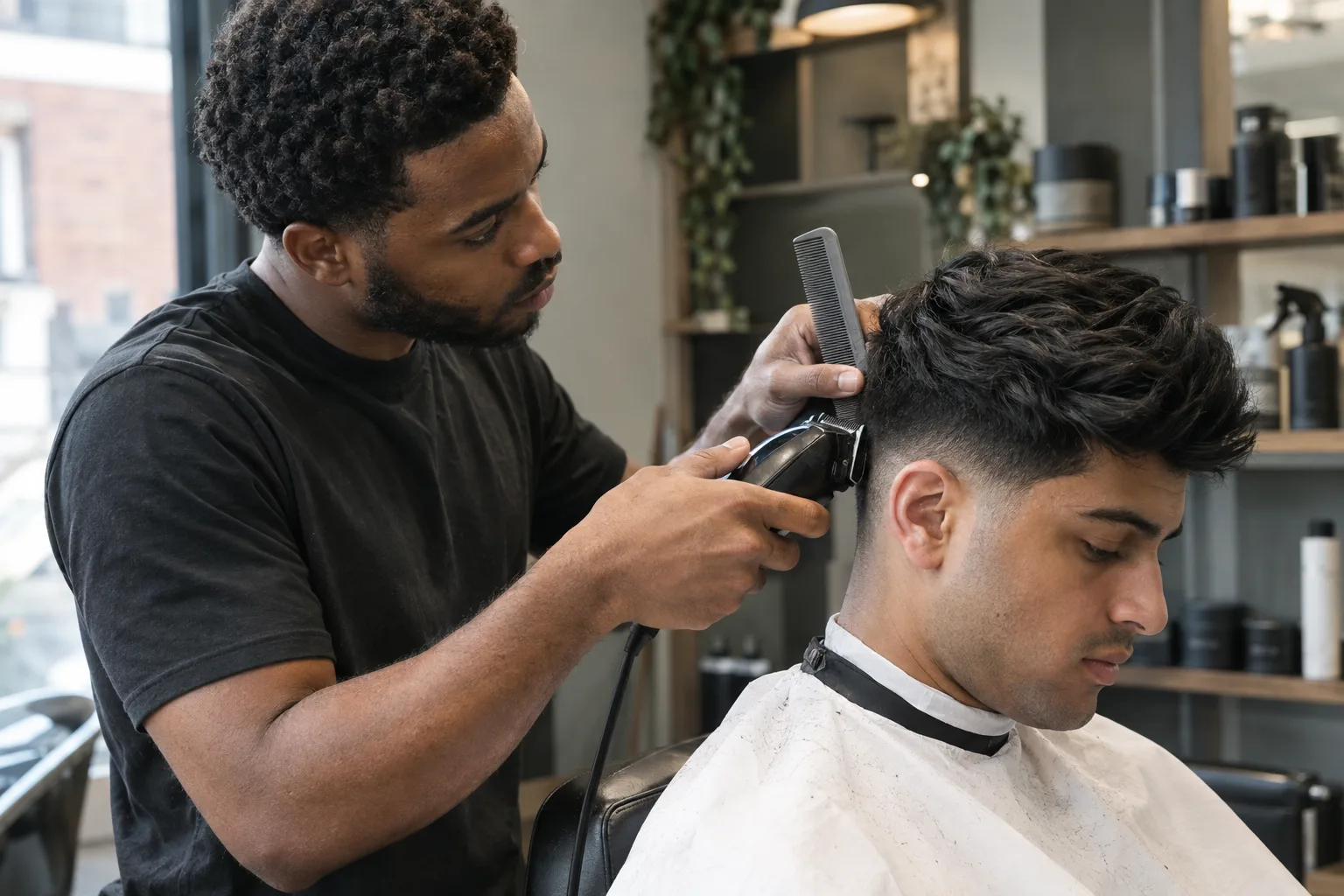
If you like contrast, ask for a low or mid fade that runs close to the skin at the bottom and blends up to a short guard near the temples. Keeping the weight tight below the parietal ridge pushes focus to the centre, which is the whole point of the style.
How to request it: mention a fade that starts at 0 or 0.5 and blends to around a 2 at the widest point, then keep the top layered and textured so it grips product and stands up.
Short and office‑friendly
Prefer minimal faff? Keep the sides neat with a clipper taper and maintain a short, choppy strip of length through the middle. This version reads smart from the front but still gives you a subtle ridge when you rough it up.
How to request it: ask for a tidy taper on the sides and back with scissor work up top, keeping the front slightly longer than the crown for easy lift.
Shaggy or curly take
Wavy or curly hair makes a great faux hawk because natural movement creates height without obvious spikes. Leaving the top at roughly four inches gives room to form a loose ridge while the sides stay slimmer for contrast.
How to request it: keep the sides tight enough to define the silhouette, then ask for internal texturising up top so the ridge doesn’t collapse as curls relax through the day.
Mid‑length balance
A medium faux hawk is the diplomatic choice: enough top length to style up or forward, with sides that aren’t ultra‑tight. It’s easy to wear, and it grows out tidily if you decide to switch to a quiff or textured crop later.
How to request it: suggest clipper guards around 3–4 at the sides for a softer blend, with layered length through the centre and fringe left slightly longer for shape.
Long and disconnected
If you want more drama, disconnect the top from the sides and preserve serious fringe length. It’s higher maintenance but delivers that sharp profile when blown upwards and back.
How to request it: keep the sides short but not extreme, leave the top clearly heavier than the sides, and ask for dry texturising so the hair interlocks and holds.
Undercut option
For a bolder edge, pair a tight undercut with a choppy, longer top. The silhouette looks strong from every angle, but you’ll need to style it most mornings to keep the ridge purposeful rather than accidental.
How to request it: ask your barber to separate the top from the sides entirely, with a clean line at the disconnect and a couple of inches minimum across the crown.
The background
The faux hawk sits between punk lineage and practical grooming: it borrows the central ridge of a mohawk but keeps the sides wearable, meaning no shaved strip and no strict dress‑code problems.
It’s a balancing act for face shapes. If your face is long or rectangular, avoid towering height and very tight sides, which can stretch the silhouette. If your face is round or heart‑shaped, extra height on top and shorter sides slim and lengthen the look.
Hair type matters, too. Fine, straight hair needs product with grip and some heat to coax height, while thick hair benefits from weight removal and matte finishes to stop the ridge dropping. Wavy or curly hair already brings volume, so side control is your priority.
Maintenance should match your appetite for effort. Short or mid‑length versions need a quick ruffle and go; disconnected and longer takes ask for blow‑drying and product layering. If speed is key, go shorter; if you’ve time and like drama, add length.
If you’re working with dense hair and want options beyond a faux hawk, our guide to the best hairstyles for men with thick hair in 2026 lays out shapes that control bulk without losing movement.
What people are saying
Barbers are broadly aligned on one point: prep beats product. A quick blow‑dry from damp, using your fingers to lift the front, creates a base that needs less paste later. Finishing with a brief cool shot helps the shape stay put without setting it rock‑hard.
Keep product light and matte for a modern finish. A pea‑sized amount of clay warmed in your palms will add texture and hold without the crunchy spikes that date the look. For hair types that struggle for lift, use a salt spray first, then clay.
If you’re assembling a simple kit, pair a sea salt spray for root lift with a matte clay for definition. We’ve tested both categories extensively; start with our best sea salt sprays for men and find a finish that suits your hair’s density.
Curly or wavy? Work a salt spray through damp hair, diffuse or air‑dry while pinching the centre upwards, then detail with a matte paste. Straight and fine? Blow‑dry upward with tension at the roots, then use clay and a light mist of hairspray if you need extra backbone.
Longer tops respond well to product layering. Apply a small amount of styling cream or lightweight paste to damp hair, blow‑dry into shape, then refine with clay once dry. If you’re wearing a disconnected version, keep the sides flat with a touch of grooming cream to avoid puffiness.
If you prefer low‑shine products but want pliability, clay is a smart first buy. Our breakdown of the best hair clays for men in 2026 matches formulas to hair type so you’re not guessing at the till.
What happens next
Book tidy‑ups every three to five weeks if your cut involves a fade; crisp edges make the ridge read clean rather than scruffy. If your sides are left longer, you can stretch to six or seven weeks, trimming the top as needed to maintain proportion.
Growing out is straightforward: relax the ridge into a textured crop or a short quiff as length evens out. A mid‑length faux hawk transitions particularly smoothly because the sides aren’t extreme and the fringe already carries shape.
If you decide to push longer, maintain the centre line with regular dusting cuts and switch to lighter products that won’t weigh the ridge down. Our guide to hair products for men with long hair covers how to keep length healthy while you wait.
For anyone flirting with a drastic reset, a short faux hawk can be a decent halfway house: more presence than a classic crop, less severity than a full chop. If you’re considering the opposite end of the spectrum, see how we approached a dramatic crop in our take on the Erling Haaland short cut for perspective on silhouette and maintenance.
Finally, talk plainly at the chair. Mention how you style your hair on weekdays, how much height you actually want, and the products you’ll realistically use. A good barber will tune the fade height, top length and texture so your faux hawk looks intentional on day one and forgiving on day 30.
Related: Taper haircut guide 2026: what it is and how to wear it
Related: Tom Hardy haircut: the classic textured cut that suits midlife
Why this matters
The faux hawk is one of those rare cuts that reads sharp at work and fun at the pub, provided you match the sides and height to your face and hair type. If you want low effort, ask for a short, textured top and a soft taper; if you like drama, go for a disconnect and learn a quick blow‑dry. For extra lift without stiffness, a salt spray plus matte clay is a safe bet; our guide to the best sea salt sprays for men is a sensible place to start.
Common questions
- what is a faux hawk haircut
- A faux hawk is short back and sides with a longer, textured top styled into a soft ridge. It nods to a mohawk without shaved strips or extreme height.
- how do i ask my barber for a faux hawk
- Say you want short sides and back, length through the centre, and texture on top to style upward. Mention a low or mid fade, or guards 3–4 for softer sides.
- does a faux hawk suit round faces
- Yes. Extra height on top and shorter sides help elongate a round face. Keep the ridge defined and avoid heavy, flat styling that widens the silhouette.
- what products work best for a faux hawk
- Use sea salt spray for lift, then a matte clay for hold and texture. For longer tops, layer a light cream before blow‑drying, then refine with clay.
- how long should the top be for a faux hawk
- You need enough to nudge into a ridge; around two to four inches works for most. Curly or shaggy versions benefit from roughly four inches for stability.
- how often should i get a faux hawk trimmed
- Every 3–5 weeks keeps fades sharp and the top in proportion. If your sides are longer and tapered rather than faded, you can push to 6–7 weeks.
- can i do a faux hawk with curly hair
- Absolutely. Keep the sides neat for contrast, add internal texture on top, and use salt spray plus matte paste to lift the centre without stiffness.
- how do i style a faux hawk quickly in the morning
- Blow‑dry from damp while lifting the front with your fingers, then work in a pea‑sized amount of matte clay. A brief cool shot helps lock the shape.
Sources
This article was written by The Good Cut using the sources listed above. Product mentions are editorial unless clearly marked as sponsored.