Grooming & Skincare
Best hair clay for men 2026: pick by hair type
Clay, fiber or pomade? The right choice depends on your hair density, texture and the finish you’re after.
By The Good Cut Editorial Team
Published · Updated · 6 min read
Quick answerThere isn’t one best hair clay for every man. Fine hair usually does best with a lightweight dry wax, while medium‑to‑thick hair suits true clays, fibers or clay pomades depending on the finish you want.
If you’re wrestling with clay every morning and still ending up with a flat, slightly greasy helmet by lunch, it’s probably not your technique. In 2026, men’s styling aisles are packed with clays, fibers and pomades that sound similar but behave very differently — and your hair type calls the shots more than the label does.
Here’s the good news: once you match format to hair, everything gets easier. We’ve broken down what each product actually does, where it shines, and the kind of hair it suits — with current market examples — so you can buy once and style right.
What happened
Men’s hair clays remain big business in 2026, with shelves full of matte options promising texture and control. Alongside long‑standing tins known for set‑and‑forget hold, newer arrivals lean into specific use‑cases — thick hair, thin hair, even anti‑dandruff claims — reflecting how brands now target density and scalp needs rather than a one‑size‑fits‑all clay.
At the strong‑hold end, barbershop‑style clays continue to pitch all‑day structure in a genuinely matte finish and easy rinse, while others lean semi‑matte for guys who want a touch of movement. Some formulas are positioned for thicker manes that fight frizz, while lightweight blends target finer hair that collapses under heavier clays. There are also clay‑pomade hybrids promising the texture of clay with the workability of pomade, plus budget options that keep the basics — hold and matte — without premium pricing.
Beyond clay, fibers still have a loyal following for separated, textured looks on medium‑to‑thick hair, and water‑based pomades cover the shine crowd without the multi‑shampoo removal of traditional oil‑based jars. A standout for fine hair is the “dry wax” category — essentially a low‑weight, matte texturiser — created to lift without smothering density.
The background
Think of formats as tools, not trends. Clay, typically powered by kaolin or bentonite, roughens the hair surface slightly, creating believable fullness with a matte finish that reads natural in daylight and on camera. It’s great on medium‑to‑thick hair because there’s enough strand mass for the clay to grip without turning rigid.
Fiber is stringy by design. It grips and separates to deliver stronger hold with a near‑matte finish, making it a good fit for thicker hair that wants definition without obvious shine. On fine hair, that same grip can clump and kill lift.
Pomade comes in two families: oil‑based (serious shine, serious staying power, serious removal) and modern water‑based (controlled shine, easier wash‑out). Both skew towards neater, comb‑driven styles. Fine hair plus wet‑leaning products is usually a bad match because weight defeats volume.
Then there’s dry wax — a lighter, almost powder‑adjacent wax that adds grit and air without moisture. This niche solves a common fine‑hair complaint: everything else feels too heavy. Used sparingly on dry hair, it creates lift that doesn’t telegraph product.
If you’re working with very thick hair that needs taming, strong clays and high‑grip fibers make sense. If you prefer looseness and movement, a clay‑pomade hybrid gives you texture you can restyle at 4pm without a sink.
Application basics that actually matter
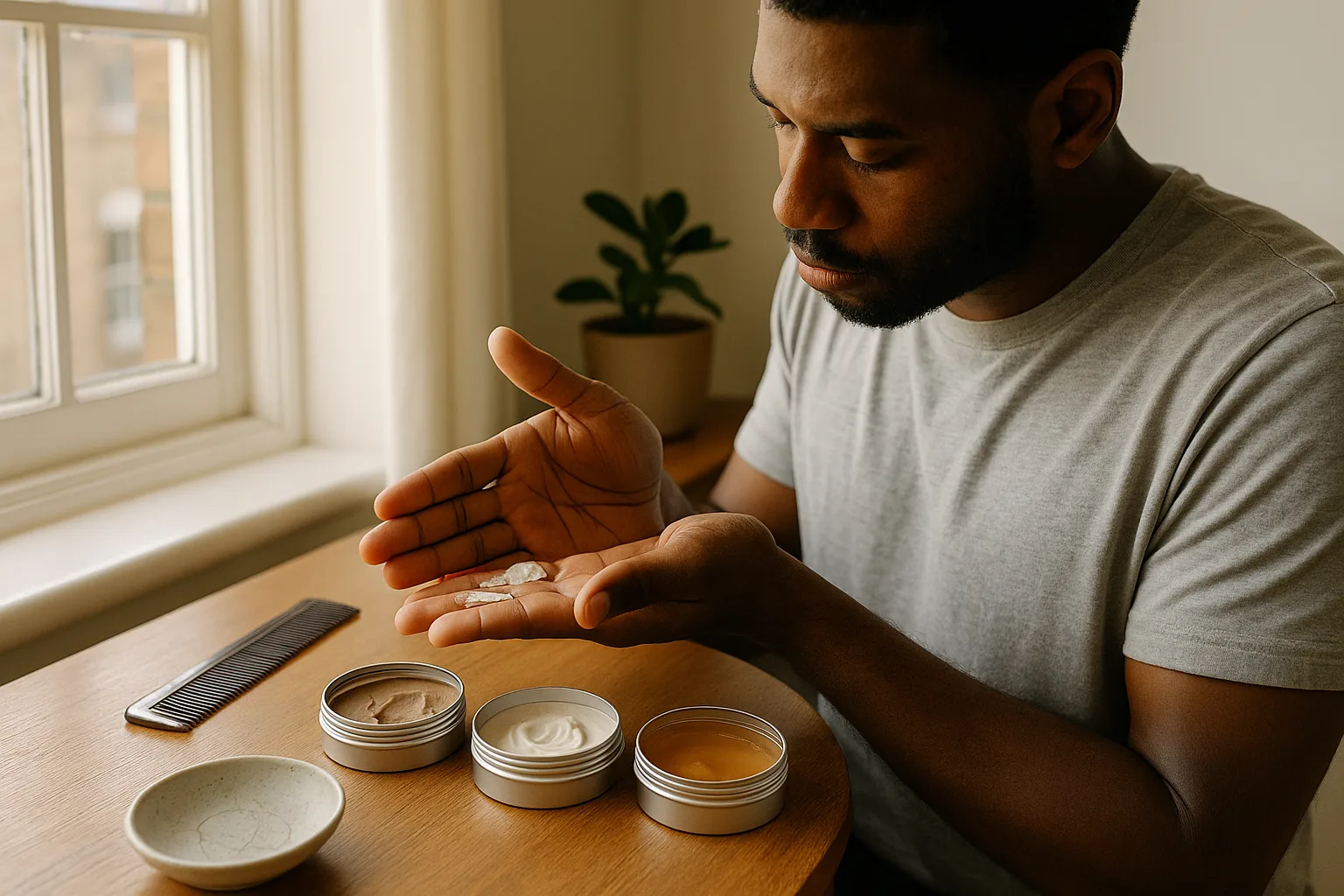
- Start tiny. A pea of clay or dry wax, warmed to clear in your palms, beats a thumb‑scoop every time.
- Apply to dry hair for true matte and maximum texture; apply to slightly damp hair for a softer set.
- Build in layers. Add a whisper more only if you need it; overloading is why styles collapse.
- Water‑based products usually rinse in one shampoo; oil‑based pomades often need multiple washes.
What people are saying
Barbers consistently flag dosage as the number‑one mistake — men simply use too much — which explains why many give up on clays after a few tries. A second common pitfall: expecting a clay to behave like hairspray. Matte products are about texture and thickness; if you want helmet‑level hold, finish with a light mist of spray rather than stacking more clay.
On hair type, there’s broad agreement. Fine or limp hair tends to thrive on lighter, low‑moisture formulas (dry wax) that support lift, not smother it. Medium hair is the most forgiving — true clays, fibers and clay‑pomades can all work depending on whether you want ultra‑matte, natural‑matte or a touch of sheen. Thick or coarse hair benefits from higher hold and grip; it can also handle heavier textures without looking weighed down.
Product choice also intersects with length. For longer styles, a firmer clay can keep mid‑lengths in line without wet gloss, but many men with long hair prefer to combine a lighter matte product with a pre‑styler, like a sensible sea salt spray, for lift before finishing with clay.
Scalp comfort is part of the 2026 conversation too. Water‑based clays and pomades are popular for single‑shampoo wash‑out, which helps if you’re styling daily. Some clays are marketed with anti‑dandruff positioning, but if flaking persists, it’s worth separating product build‑up from a true scalp condition and rotating in a gentle cleanse.
For curl patterns, matte formats can enhance texture without crisping curls. If your aim is looser waves with definition, use a pre‑styler and then a small amount of clay‑pomade to finish — a technique we’ve seen work on anyone chasing controlled, natural‑looking movement rather than crunchy ringlets, as in our look at Timothée Chalamet’s curls on the runway.
What happens next
Here’s how we’d shop in 2026.
-
Fine or limp hair: we rate dry wax formats for true lift with no shine. Use less than you think, on dry hair, and resist topping up. If you want extra root height, blow‑dry first, then feather in product.
-
Medium hair: pick finish first, then hold. True clays for ultra‑matte texture; fibers for stronger, separated definition; clay‑pomades if you like to restyle. A single water‑based tin will see you through office to evening without stickiness.
-
Thick or coarse hair: reach for higher‑hold clays or fibers. They grip enough to keep density in line and can smooth frizz without obvious product shine. If you prefer a looser, natural‑matte look, a clay‑pomade strikes the balance.
-
Longer hair: firmer matte clays can control mid‑lengths, but don’t underestimate prep. A quick salt‑spray blast and blow‑dry does half the work; finish with a fingertip of clay. Our guide to long‑hair products that actually help covers the combos that don’t fight each other.
-
Short crops and fades: you don’t need much. A fingertip of fiber or clay worked through the top adds texture without mess. See how a dramatic crop reads cleaner with matte texture in our take on the Haaland short cut.
Ingredient‑wise, kaolin and bentonite are the workhorses for matte clays; beeswax and plant waxes add structure; water‑based carriers make clean‑up easy. If you’re scent‑sensitive, look for unscented or lightly fragranced jars — plenty exist now without the barbershop cologne vibe.
Market‑wise, you’ll find:
- Strong‑hold matte clays engineered for set‑and‑forget days.
- Thick‑hair‑focused clays pitched at slick‑back control and frizz management.
- Budget clays that keep to the brief — matte and hold — at sensible prices.
- Semi‑matte clays for men who want texture without dead‑flat hair.
- Thin‑hair‑leaning clays that prioritise volume and fullness.
- Niche options with anti‑dandruff positioning for those who need it.
The bottom line? Match product to your hair’s density and behaviour, then learn the smallest workable dose. Do that, and almost any modern matte product becomes an ally rather than something you fight.
Related: Are electric toothbrushes better? Dentists say yes — here’s why
Related: How often should you replace your toothbrush? The facts
Why this matters
Buying the right styling product saves time, money and your hairline’s patience. UK shelves are crammed with clays that sound identical, but hair type decides what actually works. Start with density: fine hair often needs dry wax; medium‑to‑thick can pick between true clay, fiber or clay‑pomade. If you’re growing it out, pair a salt spray with a fingertip of clay for believable fullness, as we explain in our guide to long‑hair products. Ask your barber to show you dosage — it’s the real difference between texture and straw.
Common questions
- what does hair clay do for men’s hair
- Hair clay adds matte texture and a thicker look by slightly roughening the hair surface. It suits medium‑to‑thick hair best and photographs naturally without shine.
- which is the best hair clay for fine hair
- Most fine hair prefers lightweight dry wax over heavy clay. It adds grip and lift without the moisture or weight that can flatten volume.
- is fiber better than clay for thick hair
- For thick hair, both work. Fiber gives stronger, separated definition; clay gives drier, fuller texture. Choose based on whether you want piece‑y separation or uniform matte volume.
- can i use hair clay on long hair
- Yes. Use a small amount to control mid‑lengths and reduce frizz. For best results, prep with a blow‑dry and a light salt spray, then finish with clay.
- does pomade work on fine hair
- Usually not well. Wet‑leaning pomades add weight and shine that can collapse fine hair’s volume. Dry, lightweight formats tend to perform better.
- how much hair clay should i use
- Start with a pea‑sized amount, warmed until clear in your palms. Apply to dry hair and layer in tiny increments only if needed.
- will hair clay wash out easily
- Water‑based clays typically rinse out with one shampoo. Traditional oil‑based pomades can take multiple washes and may leave residue.
- can hair clay cause dandruff
- Clay doesn’t cause dandruff itself, but product build‑up can mimic flaking. Rinse thoroughly, clarify occasionally, and consider targeted formulas if you’re prone to flakes.
Sources
- FashionBeans: 14 Best Hair Clay For Men – Get More Definition for 2026 | FashionBeans
- looksmaxman.com: Best Hair Styling Products for Men 2026: By Hair Type | Looksmax Man
- FashionBeans: Best Men’s Hair Products: Modern Guide For 2026 | FashionBeans
This article was written by The Good Cut using the sources listed above. Product mentions are editorial unless clearly marked as sponsored.