Haircuts & Hairstyles
Best sea salt sprays for men: buy for your hair, not the hype
Sea salt spray can give a haircut definition without a glossy finish, but price and a promising bottle only tell half the story.
By The Good Cut Editorial Team
Published · 5 min read
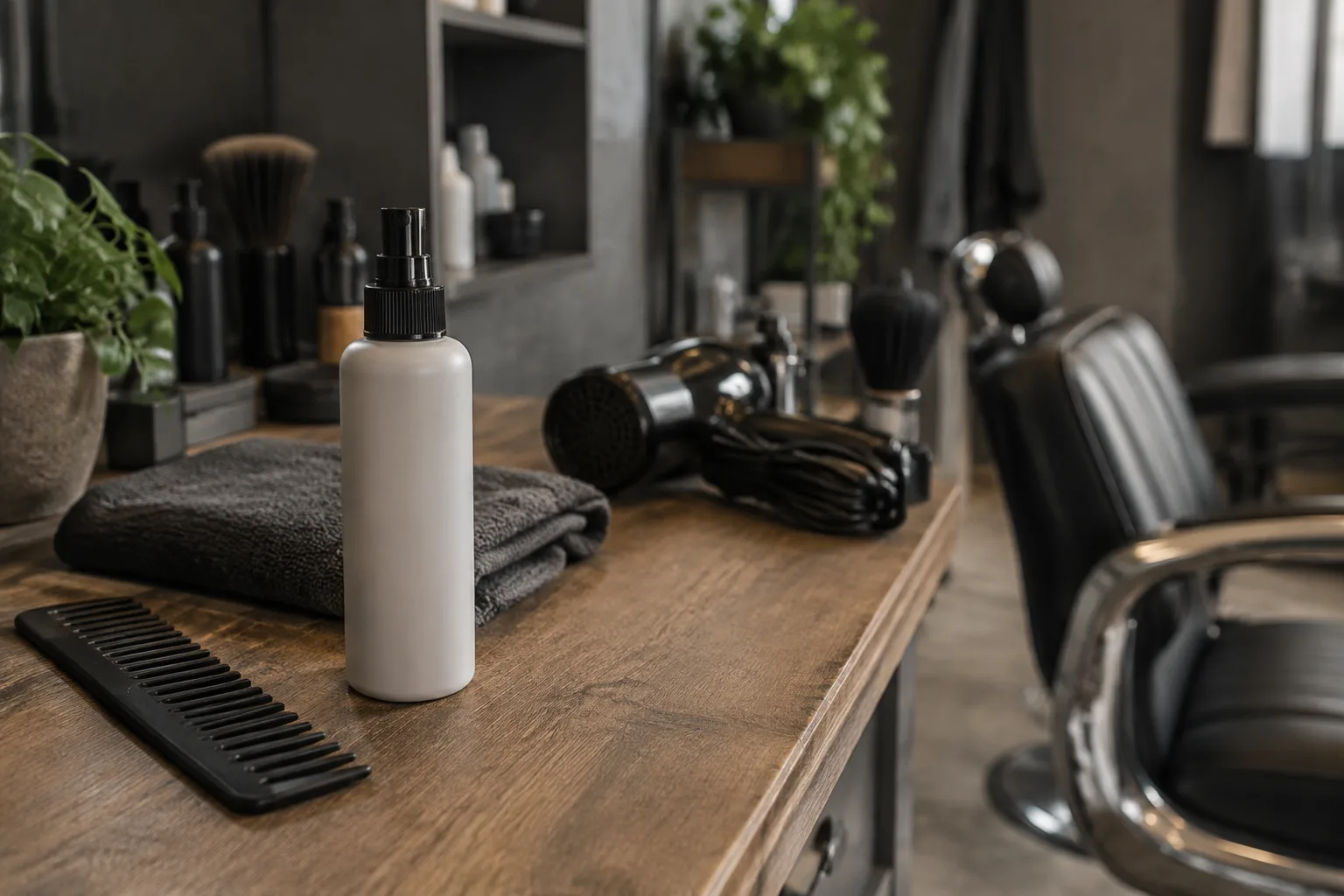
Quick answerThe best sea salt spray for men depends on hair texture, length and the finish you want. Choose it for grip and separation rather than guaranteed strong hold, and apply sparingly to avoid stiffness or dryness.
Men shopping for sea salt spray face a surprisingly wide choice for a product with a straightforward job: giving hair more texture and grip. Options include inexpensive 150ml and 200ml bottles alongside larger, pricier formulas containing oils and proteins. The useful distinction is not how convincingly the packaging promises a seaside finish, but how the product fits your haircut.
Our take: treat salt spray as a styling tool, not an automatic upgrade. It makes sense when a fringe falls too neatly, a loose style needs separation or freshly washed hair feels slippery. If your hair already feels rough and thirsty, adding more grit may solve precisely the wrong problem.
What happened
The choice goes beyond the ticket price
The category brings together products such as Fudge Urban Rough Up, Toni & Guy Sea Salt Texturising Spray and Brickell Men’s Texturising Sea Salt Spray. Their bottle sizes and formulations offer useful starting points for a buying decision, without pretending that one spray will behave identically on every head.
At indicative prices of £6 for Fudge Urban’s 150ml bottle, £5 for Toni & Guy’s 200ml and £18 for Brickell’s 237ml, the comparison changes when you account for volume. Those figures work out at roughly £4, £2.50 and £7.59 per 100ml respectively. Prices fluctuate, so check the current ticket rather than treating these as guaranteed offers.
On that arithmetic alone, our starting point for a budget-conscious first purchase would be the 200ml Toni & Guy bottle. That is a value judgement about quantity and price, not a claim that it outperforms everything else. A cheap bottle that leaves your hair unpleasant to touch is still money wasted.
Fudge Urban’s Rough Up has a coconut scent, making fragrance another consideration if you dislike scented styling products. Brickell includes argan oil, vitamin E and hydrolysed proteins. Those are meaningful formulation differences, but an ingredient list cannot tell you exactly how soft, heavy or sticky the finished product will feel.
Before buying, separate strand thickness from density: fine hair describes individual strands, while low density means fewer hairs across the scalp. You can have plenty of fine hair. Our guide to choosing a haircut around your hair’s natural texture explains why the starting material matters more than copying a finished look.
The background
Texture is not the same thing as hold
Salt sprays leave material on the hair as their water-based carrier dries, changing its feel and helping create separation. Depending on the formula and how you dry it, that can make hair appear fuller. It is a temporary styling effect, not new growth or a permanent increase in strand thickness.
Hold is a separate question. A spray might help a fringe sit less flat without keeping a tall quiff upright throughout the day. Other ingredients in the formula influence staying power; the words “sea salt” alone do not tell you how firmly a product will set. Look for the stated hold level, then judge it against your hairstyle.
Straight hair can gain a less uniform finish, but salt spray will not reliably turn naturally straight strands into curls. Existing bends and waves are easier to emphasise through scrunching. Hair length, weight and drying technique all affect the result, which is why using more product is not always the answer.
Dry or bleached hair deserves particular caution because extra roughness can make tangles and brittleness more noticeable. Conditioning ingredients may improve feel, but their presence is not permission to keep layering. If hair becomes harder to detangle, reduce the amount or try a different type of styler.
Longer lengths also need a different approach from a short fringe. Ends have undergone more washing, brushing and environmental exposure than newer hair near the scalp, so avoid repeatedly saturating them. Our advice on what to change when growing long hair puts conditioning and manageable shape ahead of simply accumulating length.
What people are saying
Our view: stop asking one bottle to do everything
We rate sea salt spray most highly as an optional preparation step. For someone who wants a loose, touchable finish, it may be enough on its own. For a more controlled shape, it can supply grip before a small amount of paste or another finishing product. Those are different jobs, not competing promises.
We would also resist choosing solely by labels such as “for men”, “professional” or “natural”. None establishes how much product your hair needs or whether your scalp will tolerate it. Fragrance and botanical ingredients can still irritate sensitive skin. If application causes itching, burning or redness, stop using it rather than assuming discomfort means it is working.
The applicator deserves more attention than it usually gets. A broad mist makes small doses easier to distribute; a narrow jet can concentrate product in one patch. Follow the bottle’s spraying-distance instructions, keep it away from your face and avoid inhaling the mist. Uneven application can make one section stiff while the rest stays flat.
Finally, do not confuse separation with neglect. A textured haircut still needs an intentional outline and a length that your hair can support. If every morning involves fighting a heavy fringe or forcing a stubborn growth pattern backwards, the better purchase may be a haircut adjustment rather than another styling product.
What happens next
Give the first application a fair trial
Start on towel-dried hair unless the product instructions specify otherwise. Blot rather than vigorously rubbing, then apply a small amount across the sections you actually want to style. For a short cut, there is little reason to soak the closely clipped sides. Work it through with your fingers before deciding whether you need more.
Choose the drying method to match the result. Air-drying with occasional scrunching can encourage existing waves; blow-drying while lifting at the roots can help build volume. Use a moderate heat setting and suitable heat protection when needed. A salt spray should not be assumed to protect against heat unless it explicitly says so.
Let the hair dry fully before adding a finishing product. Assess what is missing: more definition, stronger hold or simply a better shape. If you want extra control, work a small amount of styler between your hands and distribute it gradually. Adding several products while the hair is still wet makes the culprit harder to identify when it feels overloaded.
At your next appointment, ask the barber to demonstrate the quantity and hand movements on your own cut. If you are considering going substantially shorter, our guide to buzz-cut lengths and what to ask your barber is a useful reality check: very close-cropped hair offers little length for a texture spray to manipulate.
Why this matters
For UK readers, the sensible move is to spend according to the job, not the promise on the bottle. Ask your barber where your cut needs grip and where it needs softness, then try a modest amount before committing to daily use. Our guide to haircuts that work with your natural texture is a useful starting point. Getting the shape right can reduce how much styling you need; salt spray should help you manage that shape, not make your morning more complicated.
Common questions
- what does sea salt spray do to men's hair?
- Sea salt spray adds texture, grip and separation, which can make hair appear fuller. The result is temporary styling, not new hair growth or a permanent change to your strands.
- do you put sea salt spray on wet or dry hair?
- Towel-dried hair is a useful starting point unless the product instructions say otherwise. Apply sparingly, distribute with your fingers and let the hair dry before deciding whether to add more.
- does sea salt spray make straight hair curly?
- Sea salt spray will not reliably turn naturally straight hair curly. It can add separation and help emphasise existing bends or waves, especially when you scrunch the hair as it dries.
- can sea salt spray dry out your hair?
- Sea salt spray can leave hair feeling dry, rough or stiff, especially if overapplied. Be cautious on already dry or bleached hair, and reduce use if detangling becomes more difficult.
- can sea salt spray replace hair paste?
- It can be enough for a loose finish, but it does not automatically replace paste for stronger control. Let your hair dry, then add a small amount of finishing product if the style needs more hold.
- is expensive sea salt spray worth it?
- A higher price alone does not establish better results. Compare bottle size, formulation and the finish you need; conditioning ingredients may interest you, but they cannot guarantee how a product will feel on your hair.
- does sea salt spray work on a buzz cut?
- A very close buzz cut has little length for sea salt spray to manipulate. It is more useful when there is enough hair to lift, separate or shape, such as a longer fringe or top.
Sources
This article was written by The Good Cut using the sources listed above. Product mentions are editorial unless clearly marked as sponsored.