Culture & Lifestyle
Genesis GV60 Magma: 650PS EV does 0–62mph in 3.4sec
Korea’s luxury upstart wants Porsche money for a family‑size EV with a track trick up its sleeve. Here’s what it is and why it matters.
By The Good Cut Editorial Team
Published · 6 min read
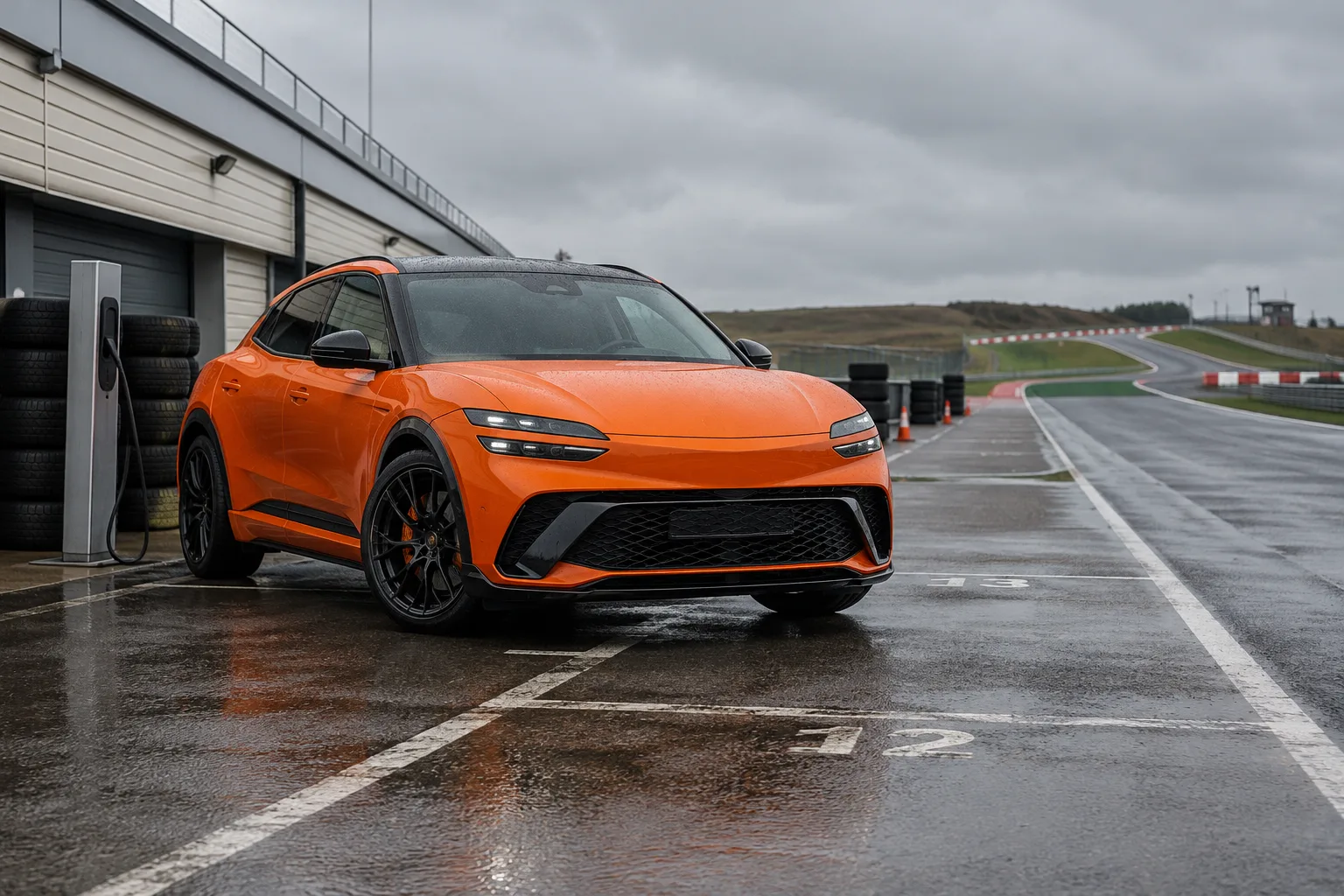
Quick answerGenesis has unveiled the GV60 Magma, a 650PS performance EV priced at £75,100. The company claims 0–62mph in 3.4 seconds, a 164mph top speed and up to 264 miles of range.
Genesis has brought the noise—artificially and otherwise—with the GV60 Magma, a family‑sized electric car that can apparently do school run and track day without breaking a sweat. The price is not shy at £75,100, but neither are the numbers: 650PS, 0–62mph in 3.4 seconds and 164mph flat out, according to the company.
The early drive programme sent cars from Edinburgh into the countryside before handing them over to track instructors at Knockhill. That’s a bold stage for a luxury EV to make its point. It did, helped by big brakes, a stiffer set‑up on demand and a cabin that looks designed to stop you fiddling and start you driving.
What happened
Genesis has introduced the GV60 Magma as its first dedicated performance model, positioned above the existing GV60 EV and pitched directly into the German‑dominated premium space. The big headline is the power figure—650PS, which translates to roughly 641bhp—and the sub‑3.5sec sprint to 62mph. The top speed claim is 164mph, squarely in sports‑SUV territory.
The car’s UK media day mixed real‑world and closed‑circuit use. Crews paired up in Edinburgh, took in a charging stop en route, then headed to Knockhill for instructor‑led laps. That format matters: it shows Genesis wants you to see everyday civility and edge‑of‑grip performance in the same afternoon, rather than hiding one behind the other.
Range is quoted at 264 miles, which is credible for a power‑dense dual‑motor EV, if not class‑leading. Charging is the bigger flex here: Genesis says 10–80% is possible in 18 minutes on a suitably rapid DC unit. For a car with this punch, that refuelling tempo will be a selling point.
On track, the Magma’s hardware underpins the talk. Up front sit 400mm brake discs—serious kit for repeated heavy stops—paired with a mode set‑up that can be toggled via a dedicated ‘Magma’ button. In GT mode it’s the calmer character; in Sprint it sharpens steering, suspension and throttle to track‑friendly responses.
Genesis has leant into theatre as well as timing. There’s a simulated eight‑speed gearbox and synthetic engine notes to layer on a familiar rhythm for drivers hopping from petrol performance cars. Purists will grumble, but rhythm and reference points can boost confidence when you’re braking later and turning in harder than instinct suggests.
Liveability hasn’t been ignored. Inside, a 27‑inch display spreads horizontally across the dash, rather than jutting upward like a tablet. The effect is panoramic but low‑key, keeping sight lines clean. The front chairs are properly bolstered, and the finish is premium without the glare of gloss‑black everything.
In town the car reportedly settles into whisper‑quiet, well‑damped progress, with the stronger personality saved for quicker roads and circuits. That duality is the point. Genesis itself calls the Magma a “luxury grand tourer”, rather than a track refugee with number plates, which frames the brief more honestly than its acceleration time might suggest.
The background
Genesis—the premium offshoot of Hyundai—launched in Europe in 2021 and is trying to redraw what a luxury badge means. Instead of relying on decades of name recognition, the brand talks up concierge‑style service and boutique‑like studios designed to feel welcoming rather than gladiatorial. That’s a different sales pitch from the old guard.
The Magma sub‑brand is about desire as much as data. It gives Genesis an aspirational halo product to pull attention across the range, just as sports divisions have long done for rivals. Asking Porsche money places it in a difficult class, but the specification aims to earn the conversation.
Numbers alone rarely close a deal in this corner of the market. Buyers care about how quickly an EV gets back on charge after a spirited run, how the cabin looks after a 200‑mile stint, and whether the car can cope with the occasional track day without chewing through pads and tyres. The headline figures—18‑minute rapid charge, 400mm brakes—are chosen with those questions in mind.
There’s a cultural nudge here too. Many of us fetishise capability we’ll rarely use; think of dive watches that never see 30 metres. We’ve covered plenty of mechanical romance, from TAG Heuer’s colour‑rich Formula 1 chronographs to Breitling’s Top Time Deus and Triumph tie‑in. The GV60 Magma taps the same itch: it’s comforting to know your sensible choice has a wild streak on standby.
And then there’s the badge dynamic. If you shop by logo, this won’t move you. If you shop by substance, ride‑and‑handling and service experience, it very well might. We’ve long said in menswear that silhouette beats status—see our guide to buying a tracksuit for the fit, not the badge. The same logic travels.
What people are saying
Early drive impressions from Scotland point to a split personality executed with rare polish in this segment: civil on the commute, keen on command. Instructors at Knockhill encouraged later braking than most drivers’ instincts would allow; the big front discs and quick‑to‑respond chassis backed that confidence up over multiple laps.
The artificial soundtrack and faux shifts will divide opinion. Some drivers prefer their EVs quietly monogear; others want a beat and cadence to key off when pushing. Our take: as long as the pretend gearbox doesn’t blunt acceleration or heat the powertrain unnecessarily, extra rhythm is a net positive for track novices.
Cabin design also pushes a live debate: knobs and switches versus all‑screen everything. The GV60 Magma’s wide, low display reduces the tablet‑on‑a‑stick vibe and keeps controls within reach, which is exactly what you want when you’re bumping through B‑roads or hustling between apexes.
And the colour? The launch car’s vivid orange will be Marmite, but it does a fine job of signalling that this isn’t a stealth‑wealth trim level. If you prefer discretion, expect calmer shades on the options list; the Magma name is a mood rather than a paint code.
What matters more is how composed it feels at speed. Many fast SUVs can fling themselves down a straight; fewer stay tidy over crests and compressions. Knockhill is rich in both, so that setting is a useful stress test. If the Magma can do that and then glide home without drama, it’s done its job.
What happens next
If you’re EV‑curious and cross‑shopping the usual German badges, the GV60 Magma earns a slot on the shortlist. Arrange a long test drive that includes rough‑surface A‑roads and a fast dual carriageway stretch, and pay attention to wind noise, seat support and lane‑keep behaviour at motorway pace.
Ask your salesperson to demonstrate both GT and Sprint modes on the same route. You want to feel the difference in steering weight, body control and throttle mapping, not just see a new icon on the display. Try the simulated shifts; if they’re not for you, check whether they can be disabled and what persists in each mode.
Bring charging into the discussion, not just range. If you plan frequent long trips, that 18‑minute 10–80% claim will need real‑world replication. Locate your nearest high‑power DC units and note which networks deliver consistent outputs. If you mainly charge at home, consider load‑balancing with other household kit and whether off‑peak tariffs stack up for your mileage.
On the practical side, look at tyre sizes and availability, because fast EVs can be picky. Check the boot for under‑floor cable storage, fold the rear bench, and try two child seats if that’s your reality. If you’re track‑day curious, ask about brake pad options and cooling intervals so you’re not guessing after three hot laps.
Brand‑wise, Genesis is still earning its stripes in the UK, but the studio experience—designed to be bright and welcoming rather than combative—will suit plenty of buyers. Expect more Magma‑badged talk to follow; a halo car only works if people keep spotting the glow.
Why this matters
The GV60 Magma shows how far a modern EV can stretch: quiet enough for the commute, quick enough for a cheeky track session. If you’re weighing substance over a famous badge, this is a credible alternative. Book a long test route, try both drive modes, and think about charging as much as you do 0–62mph. For style‑adjacent car culture, our look at buying a tracksuit for the fit, not the badge still applies: pick what works, not what shouts.
Common questions
- how fast is the genesis gv60 magma 0-62
- Genesis claims the GV60 Magma does 0–62mph in 3.4 seconds. It also quotes a 164mph top speed and 650PS of power.
- what is the price of the genesis gv60 magma in the uk
- The GV60 Magma is priced at £75,100 in the UK, positioning it against established German performance SUVs.
- what is the range of the gv60 magma
- Genesis quotes a 264‑mile range for the GV60 Magma. Real‑world range will vary with speed, temperature, driving style and wheel choice.
- how fast does the gv60 magma charge 10 to 80
- On a suitably rapid DC charger, Genesis says the GV60 Magma can go from 10% to 80% in about 18 minutes.
- does the gv60 magma have a special driving mode
- Yes. A ‘Magma’ button toggles GT and Sprint modes, with Sprint sharpening steering, suspension and throttle for more focused driving.
- does the gv60 magma have fake engine sounds or gears
- Yes. It offers a simulated eight‑speed gearbox and synthetic engine sounds to provide a familiar rhythm when driving enthusiastically.
- how big are the front brakes on the gv60 magma
- The GV60 Magma uses large 400mm front brake discs, aimed at coping with repeated heavy stops on fast road or track use.
- when did genesis launch in europe
- Genesis launched in Europe in 2021 and has focused on concierge‑style service and welcoming studios over traditional dealerships.
Sources
- Esquire UK: This £75,000 Korean Electric Car Does 0-62mph in 3.4 Seconds. We Took It to a Race Track
This article was written by The Good Cut using the sources listed above. Product mentions are editorial unless clearly marked as sponsored.