Men's Style
Breitling Navitimer Cosmonaute honours Scott Carpenter at 100
A 41mm platinum limited edition brings back the 24‑hour space watch — in just 50 pieces.
By The Good Cut Editorial Team
Published · Updated · 6 min read
Quick answerBreitling has released a 41mm platinum Navitimer Cosmonaute limited to 50 pieces, marking astronaut Scott Carpenter’s centenary. It revives the 24‑hour space‑ready layout and uses the hand‑wound B02 movement.
Timeline
1952
Breitling introduces the Navitimer as a pilot’s flight‑computer wristwatch.
24 May 1962
Scott Carpenter orbits Earth three times aboard Aurora 7 wearing a custom Breitling.
October 1962
Wally Schirra wears an Omega Speedmaster on the Sigma 7 mission.
1 May
Scott Carpenter’s 100th birthday is marked by Breitling’s centenary edition.
Breitling has reached back into the archives for a story that genuinely went stratospheric. The Navitimer B02 Chronograph 41 Cosmonaute Scott Carpenter Centenary is a platinum, 50‑piece reissue that nods to the brand’s role in early spaceflight — and to the astronaut who pushed for a watch built to work in orbit.
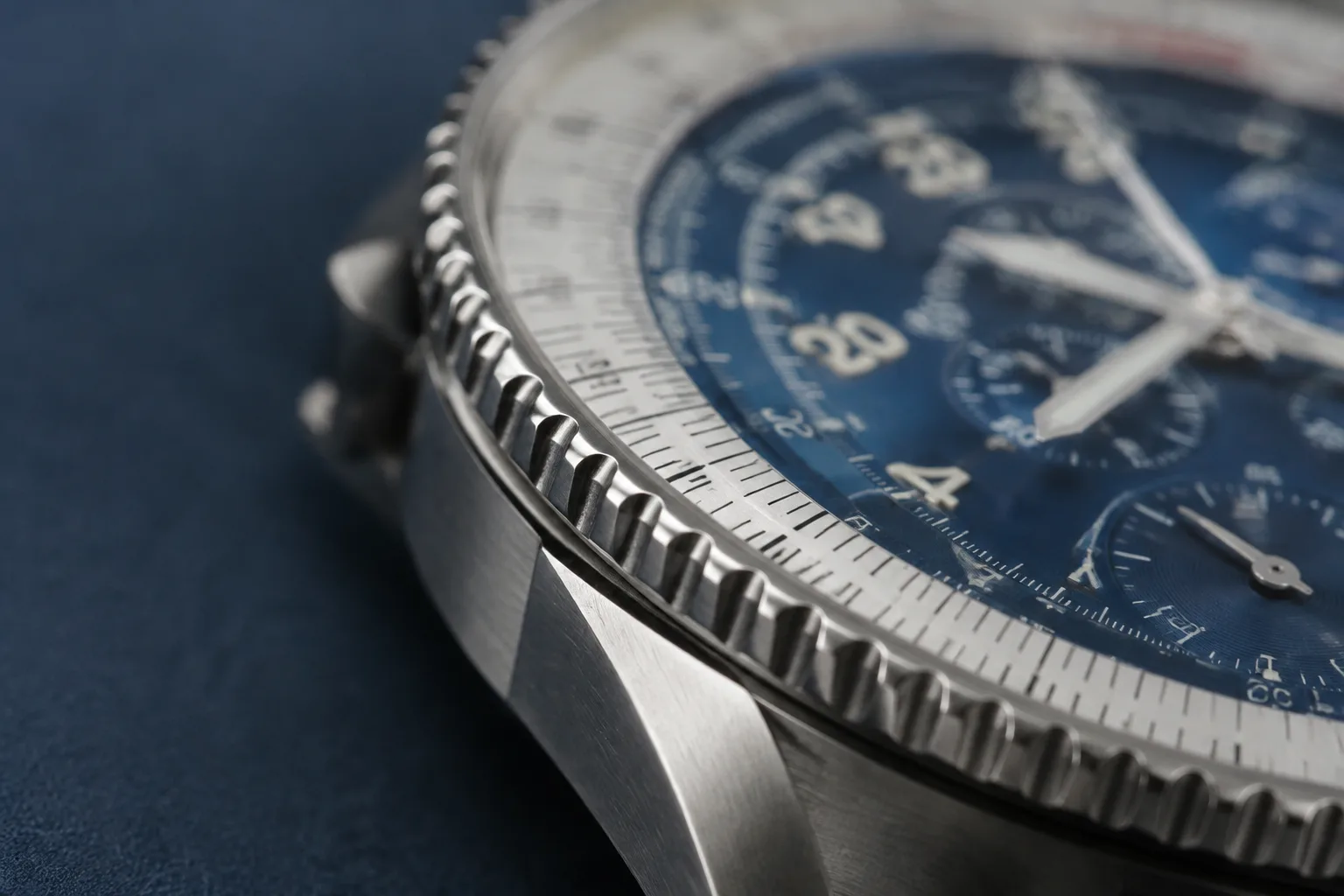
This limited edition lands with serious details: a compact 41mm platinum case, a deep blue dial with a 24‑hour layout, and a white slide‑rule bezel that doubles down on the Navitimer’s aviation DNA. Under the hood is Breitling’s hand‑wound B02 calibre; flip it over and a sapphire back reveals commemorative engravings for Carpenter, his Aurora 7 mission and the Mercury 7 programme. The price is £34,000, which tells you who it’s aimed at — but the story it carries speaks far beyond collectors’ circles.
What happened
Breitling confirmed a new Navitimer Cosmonaute that revives the specifics Carpenter requested for spaceflight: a 24‑hour dial to solve the confusion of multiple sunrises in orbit, plus ergonomics drawn from the functional brief of the early 1960s tool watch. The brand has translated that brief into modern luxury with a platinum case and a colourway intended to cue Earth and cloud — the dial a saturated blue, the slide‑rule a crisp white.
The watch measures 41mm across, which keeps it wearable for most wrists while maintaining the busier dial architecture of a full‑fat Navitimer. The B02 movement inside is hand‑wound rather than automatic, a faithful nod to period chronographs and a choice that helps keep thickness under control while delivering ample power reserve and column‑wheel chronograph engagement.
Around the back, a sapphire caseback carries specific engravings that anchor the narrative to Carpenter, Aurora 7 and the Mercury 7 cohort. For those who buy watches with stories, that’s the hook; for those who buy them to wear, the decision to bring back the 24‑hour scale makes this feel more like a purpose‑built instrument than a simple colour swap.
We rate the decision to keep the slide‑rule bezel in high contrast. On a data‑heavy dial, legibility lives or dies by contrast, and the white ring against the blue field keeps the arithmetic ring readable without swallowing the hands.
The background
Scott Carpenter was one of Nasa’s original Mercury Seven — the hand‑picked group chosen for the United States’ first crewed space programme. On 24 May 1962 he orbited Earth three times aboard Aurora 7, completing the feat in under five hours and becoming the second American to do so.
On his wrist for that flight was a specially built Breitling that later acquired the name Cosmonaute. As the brand recounts, Carpenter asked for a layout that tracked a full 24‑hour cycle so day and night could be read at a glance. He also pushed for a broader, easier‑to‑grip bezel to use with gloved hands and a stretch‑metal bracelet that would sit over a pressure suit.
Willy Breitling, then head of the company, approved and delivered the watch just days before launch — a turnaround that speaks to the improvisational, mechanical ingenuity of the space‑race era. In the same year, Omega entered the picture when Wally Schirra wore a Speedmaster on Sigma 7 in October, but Carpenter’s watch remains the first Swiss wristwatch worn in space.
The Navitimer itself dates to 1952 and was developed with the Aircraft Owners and Pilots Association as a flight‑computer you could strap on. The signature slide‑rule bezel allowed pilots to compute fuel consumption, speed and rate‑of‑climb long before cockpits went digital. It later migrated from runways to the wider culture — engineers wore it, musicians wore it, and its connection to Miles Davis has even spawned its own tribute edition.
Carpenter’s life after Mercury backed up the “tool for a job” ethos; he later took part in the SEALAB II underwater habitat project, which complements the watch’s dual identity as a piece for both air and sea‑level extremes. The centenary edition uses the dial and bezel language of that first spacefaring Breitling to recapture a moment when exploration was still raw, analogue and embodied by a pilot‑astronaut.
What people are saying
Among watch fans, history with specifics tends to trump vague anniversary badges, and this release has specifics in spades: a named mission, a documented configuration and a case size that lands right in the contemporary sweet spot. As one data point, CEO Georges Kern has called “sending the first Swiss wristwatch into space” a point of pride for the brand.
Collectors will note the production cap at 50 pieces and the choice of platinum. Low‑volume precious‑metal runs have become the Swiss way to mark marquee anniversaries, and they concentrate demand around a pure hero piece while leaving room for more accessible variations down the road — a strategy we’ve seen across the industry without naming names.
From a design perspective, the return of a 24‑hour dial is the headline. If you’ve not lived with one, it’s surprisingly intuitive after a week; the eye learns the arc of daytime hours across the upper half of the dial, with night hours running low. On a chronograph, there’s plenty of information, but the clean colour blocking here keeps it from tipping into chaos.
We also like the decision to keep it hand‑wound. Manual calibres offer a thinner profile and a tactile routine — wind it in the morning and you’ve got a small daily ritual. It’s a move in the same spirit as Breitling’s recent retro‑leaning pieces such as the Top Time B31 three‑hander, which favour engaging mechanics over spec‑sheet point‑scoring.
If you’re wondering how to wear a full‑dress tool watch, the answer is: treat it as the conversation piece it is. With tailoring, keep shirts crisp and cuffs roomy; with knitwear, let the blue dial pick up navy and charcoal hues. For chronographs with bolder palettes, see how colour is handled with purpose in our look at the TAG Heuer Formula 1 chronographs.
There’s also a broader cultural current here. Space‑linked watches sit at the intersection of science, engineering and style — which is why they tend to punch above their weight outside the watch‑nerd bubble. Just look at how the right backstory can sustain interest in competition‑grade pieces like the Rolex Daytona “Le Mans” on Carlos Alcaraz’s wrist; narrative and function still matter.
What happens next
With only 50 pieces and a price to match, the centenary Cosmonaute will quickly find its way to established collectors. For everyone else, the takeaway is practical: a 41mm case with strong dial contrast is wearable on a wider range of wrists than you might think, and a 24‑hour layout is more usable than it looks at first glance.
If this story has you eyeing flight‑computer bezels and blue dials, start by trying on 40–42mm cases to judge lug‑to‑lug fit, then check how busy dials read in low light. If the function speaks to you but precious metal doesn’t, keep an eye on the broader Navitimer family and other heritage‑rich pilot’s chronographs from the brand’s stablemates. And if you’re in the market purely for horological theatre, museum‑grade exhibitions like Patek Philippe Watch Art in Milan show how brands frame history — which is half the fun of owning a story‑led watch.
Related: The weirdest Rolex watches ever made — and why they exist
Related: Breitling Top Time Deus and Triumph return with B01 movement
Why this matters
For UK readers who favour watches with substance, this is the rare tribute that earns its gloss with hard history: a real mission, a real brief and a wearable size. If you’re tempted by slide‑rule chronographs, ask your AD for 40–42mm options with strong contrast dials, and try a hand‑wound piece to see if the daily wind suits you. If bold dial colours appeal, our look at the TAG Heuer Formula 1 chronographs shows how brands make colour work without sacrificing utility.
Common questions
- what is the breitling navitimer cosmonaute scott carpenter centenary
- It’s a 41mm platinum limited edition of 50 pieces marking Scott Carpenter’s 100th birthday. The watch revives the 24‑hour space‑era Cosmonaute layout and uses Breitling’s hand‑wound B02 calibre.
- how many pieces are made of the new navitimer cosmonaute
- Breitling is producing 50 pieces of the Navitimer B02 Chronograph 41 Cosmonaute Scott Carpenter Centenary.
- how much does the breitling scott carpenter centenary watch cost
- The price is £34,000. It’s positioned as a collector‑grade release with a platinum case and commemorative details.
- why does the navitimer cosmonaute have a 24 hour dial
- The 24‑hour dial helps distinguish day from night in orbit, where sunrises occur frequently. Scott Carpenter requested it for his 1962 Aurora 7 mission.
- was this the first swiss wristwatch in space
- Yes. When Scott Carpenter wore his custom Breitling on Aurora 7 in May 1962, it became the first Swiss wristwatch in space.
- what movement is inside the new breitling navitimer cosmonaute
- It uses Breitling’s hand‑wound B02 movement, a manually wound, column‑wheel chronograph calibre suited to the heritage brief.
- what size is the new navitimer cosmonaute scott carpenter edition
- The case is 41mm across, a contemporary wear‑anywhere size that suits the detailed Navitimer dial layout.
- what details are engraved on the back of the watch
- The sapphire caseback carries engravings commemorating Scott Carpenter, the Aurora 7 mission and the Mercury 7 programme.
Sources
This article was written by The Good Cut using the sources listed above. Product mentions are editorial unless clearly marked as sponsored.