Men's Style
TAG Heuer Formula 1 chronographs: colour with a purpose
Racing heritage gives these colourful chronographs a reason to shout, but fit and wardrobe mileage should decide which one earns your money.
By The Good Cut Editorial Team
Published · 6 min read
Quick answerTAG Heuer’s green, yellow and red Formula 1 chronographs pair 43mm cases with matching rubber straps and racing-inspired details. Launched at £1,550 each, they make most sense as bold casual watches; our colour pick is green.
TAG Heuer’s green, yellow and red Formula 1 chronographs put an unusually straightforward question to anyone shopping for a sports watch: how much colour will you actually wear? Introduced at £1,550 apiece, the trio combines matching rubber straps with 43mm cases, making colour a substantial part of the design rather than a discreet dial accent.
Our take is that green offers the strongest starting point for an everyday wardrobe, while yellow and red suit someone deliberately buying a statement piece. That is a styling judgement, not a claim about performance. The more important buying decision comes before picking a shade: does this sizeable, openly sporty watch suit your wrist and your week?
What happened
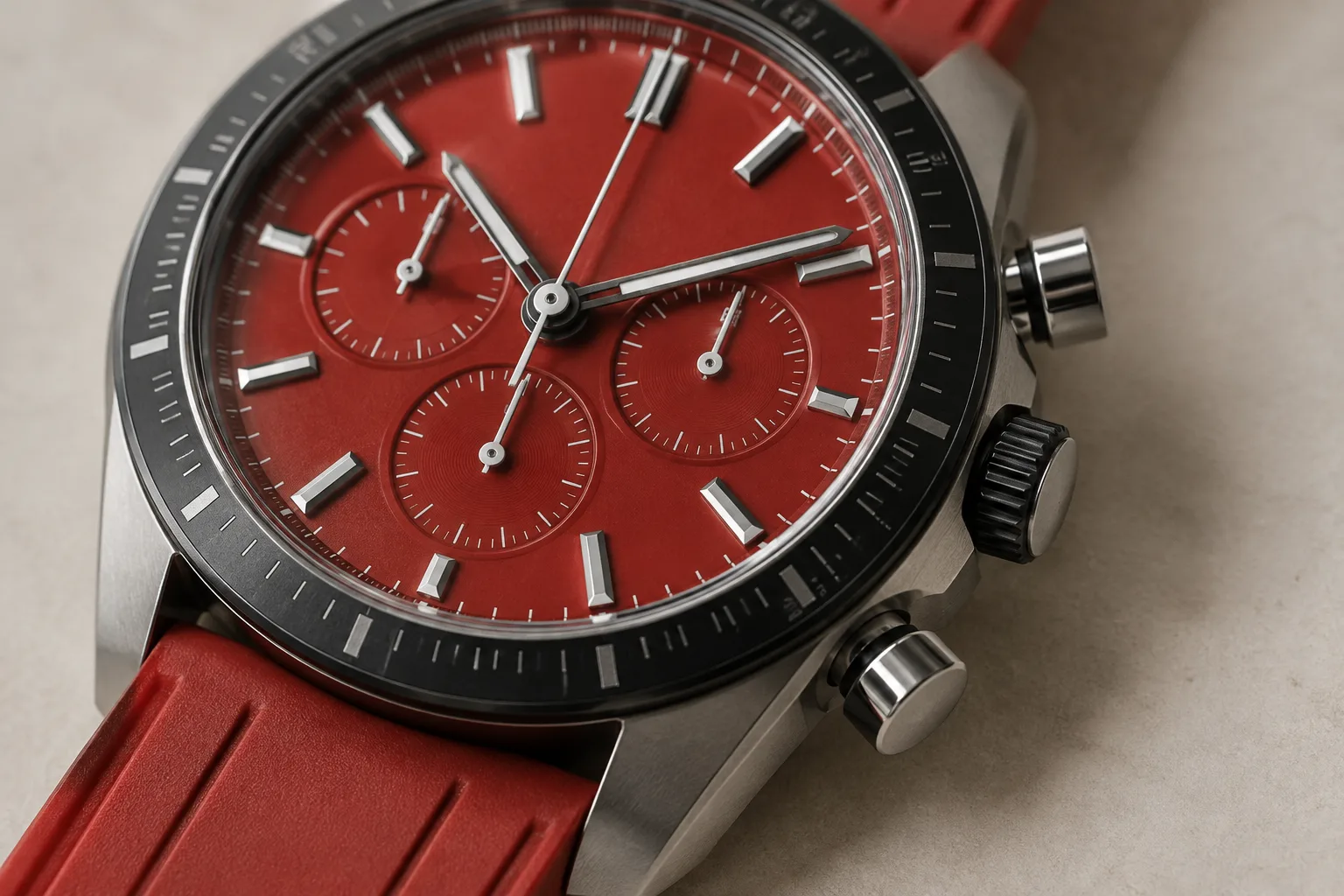
TAG Heuer brought the three colours together in a coordinated Formula 1 release, with shared hardware and small differences in dial treatment. Around each dial sits a PVD-coated steel tachymeter bezel; stainless-steel pushers occupy the two and four o’clock positions. Turn the watch over and a chequered-flag motif continues the motorsport reference on the caseback.
The hour markers change with the colour scheme. The red version uses rhodium-plated indices, while the green and yellow versions have black indices. That distinction matters because a watch dial is a working display, not simply a coloured surface. Marker finish and contrast affect how readily your eye separates the time from the surrounding detail.
A chronograph adds a stopwatch function to ordinary timekeeping. Its pushers operate that timing mechanism, while a tachymeter scale can translate the elapsed time over a known distance into average speed. You do not need a pit wall to use it: timing a train journey or a kitchen task is considerably more likely for most owners.
The matching rubber straps are arguably the bigger style decision. They carry the dial colour around the wrist, so these watches read differently from a bright dial on a neutral steel bracelet. Less of the colour disappears into the outfit. That is appealing if you want an accessory with presence, less helpful if discretion is the brief.
Treat £1,550 as the launch price, not a promise about today’s checkout total. Before buying, establish the exact reference, current availability and the seller’s terms. A familiar collection name can cover different generations and specifications; matching the colour alone is not enough to identify the watch.
The background
TAG Heuer links the palette to the national racing colours used between the world wars, when a car’s paintwork could indicate its national affiliation. Green carries the British association, while red is closely identified with Italian racing. Yellow has a less singular history, appearing across several countries and teams rather than belonging neatly to one national story.
That makes the colour choice more coherent than simply adding a bright finish to a familiar product. It also sits comfortably alongside TAG Heuer’s wider racing associations through the Carrera and Monaco collections. The useful distinction is between a design reference and a buying argument: heritage explains the appearance, but it cannot establish comfort or suitability for you.
Colour was already part of the Formula 1 range before this trio. A red Ayrton Senna Special Edition appeared in 2019, followed by a green Calibre 16 model with a sunray dial in 2020. These earlier watches show that the palette was not a sudden departure, although sharing a collection name does not make their specifications interchangeable.
Our guide to motorsport watches worth considering away from the track tackles the broader question behind this category: what survives once you remove the racing romance? Here, the answer should come down to a useful timing function, readable display and a shape you enjoy wearing. The chequered flag is a finishing touch, not the whole proposition.
What people are saying
The brand’s explanation centres on racing history. We would put the wardrobe consequences first. A full-colour watch and strap can supply the visual interest that a plain outfit needs, but they also ask more of the wearer than a black dial on steel. The trick is to give the colour space rather than build an entire costume around it.
Our pick: green
We rate green because it works convincingly beside navy, grey, washed denim and brown footwear. Try it with a white T-shirt, dark jeans and a navy overshirt. There is enough contrast to make the watch noticeable without needing another green item elsewhere. Exact colour matching can make a relaxed outfit look suspiciously rehearsed.
Yellow is our choice for someone who wants the watch to be the focal point. Keep the surrounding clothes quiet: charcoal trousers, an ecru knit or a plain navy jacket. Red makes a similarly assertive choice against black, white and indigo. With either, we would skip extra racing-themed accessories; one reference is sharper than a paddock souvenir haul.
The silhouette of your clothes matters too. A substantial sports watch generally feels more at home beside an overshirt, sweatshirt or casual jacket than a close-fitting formal cuff. Our breakdown of men’s jacket types and what each one does is a useful starting point for finding outerwear with the right degree of informality.
There is also a legitimate case for wanting something cheerful rather than maximally versatile. As our look at unusual watches and their design choices explores, personal taste need not stop at pure utility. We would simply distinguish a watch bought for occasional enjoyment from one expected to handle every office day and formal invitation.
What happens next
For a prospective buyer, the next step is a fitting rather than another scroll through product pictures. A 43mm diameter gives you one useful measurement, but it does not describe the complete wearing experience. Case thickness, the distance between the lugs and the way the strap bends can all change how a watch sits.
Make the fitting count
Look for lugs that sit comfortably within the edges of your wrist rather than projecting conspicuously beyond them. Then fasten the strap securely enough to stop the case rotating without pinching. Flex your wrist and check whether the crown or pushers press into the back of your hand. A handsome dial will not compensate for persistent irritation.
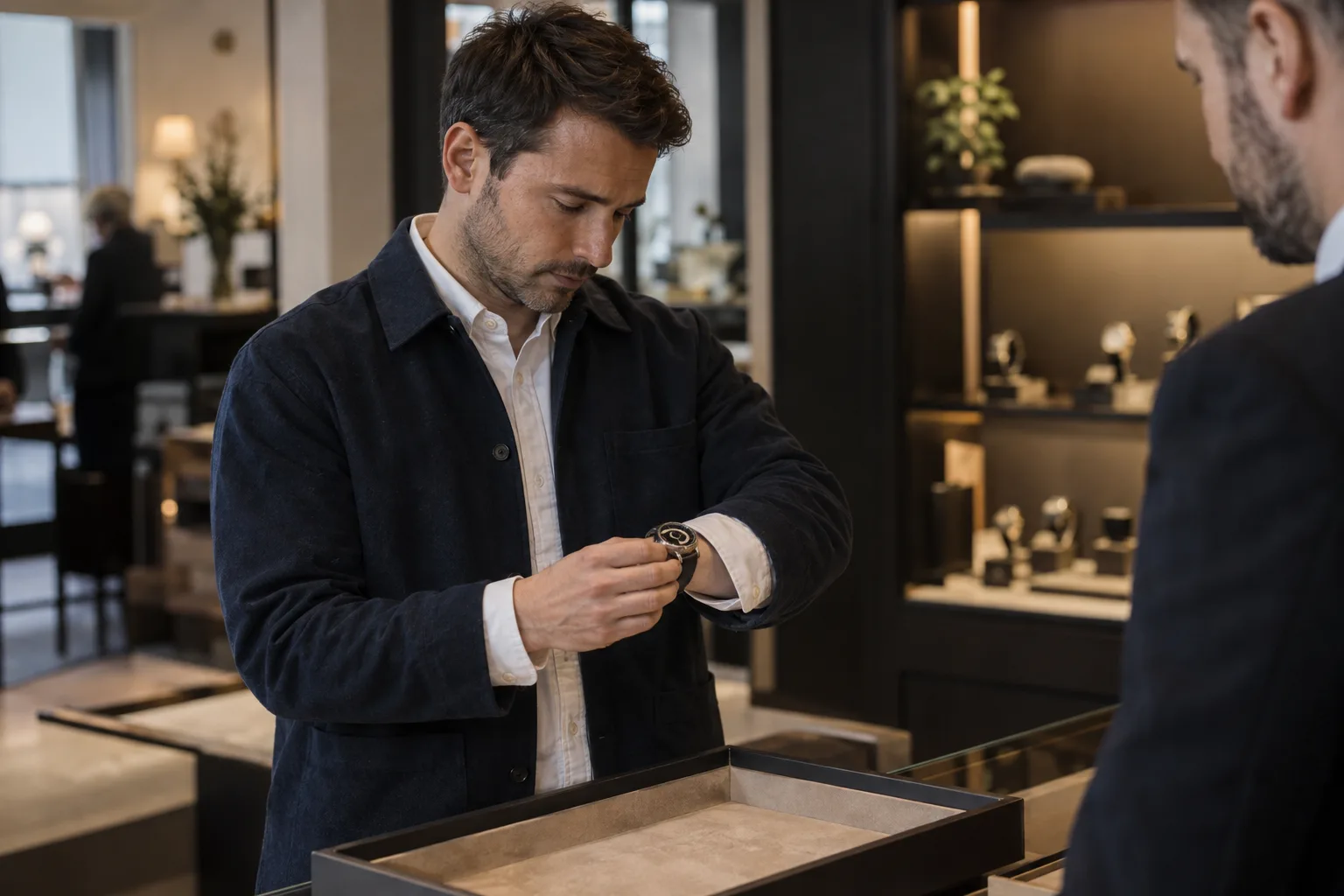
Bring the sort of layer you actually wear. Slide a shirt or jacket cuff over the watch, then reach forward as you would at a desk. This reveals snags and bulk that a stationary glance in a shop mirror can miss. Check the time at an ordinary viewing distance too, rather than judging everything through a magnified product photograph.
If you are considering a pre-owned example, inspect the strap for cracking, splits and damage around the fastening holes. Look closely at the bezel’s edges and ask the seller to demonstrate the chronograph starting, stopping and resetting. Establish what checks have been performed and what the warranty covers. Those are buying questions, not evidence that every example has a problem.
Finally, ask about battery or servicing requirements for the exact reference, replacement-strap availability and the documented water-resistance guidance. Do not infer permission to swim from a rubber strap. Once those practicalities are settled, choose the colour that works with clothes you already own. Buying a watch is expensive enough without accidentally commissioning a new wardrobe.
Why this matters
For UK buyers, the useful lesson is to spend according to your actual dress code, not an imagined weekend in the pit lane. A colourful sports watch can work brilliantly with casual clothes, but an office shirt cuff and a formal occasion make different demands. Try your preferred colour with your usual jacket before committing, and compare the full cost with other motorsport watches worth your money off the track. Buy for the days you will wear it, not just the moment you first spot it.
Common questions
- what colours do these TAG Heuer Formula 1 chronographs come in?
- This trio comes in green, yellow and red. Each version pairs its dial colour with a matching rubber strap.
- how big are these TAG Heuer Formula 1 watches?
- Each has a 43mm case. Try one on before buying, because case thickness, lug span and strap shape also affect how comfortably a watch fits.
- how much did the colourful Formula 1 chronographs cost?
- Their launch price was £1,550 each. That is a historical price, so check current availability, the exact reference and the seller’s terms before buying.
- what does a tachymeter bezel do?
- A tachymeter converts the time taken to cover a known distance into average speed. It works with the chronograph’s stopwatch function rather than measuring speed independently.
- which Formula 1 watch colour is easiest to wear?
- Our pick is green because it pairs well with navy, grey, denim and brown footwear. That is our styling recommendation, not a difference in technical performance.
- are the hour markers the same on all three watches?
- No: the red version has rhodium-plated indices, while the green and yellow models use black indices. The different finishes change the contrast against each dial.
- can you swim with a watch that has a rubber strap?
- A rubber strap alone does not establish swimming suitability. Check the documented water-resistance guidance and condition of the exact watch before taking it into water.
Sources
This article was written by The Good Cut using the sources listed above. Product mentions are editorial unless clearly marked as sponsored.