Haircuts & Hairstyles
The Best Haircuts for Your Hair Type Start With Texture
Fine strands, dense waves or tight coils need different cutting decisions. Here’s how to arrive at the barber with a plan that makes sense.

By Eleanor Marsh, Senior Writer
Published · 5 min read
Quick answerThe best haircuts for your hair type work with your strand thickness, density, curl pattern and growth direction. Choose the shape around those features, then match the length and styling routine to the time you actually have.
Choosing the best haircuts for your hair type starts with a distinction that haircut menus rarely make: fine, sparse, straight and short are not interchangeable descriptions. Each tells your barber something different, and confusing them can leave you with a technically tidy cut that behaves badly at home.
Our approach is to choose the shape before the styling product. A cut that respects your natural texture and growth direction gives you a workable starting point; a pot of industrial-strength paste cannot reliably compensate for the wrong length around a stubborn crown.
What happened
The useful question at a haircut consultation is not simply which style suits your face. It is how that style will behave on your head. A fringe needs enough length to fall forwards, a quiff needs support at the roots, and a rounded curly shape needs room for the curls to contract as they dry.
That makes hair type a set of characteristics rather than a single label. You can have fine strands packed densely together, coarse strands with lower density, or waves that become more obvious only after several months of growth. Each combination calls for a different approach to removing weight.
Start with an honest assessment
Look at your hair clean, dry and without styling product. Notice where it parts naturally, which sections stand away from the scalp and how much movement appears through the ends. Check the crown as well as the front: the view in your bathroom mirror tells only half the story.
Bring reference photographs showing comparable texture, not just an appealing face. Ask the barber which elements transfer to your hair and which require daily blow-drying. A photograph is a useful brief, but it is not a guarantee that your fringe will develop somebody else’s wave pattern.
Ethnicity is not a sufficiently precise cutting instruction either. Hair characteristics vary within populations. Describing strands as straight and coarse, or tightly coiled and fine, gives a barber more practical information than expecting a broad heritage label to do the work.
The background
Thickness and density need different decisions
Fine hair has a small individual strand diameter; low-density hair has fewer hairs within a given area. The distinction matters because aggressively thinning out fine but dense hair may remove the support that makes a style look full. Naturally fine strands also do not automatically indicate hair loss.
For fine hair, we favour preserving a solid outline and being selective about layers. A compact crop or a softly swept style can both work, depending on density and growth direction. There is no universal rule that fine hair must be grown long: extra length can also weigh it down.
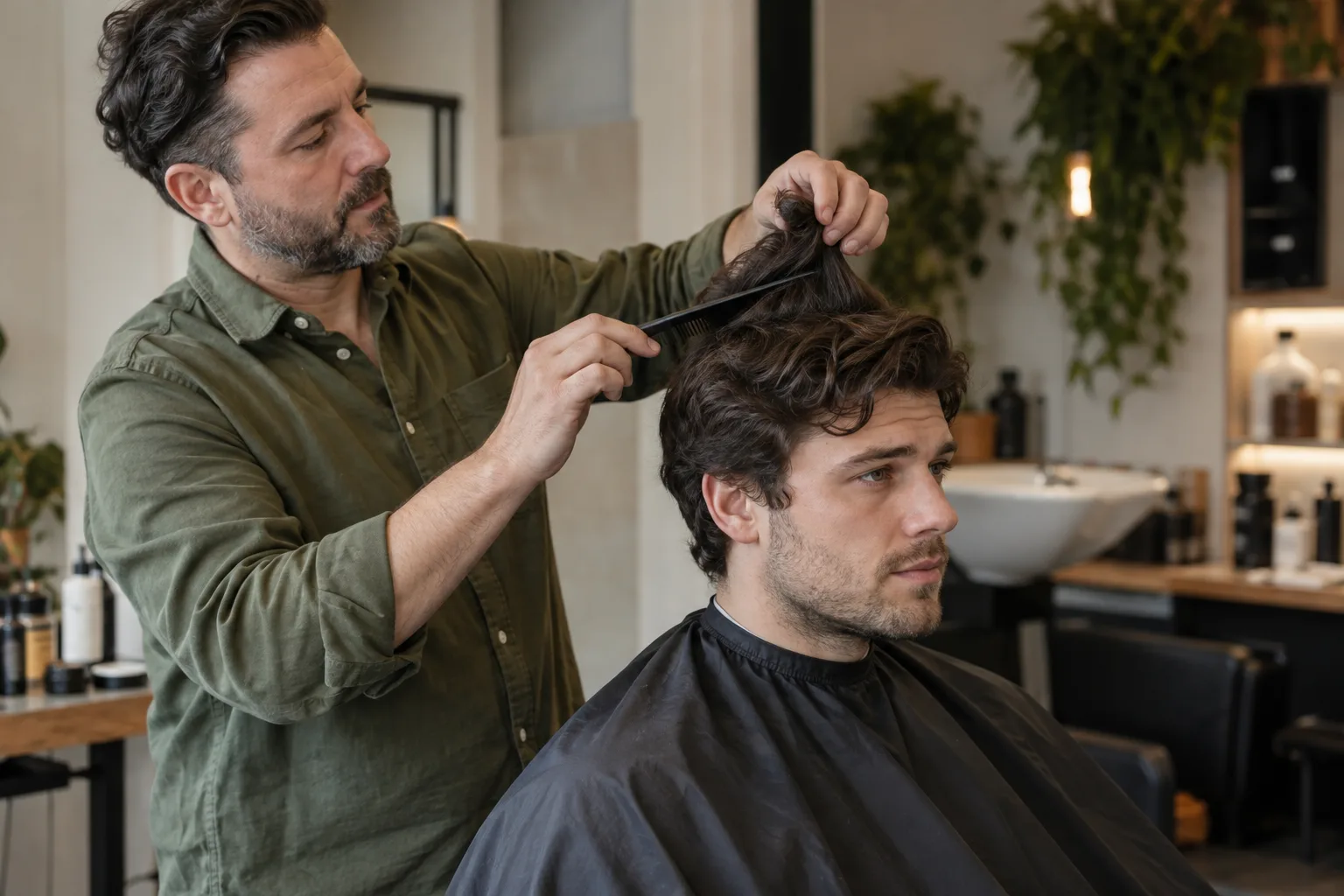
Dense hair presents a different challenge. Removing bulk internally can make a shape easier to wear without leaving the outline wispy. Ask where the weight is being removed rather than requesting thinning everywhere; the wrong intervention can leave short sections pushing out beneath longer ones.
Keeping more length can help some dense hair settle under its own weight, but growing it is not the same as abandoning maintenance. Our guide to growing long hair without losing the shape covers the changes worth making before you stop booking regular appointments.
Curl pattern changes the silhouette
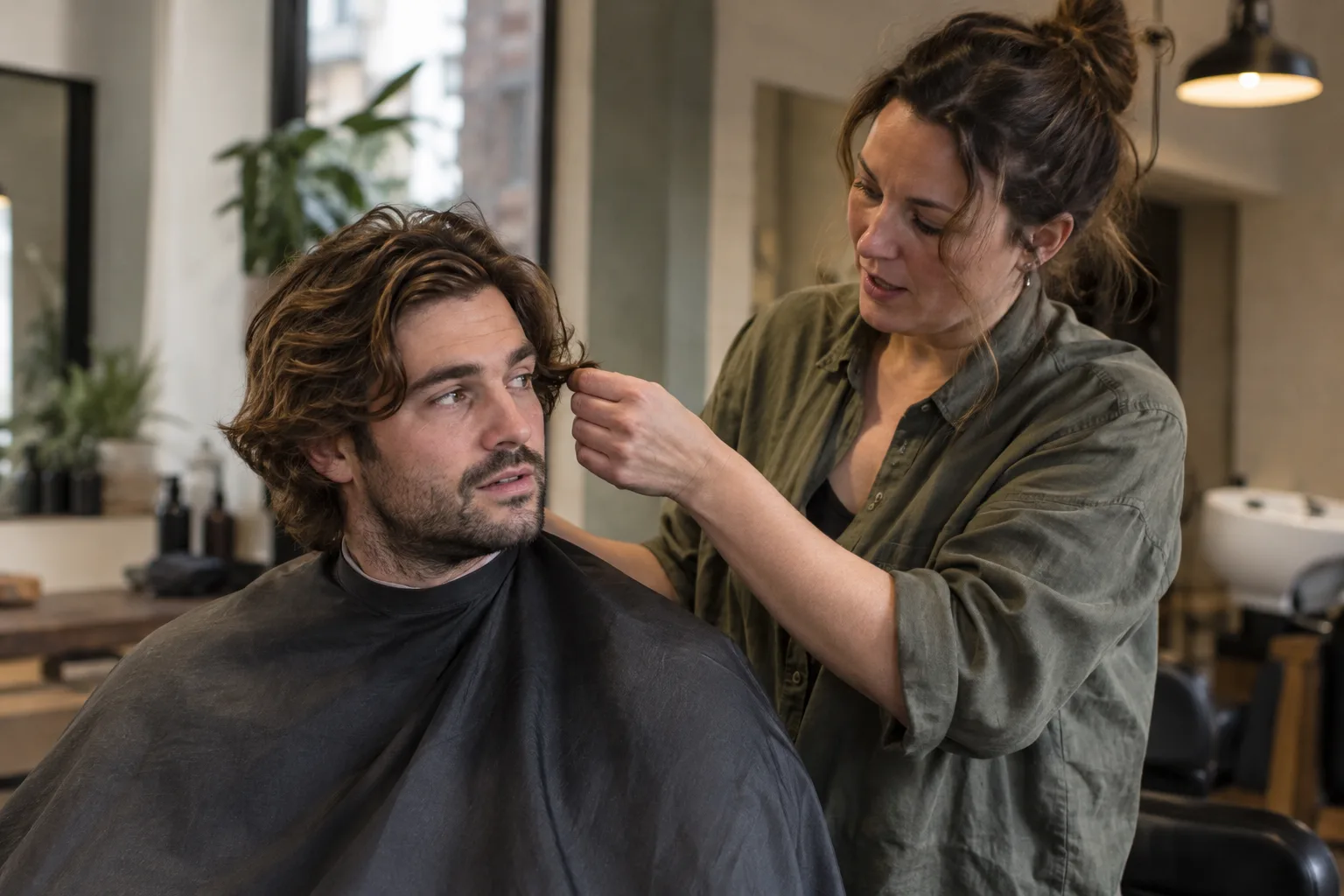
Waves often benefit from enough length to show their bend, with the sides shaped to keep the overall outline deliberate. Our pick is a softly textured top with a restrained taper. It uses existing movement rather than demanding a perfectly straight finish every morning.
For curls and coils, the barber needs to account for shrinkage: stretched or wet hair can look substantially longer than it does in its natural dry state. Discuss the finished silhouette, including height and width, and ask how the cut will look when styled as you normally wear it.
A rounded shape, a squared top or a taper can all work with coiled hair. The decision depends on curl pattern, density and the outline you want, not a rule that one texture requires one haircut. Choose someone whose portfolio includes hair that behaves like yours.
What people are saying
Our view is that low-maintenance needs a better definition. A close fade may need little morning styling but frequent appointments to keep its edges crisp. A longer, softer cut can demand more drying time while being more forgiving as it grows. Those are two different maintenance bills.
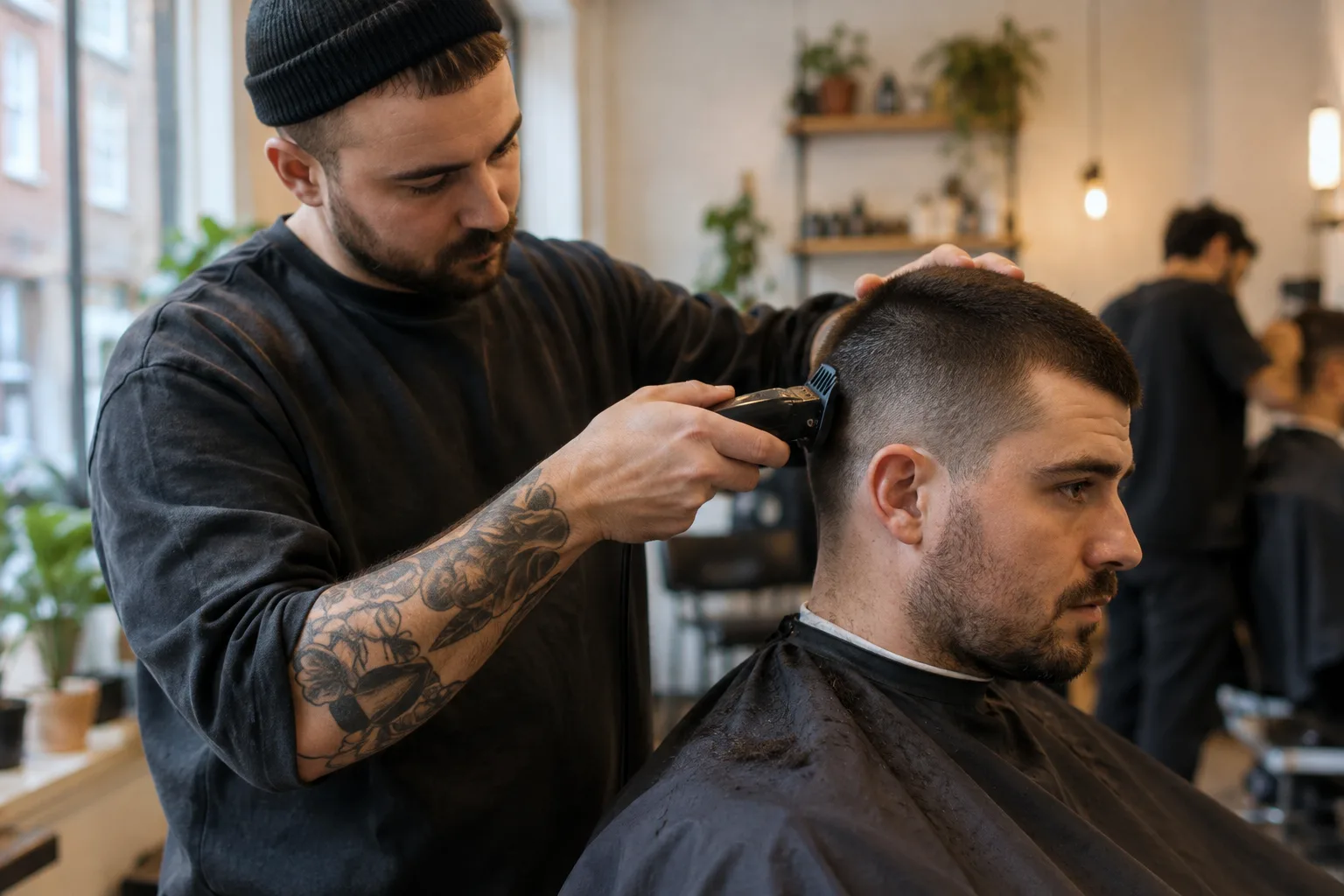
The buzz cut illustrates that trade-off neatly. It removes most styling decisions, but exposes the hairline, crown and contours of the head. The discussion around Ed Sheeran’s move to a buzzcut is a useful reminder that going short changes the whole impression, not just the time spent getting ready.
Products should solve a specific problem
For fine strands that collapse, start with a small amount of lightweight volumising product and lift the roots while drying. Add finishing product gradually. Heavy oils and generous helpings of wax can pull strands together, making the scalp more noticeable rather than producing convincing fullness.
For waves, a light cream can encourage a softer finish, while a little paste provides separation and hold. Salt spray adds grip but can leave already-dry hair feeling rough. More texture is not automatically better texture; stop when the hair still moves rather than feels coated.
Curly and coiled hair often benefits from conditioning and gentle detangling before hold becomes the priority. Work through manageable sections, starting at the ends, and use a suitable comb or your fingers. If diffusing, keep the heat moderate and avoid constantly disturbing the curls as they set.
Cowlicks deserve a cutting decision, not just stronger product. Leaving enough length to give the section weight can help; cutting it sufficiently close is another option. An awkward intermediate length may stand up more prominently. Ask the barber to inspect the growth pattern before wetting everything down.
What happens next
At your next appointment, agree three things before cutting begins: the finished length, where bulk should stay, and how you will style it. Mention glasses, headwear and any workplace expectations that affect the shape. Those everyday details are more useful than requesting something vaguely smart but relaxed.
If you are considering a dramatic reduction, start conservatively. Our buzz cut guide to lengths and barber instructions explains why agreeing a guard length matters. You can take more off during the appointment; putting it back remains outside the barber’s job description.
For thinning hair, choose the cut around the distribution of density rather than automatically growing a longer cover-up. A shorter crop may reduce contrast between fuller and sparser areas, while a carefully retained fringe can offer useful coverage. Neither approach changes the underlying cause of hair loss.
Sudden, patchy or otherwise concerning hair loss belongs in a conversation with a GP, particularly alongside scalp symptoms. For the haircut itself, ask your barber to demonstrate the finish with the amount of product you will actually use. Then agree a return interval based on how sharply you want the shape maintained.
Why this matters
For UK readers fitting haircuts around work, commuting and a finite grooming budget, the right choice is the one you can maintain between appointments. Tell your barber how often you can return and how many minutes you will genuinely spend styling. If you wear facial hair, consider the whole outline: our guide to maintaining a 5 o’clock shadow without irritation helps with the lower half. A workable haircut and a realistic routine beat an ambitious reference photograph every time.
Common questions
- How do I work out my hair type?
- Examine your hair clean, dry and without product, noting strand thickness, density, curl pattern and growth direction. Look at the crown as well as the front, then ask your barber to assess anything you cannot confidently identify.
- Is fine hair the same as thinning hair?
- No: fine hair describes narrow individual strands, while thinning means a loss of hair density. Fine hair can be dense, and naturally fine strands do not automatically indicate hair loss.
- What haircut is best for thick hair?
- Dense hair can suit a shorter shaped cut or a longer style that uses weight to settle bulk. Carefully placed internal layers can help, but removing weight everywhere may undermine the shape.
- What should I ask my barber for with wavy hair?
- Ask for enough length to show the wave, with the sides shaped around the overall silhouette. Our pick is a softly textured top and restrained taper that works with natural movement.
- Why does curly hair look shorter after a haircut?
- Curls contract as they dry, so wet or stretched length can be misleading. Discuss the finished dry shape and make sure the barber accounts for shrinkage before choosing how much to remove.
- How do I stop a cowlick sticking up?
- Changing the length can help: leave enough weight for the section to settle, or cut it sufficiently close. Ask your barber to inspect its growth direction before wetting the hair.
- Can a haircut fix thinning hair?
- A haircut can make thinning less conspicuous, but it cannot treat hair loss. Choose the shape around where density remains, and speak to a GP about sudden, patchy or otherwise concerning loss.
About the writer
Eleanor MarshSenior Writer · Edinburgh
Hairstyle trends and the stories behind them.
More from EleanorSources
This article is original reporting by The Good Cut based on the sources above. Last reviewed 9 October 2026. Product mentions are editorial unless clearly marked as sponsored.