Men's Style
Vanguart Orb adds ceramic: pink titanium, blue rose gold
Two colourful ceramic Vanguart Orbs land with flying tourbillon drama and daily‑wear specs, each limited to 25 pieces.
By The Good Cut Editorial Team
Published · 5 min read
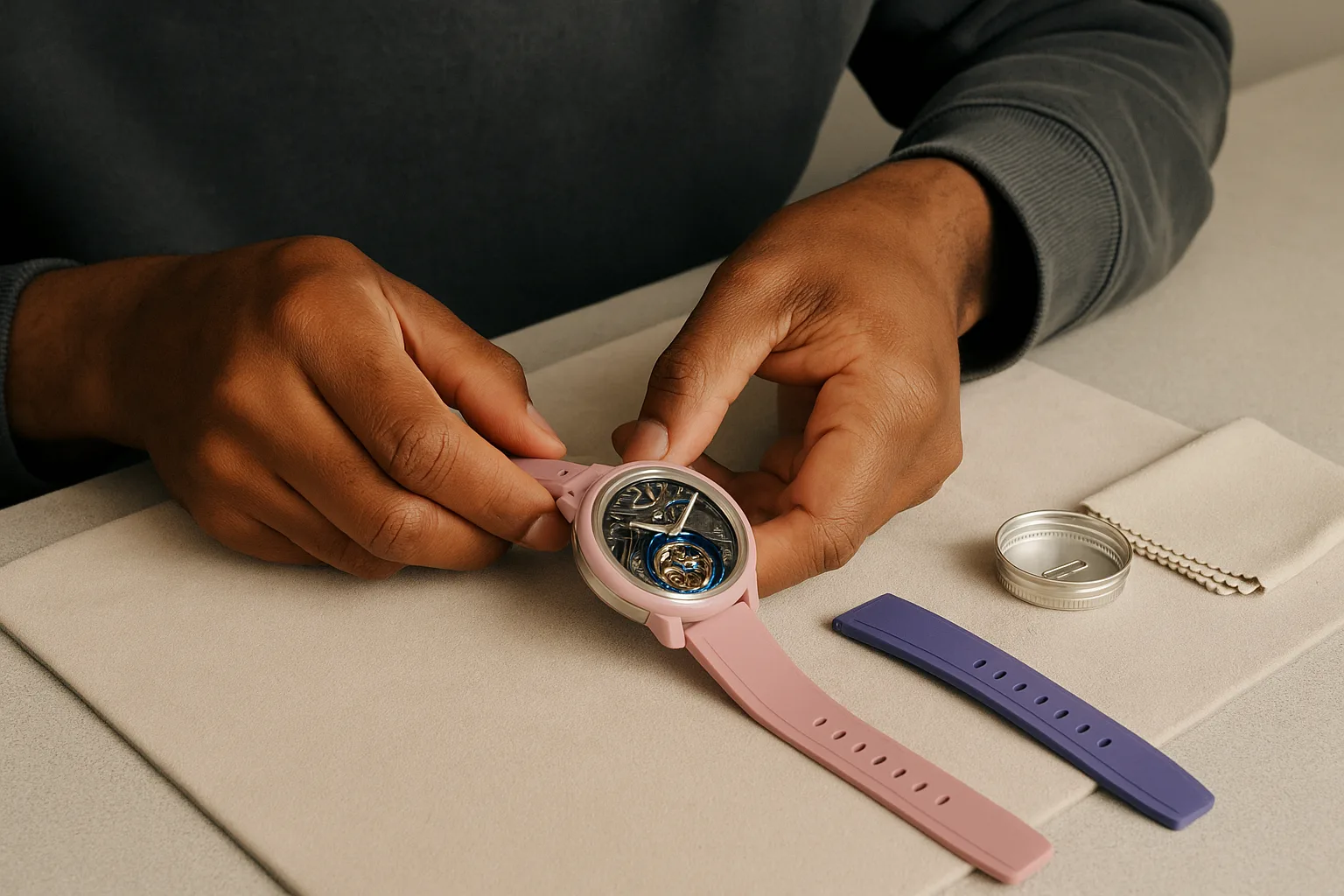
Quick answerIndependent maker Vanguart has unveiled two new Orb models in ceramic: one pairs pink ceramic with titanium, the other blue ceramic with 18‑carat rose gold. Both keep the flying tourbillon, 41mm case, 10.5mm thickness and 60‑hour reserve, limited to 25 pieces each.
Vanguart has given its Orb a bold new palette, adding two ceramic references unveiled during Geneva Watch Week. One leans futuristic with pink ceramic and titanium; the other goes richer with blue ceramic and 18‑carat rose gold. Both keep the headline mechanics that put this independent on collectors’ radars, but with a fresher, more playful complexion.
This isn’t colour for the sake of it. The cases stay startlingly slim for a flying tourbillon at 10.5mm, and they sit at a wearable 41mm across. On rubber straps with proper lume and quick‑release hardware, these look engineered to be worn rather than admired from the safe.
What happened
Vanguart’s latest Orb references arrive in two distinct material pairings. The pink ceramic model uses titanium for its metalwork; the blue ceramic version pairs with 18‑carat rose gold. The colour isn’t just on the surface either: it appears along the case flanks and crown pusher, and continues through elements of the movement architecture for a considered, coherent look.
Mechanically, the Orb stays ambitious. The calibre runs at 3Hz and centres on a flying tourbillon built around Grade 5 titanium bridges and mainplate. The movement comprises 395 components and stores a 60‑hour power reserve, impressive given the complication and the watch’s svelte profile.
A signature party trick remains in place: a three‑position selector integrated into the crown lets you choose between manual winding, automatic winding and time setting. In manual mode the oscillating mass is locked, then released when you switch back to automatic. For those who enjoy engaging with mechanics, it’s a satisfyingly tactile feature you don’t often see.
Wearability has been kept front of mind. The caseback is curved to follow the wrist, which, combined with the 10.5mm thickness, should suit more wrists than the usual high‑complication showpieces. Luminous hands and hour markers boost legibility over the skeletonised layout, while the matching rubber straps use a concealed quick‑release system for easy changes without tools.
These ceramic Orbs are tightly limited: 25 individually numbered examples of each colourway will be produced. Pricing is on application, consistent with the complication and the finishing on show. If you like your colour used with intent, you’ll probably also appreciate how brands such as TAG are approaching it in sporty horology; see our look at TAG Heuer Formula 1 chronographs: colour with a purpose.
The background
The Orb debuted in 2024, immediately standing out for its kinetic theatre and that unusual selector that toggles between manual and automatic winding. For 2026, Vanguart has introduced ceramic and says it spent a year developing a formulation that could follow the Orb’s complex curves while retaining strength and a refined finish. Given the sculptural case, that R&D work makes sense.
Ceramic brings real‑world benefits beyond colour: notable scratch resistance and fade‑resistant hue are prime draws. The pairings feel deliberate, too. Pink ceramic with titanium keeps weight down and leans contemporary; blue ceramic with rose gold dials up warmth and formality. It’s an approach we’re seeing across the industry as brands mix high‑tech shells with precious metals to balance durability and presence.
The finishing menu on the Orb’s Grade 5 titanium movement is comprehensive. Surfaces are treated with micro‑blasting and satin techniques; edges are hand‑bevelled; blocks are polished to crisp transitions. That level of attention isn’t just for loupe‑hunters — it’s what gives a skeletonised watch its depth and contrast in natural light.
Slimness is a quiet triumph here. A 10.5mm profile for a flying tourbillon with a 60‑hour reserve at 3Hz is unusual, particularly when combined with the ergonomics of a curved back and a wearable 41mm diameter. It slots neatly into the modern sweet spot for everyday sizing — neither dress‑watch delicate nor dinner‑plate dramatic. If you want a different expression of that idea in steel, our take on the IWC Ingenieur 50th anniversary limited editions shows how thoughtful engineering can keep proportions friendly.
The colour‑led direction also mirrors a broader move towards watches that are serious on the inside and a touch irreverent on the outside. We’ve already explored how colour done properly can serve a function as well as a flourish in our piece on TAG Heuer Formula 1 chronographs: colour with a purpose, and the Orb’s new shells feel cut from that cloth.
What people are saying
Among collectors, there’s a clear appetite for high complication that doesn’t demand kid‑glove treatment. The Orb’s lume, rubber strap and everyday proportions nudge it towards genuine wrist time, not just display‑case duty. That’s an increasingly common expectation at this level.
There’s also growing acceptance of rubber‑strap pairings with precious materials and heavyweight mechanics. A flying tourbillon on rubber would have raised eyebrows a decade ago; today, it reads as modern luxury rather than sacrilege — especially with a quick‑release system that lets you swap to leather at will.
The crown‑integrated selector will appeal to tinkerers who enjoy the sensation of operating a machine. It’s a rare function that, frankly, adds joy to the user experience. If you’ve ever been drawn to limited, statement‑making releases — like our recent deep‑dive into Carlos Alcaraz’s Rolex Daytona Le Mans rewards a closer look — you’ll recognise the same spirit of theatre here, just with a far smaller production run.
Our pick? We rate the blue ceramic with rose gold. It plays effortlessly with navy tailoring and dark denim, and the warmth of the gold offsets the cool of the ceramic beautifully. The pink‑and‑titanium is the bolder statement for sure — lighter on the wrist and arguably the more future‑forward — but the blue option will slot into more wardrobes with less effort.
If you’re weighing broader value cues in this space, our motorsport watches buying guide outlines the practicalities worth checking at the luxury‑sports end — from legibility to strap versatility — that also apply here.
What happens next
With just 25 pieces per colour, expect enquiries to outnumber allocations. If you’re serious, go direct to the brand and move quickly; this isn’t the kind of release that lingers. When deciding between the two, think about how each will live with your clothes and the rest of your watch box.
The blue‑and‑rose‑gold will sing with navy suits and charcoal flannel, while the pink‑and‑titanium thrives with off‑duty kit: crisp tees, knitted polos and sharp tech outerwear. Either way, the quick‑release strap opens the door to a secondary look — a matte leather for evenings, perhaps, or a textured rubber if you favour sporty contrast. If you’re building a rotation that balances bravado and heritage, our view on the Breitling Navitimer Miles Davis tribute shows how a classic can anchor more adventurous pieces like this.
Ceramic’s practical upside — strong scratch resistance and lasting colour — suits modern daily wear, but as with any high‑end piece, respect hard knocks. The Orb’s blend of theatre, ergonomics and materials feels very now: serious watchmaking, zero stuffiness. For an independent, that’s exactly the note to hit.
Why this matters
For UK readers eyeing a statement watch they can actually wear, this is the brief: proper mechanics, resilient materials and dimensions that play nicely with a suit or a sweatshirt. If you’re shopping, ask about case thickness, strap options and legibility — then pick the colour you’ll reach for most. If you prefer a subtler route into sporty‑luxe, start with something like our motorsport watches buying guide and build from there.
Common questions
- what is the vanguart orb
- It’s an independent high‑end watch centred on a flying tourbillon, notable for a crown‑integrated selector that switches between manual winding, automatic winding and time setting.
- what are the new vanguart orb models in 2026
- Two ceramic versions were introduced: one pairs pink ceramic with titanium, the other combines blue ceramic with 18‑carat rose gold.
- how big is the vanguart orb case
- The case measures 41mm in diameter and 10.5mm thick, with a curved caseback designed to follow the wrist.
- how does the orb’s function selector work
- A pusher integrated into the crown lets you select manual winding, automatic winding or time setting, locking the rotor in manual and releasing it in automatic.
- how many components does the movement have
- The flying‑tourbillon movement contains 395 components and runs at 3Hz, delivering a 60‑hour power reserve.
- how many of each ceramic orb will be made
- Each colourway is limited to 25 individually numbered pieces globally.
- what materials are used in the new orb models
- The pink version uses ceramic and titanium; the blue version pairs ceramic with 18‑carat rose gold. Both use Grade 5 titanium for movement bridges and mainplate.
- is the vanguart orb price available
- Pricing is on application. Interested buyers should contact the brand for details and availability.
Sources
This article was written by The Good Cut using the sources listed above. Product mentions are editorial unless clearly marked as sponsored.