The Good Edit
Motorsport watches: what’s worth your money off the track?
From light-powered TAG Heuers to Ferrari-linked mechanical fireworks, racing watches offer very different things. Here’s where we think the appeal justifies the spend.
By The Good Cut Editorial Team
Published · 6 min read
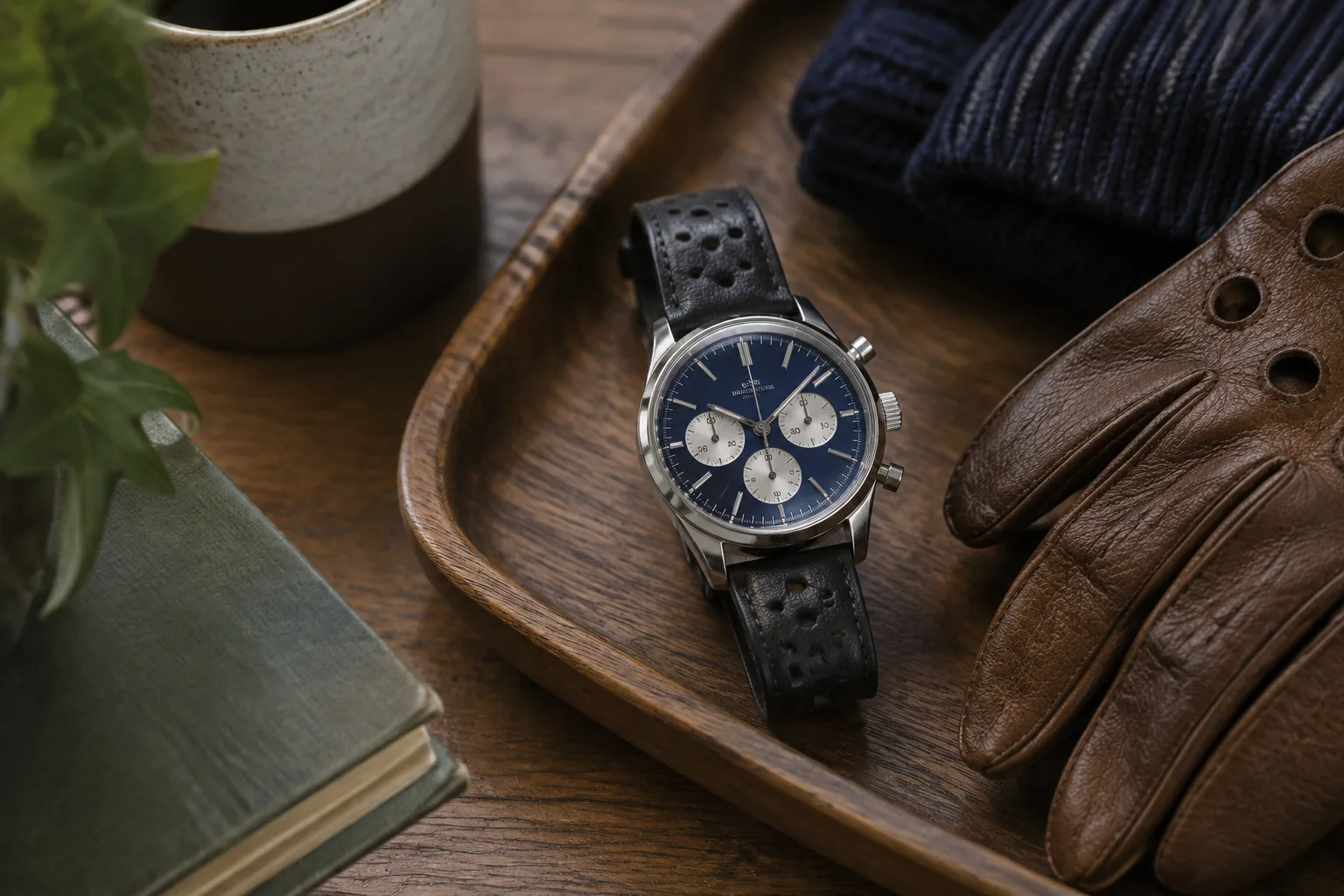
Quick answerThe motorsport watches we’d shortlist first are the light-powered TAG Heuer Formula 1 Solargraph for everyday convenience and the Tissot PR516 Automatic Chronograph for mechanical stopwatch appeal. Choose by movement, legibility and fit, not the racing badge alone.
Motorsport watches are taking two noticeably different routes: familiar racing designs with more convenient movements, and ambitious mechanical creations that turn the wrist into an engineering showcase. TAG Heuer’s Formula 1 Solargraph and Richard Mille’s Ferrari-linked RM 43-01 sit at opposite ends of that spectrum. They share an association with speed, but answer very different buying questions.
For us, the useful distinction isn’t which looks most convincing beside a steering wheel. It’s which makes sense on an ordinary Tuesday. Across seven models, there are proper chronographs, a rally-inspired automatic and light-powered timekeeping — proof that a racing connection doesn’t tell you what a watch actually does.
What happened
TAG Heuer has returned as Formula 1’s official timekeeper, while its Formula 1 Solargraph revisits the colourful character of the collection’s 1980s designs. The significant update is inside: a movement powered by light. At an indicative £1,650, it offers a different proposition from the mechanical chronographs surrounding it, with bold limited-edition colour options adding to the appeal.
Close by on price, but not on mechanism, is Tissot’s PR516 Automatic Chronograph at £1,715. Its blue-and-silver treatment gives a mid-century-inspired design a relatively versatile palette. The automatic movement and stopwatch function make it the more obvious starting point for someone who wants mechanical involvement rather than light-powered convenience.
Autodromo’s Group B Series 2 Automatic, at £835, is the lowest-priced model here. The New York microbrand draws on 1980s rally cars rather than the familiar world of circuit-racing chronographs. That distinction matters: this is a motorsport-inspired automatic, not a stopwatch simply because it belongs in the same conversation.
Hamilton and Breitling take different approaches to nostalgia. The £2,265 Hamilton Intra-Matic Auto Chrono follows a design template dating to 1969, with a dark treatment that makes it the more restrained-looking option. Breitling’s £5,950 Top Time B01 Martini Racing instead puts the recognisable blue-and-red Martini racing colours on the dial.
Further up the price ladder, the £19,300 Girard-Perregaux Laureato Chronograph Aston Martin Edition builds on the Laureato’s 1970s origins. Its distinctive detail is a dial coated with 15 layers of iridescent automotive paint. That is a tangible design connection to the carmaker, rather than simply a familiar name attached to the watch.
Richard Mille’s RM 43-01 Carbon TPT Chronograph Ferrari goes considerably further mechanically, combining a split-seconds chronograph and tourbillon with a Carbon TPT case. Pricing is on application. All figures here are indicative UK prices, not live offers; confirm the exact reference, current price and availability before committing.
The background
A chronograph is a watch with a stopwatch function operating alongside normal timekeeping. The attraction for racing is straightforward: elapsed time matters. Pushers let the wearer control timing, while subsidiary counters can record longer intervals. The precise layout varies, so an impressive-looking dial is not necessarily an immediately understandable one.
Some racing watches also feature a tachymeter scale. Used with a chronograph over a known distance, it can calculate average speed. It does not independently measure how fast you are travelling. That little distinction is worth understanding before paying for a feature you imagine doing rather more than it does.
An automatic watch winds its mainspring through the movement of the wearer’s wrist. Leave it unworn long enough and it will stop once its stored energy runs out. A solar-powered movement instead converts light into electrical energy. Neither description tells you everything about quality, but each changes the ownership routine.
Split-seconds timing is a more specialised complication. Two chronograph seconds hands can start together, with one stopping to record an intermediate time while the other continues. A tourbillon addresses positional errors through a rotating assembly; its presence alone does not guarantee that a wristwatch will keep better time.
Then there is design, which needn’t apologise for being part of the purchase. Racing colours, dashboard references and exposed mechanisms can make a watch enjoyable without making it more useful. Our look at unusual watches and timekeeping-led design explores that distinction: visual character has value, provided you know that’s what you’re buying.
What people are saying
Our view is that convenience deserves more credit in this category. We’d shortlist the Formula 1 Solargraph for someone who rotates watches and doesn’t particularly enjoy resetting a stopped mechanical movement. Light-powered does not mean maintenance-free, but it avoids the specific business of keeping a mainspring wound. There is nothing unromantic about owning something that suits your habits.
For a mechanical chronograph, our first comparison would be the Tissot against the Hamilton. The Tissot is £550 less at the prices above; the Hamilton makes its case through a darker, more restrained aesthetic. We wouldn’t call either the better-built watch without evidence from a proper assessment. On paper, this is a decision about budget and taste, not a licence to invent a quality gap.
Paying for the connection
We rate the Breitling’s use of Martini colours as a clear expression of racing enthusiasm. The question is how often you want that enthusiasm visible. With a plain knit, jeans and trainers, a colourful dial can supply enough detail on its own. Add several competing patterns and the effect becomes much busier.
That is also why the Autodromo deserves consideration beyond its lower price. Its rally reference offers a different visual vocabulary from the usual multi-counter chronograph. For wardrobe planning, the useful lesson from our autumn/winter 2026 menswear guide applies here too: choose the elements you can actually wear, rather than treating a look as an all-in package.
The Girard-Perregaux and Richard Mille sit in a different buying conversation. We see the former’s paint finish as a material-led design attraction and the latter’s complications as mechanical theatre. Neither needs to be justified as essential driving equipment. Beyond a certain point, pleasure and fascination are the honest reasons to spend.
What happens next
Before ordering, establish which job you want the watch to do. If you want elapsed-time measurement, check that the model actually has a chronograph. If you mainly want a racing-inspired everyday watch, you may prefer a less crowded display. Start with function; the car connection can come second.
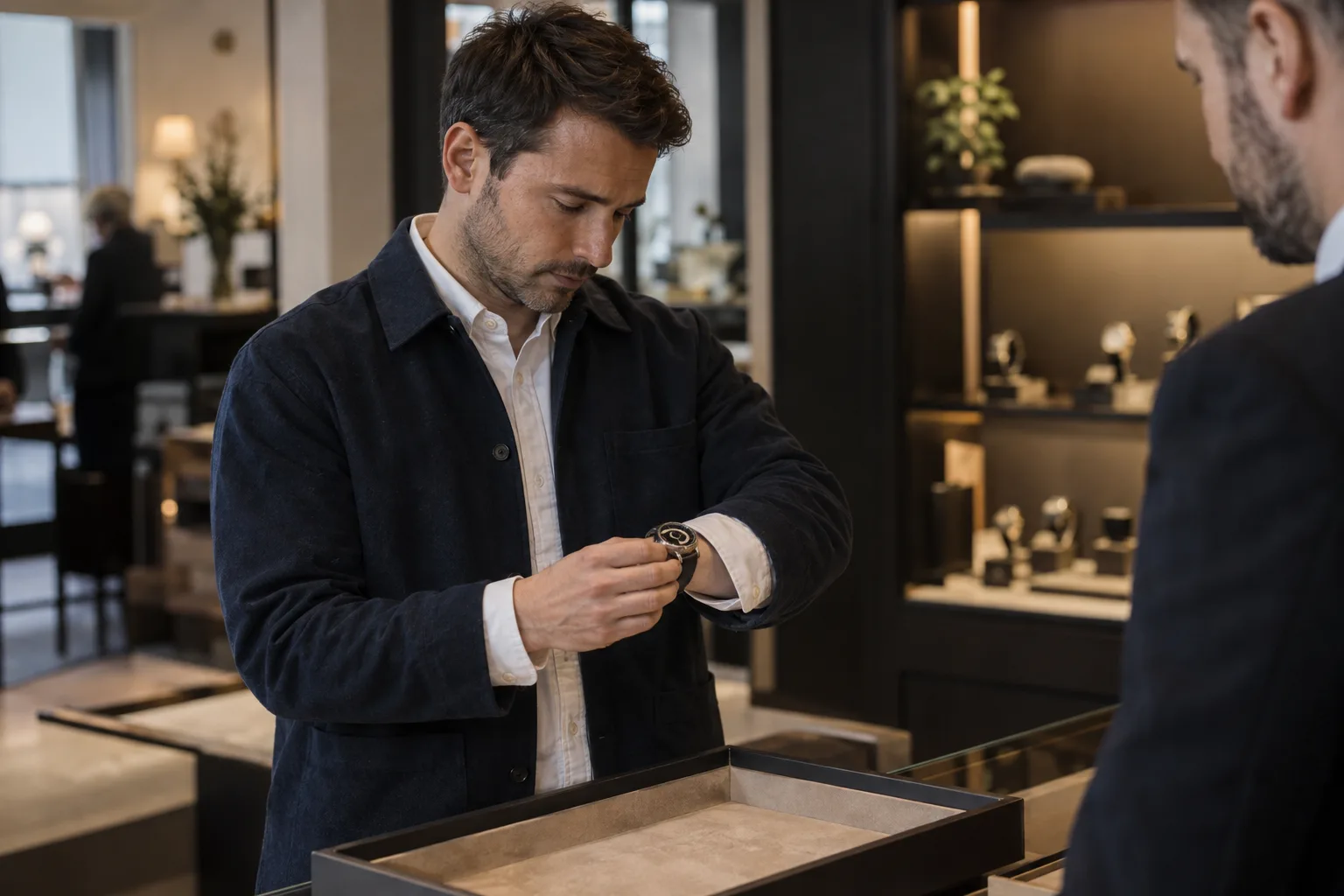
Try the exact reference on, ideally with the sort of sleeve you normally wear. Case diameter alone cannot describe fit: thickness, lug-to-lug length and bracelet shape all affect how a watch sits. Check that the crown and pushers don’t dig into your wrist when you bend your hand.
Give it the ordinary-life test
Read the time at a glance rather than admiring the dial at length. Strong contrast is useful; tiny counters and decorative detail may demand more attention. Try the chronograph controls with permission in the shop, and make sure you understand how to start, stop and reset them.
Ask about servicing, warranty terms, water resistance and replacement straps or bracelets. Don’t assume a sporty appearance makes leather suitable for swimming, or that chronograph pushers can be operated underwater. The manufacturer’s instructions for that reference matter more than the category’s rugged image.
Finally, be realistic about dress codes. A motorsport watch can work with relaxed tailoring, but it is not automatically the right accessory for every formal occasion. Our guide to morning dress and wedding tails is the better starting point when an invitation specifies traditional attire. Buy for the life you lead, not an imaginary podium appearance.
Why this matters
For UK buyers, these prices put motorsport watches firmly in considered-purchase territory, even before servicing enters the conversation. Set a ceiling that leaves room for ownership costs, then compare the actual functions within it. A light-powered watch and an automatic chronograph can cost similar amounts while asking different things of you. If the dial is the main attraction, own that decision: our guide to unusual watches as design choices offers another way to judge the appeal without confusing complexity with usefulness.
Common questions
- what is a motorsport watch?
- A motorsport watch takes inspiration from racing through its functions, design or automotive partnerships. Some have chronographs for measuring elapsed time; others use racing colours or dashboard references without a stopwatch function.
- are all motorsport watches chronographs?
- No, a racing connection does not mean a watch has a chronograph. The Autodromo Group B Series 2 Automatic is a rally-inspired automatic rather than a stopwatch-equipped model.
- is the TAG Heuer Formula 1 Solargraph automatic?
- No, the Formula 1 Solargraph uses a light-powered movement. It converts light into electrical energy rather than relying on wrist movement to wind a mechanical mainspring.
- how much is the Tissot PR516 Automatic Chronograph?
- The Tissot PR516 Automatic Chronograph has an indicative UK price of £1,715. Check the exact reference and current retailer price before buying.
- what does a tachymeter on a watch do?
- A tachymeter calculates average speed when used with a chronograph over a known distance. It does not measure your travelling speed independently.
- what is a split-seconds chronograph?
- A split-seconds chronograph uses two chronograph seconds hands to record an intermediate time while timing continues. The Richard Mille RM 43-01 Carbon TPT Ferrari includes this complication.
- what should i check before buying a motorsport watch?
- Check the movement, functions, legibility and fit before buying. Try the exact reference on, then ask about servicing, warranty terms, water resistance and replacement straps or bracelets.
Sources
This article was written by The Good Cut using the sources listed above. Product mentions are editorial unless clearly marked as sponsored.