Grooming & Skincare
Are electric toothbrushes better? Dentists say yes — here’s why
Dentists back electric brushes over manual. Here’s the evidence, the features that matter, and how to choose one that actually improves your routine.
By The Good Cut Editorial Team
Published · Updated · 5 min read
Quick answerMost dentists prefer electric toothbrushes. Studies link them with lower plaque and gingivitis, and features like timers and pressure sensors help you brush better with less effort.
Dentists are near‑unanimous: if you want cleaner teeth with fewer blind spots, an electric toothbrush is the safer bet. The reasons are simple — they remove more plaque, keep your timing honest and nudge you toward better technique without thinking about it.
The appeal isn’t just power. Features like built‑in timers, pressure sensors and quadrant pacing turn a rushed scrub into a repeatable routine. Add evidence showing lower plaque and gum inflammation after switching, and the case for electric gets strong very quickly.
What happened
Dentists compared electric and manual brushing and came down firmly on the electric side. Their view: powered brushing is more consistent, tackles plaque more effectively and reduces common user errors like pressing too hard or missing the gumline.
Researchers have associated a switch to electric with measurable gains: about 21% less plaque and an 11% reduction in gingivitis risk. That’s clinically meaningful in day‑to‑day brushing and compounds over months of use.
Electric brushes come in two main styles. Oscillating models use a small round head that rotates back and forth to disrupt plaque. Sonic designs look more like a standard brush head but vibrate at high frequency to agitate fluid and reach awkward areas.
Both styles outperform manual brushing in lab and real‑world conditions because the brush supplies the motion and consistency. The result is steadier coverage and fewer missed surfaces compared with a sleepy, hand‑driven routine.
Speed helps too. Sonic heads can deliver tens of thousands of strokes per minute, whereas manual brushing averages around 200 strokes. That multiplier matters on the sticky plaque that clings at the gumline and between teeth.
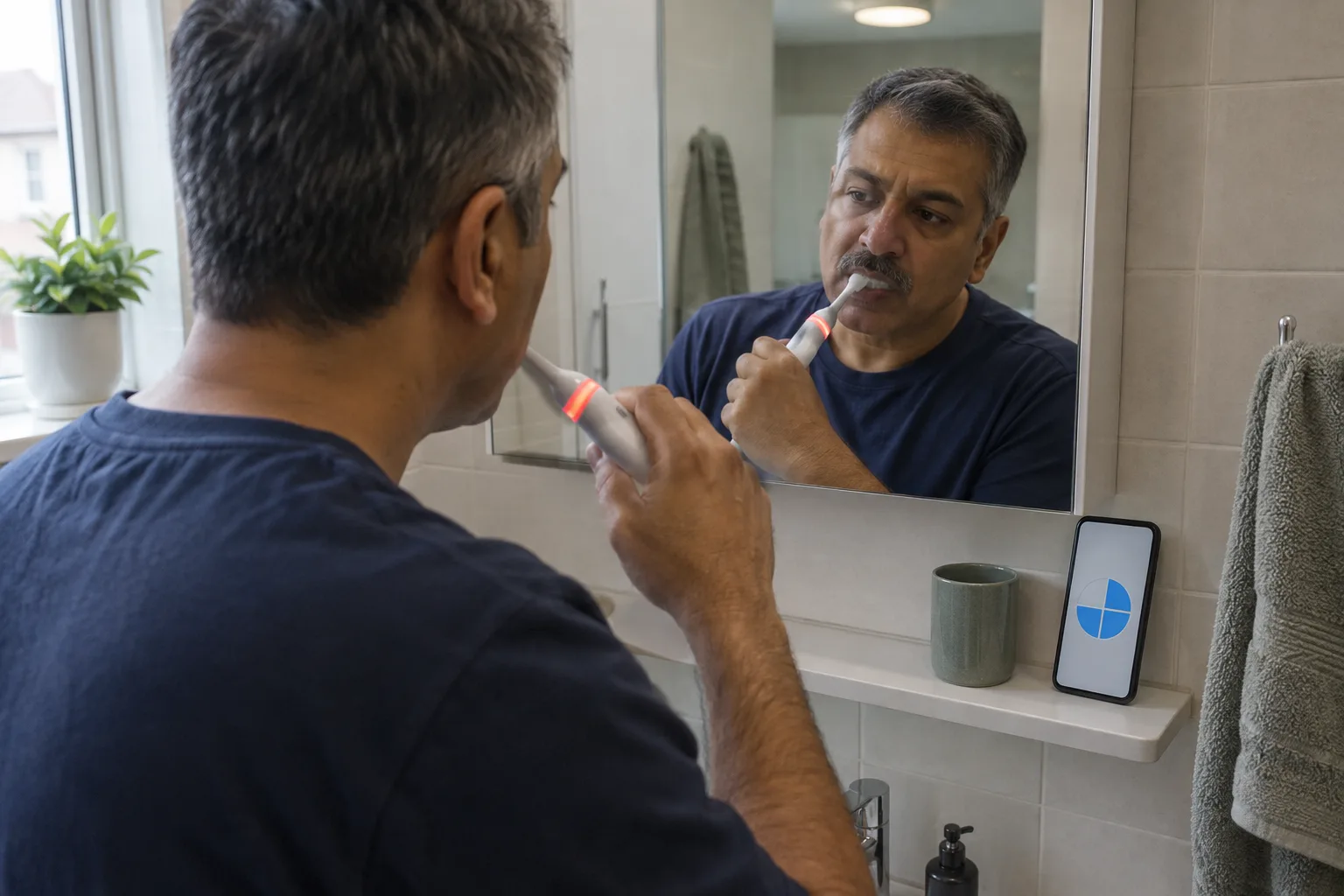
Most electric handles include a two‑minute timer. Many add 30‑second quadrant prompts so you split time evenly across upper right, upper left, lower right and lower left — an easy fix for the classic “front teeth only” rush.
Technique safeguards are now standard. Pressure sensors alert you when you bear down and risk wearing enamel or irritating gums. Some models pair with an app to map where you’ve brushed and nudge you back to missed patches.
For anyone building a bathroom routine beyond teeth, a better brush slots neatly next to a dialled‑in hair product. If you’re updating the rest of your kit, our guide to the best hair clay for men by hair type covers finishes, hold and how they behave day to day.
The background
Manual brushes still have advantages: they’re cheap, light, don’t need charging and are easy to pack. If your technique and timing are excellent, you can achieve good results with one.
Electric’s downside is bulk and cost, though battery life has improved and many heads are widely available. Some brands now offer lower‑waste options with recyclable or plant‑based heads to trim plastic impact.
Brushing method matters with any tool. Common mistakes include scrubbing flat across teeth, not angling bristles toward the gumline and pressing too hard. Powered heads reduce the need to “do” the motion yourself, so you can guide the head and let it work.
Two minutes sounds short, but most people stop early without a timer. Even coverage — especially behind molars and along the gumline — takes longer than you think when rinsing the last mouthful of coffee before the commute.
Choosing between oscillating and sonic is mostly about preference. Oscillating heads are precise in tight spaces; sonic models feel gentler while moving a lot of micro‑fluid around teeth. Both have strong evidence behind them.
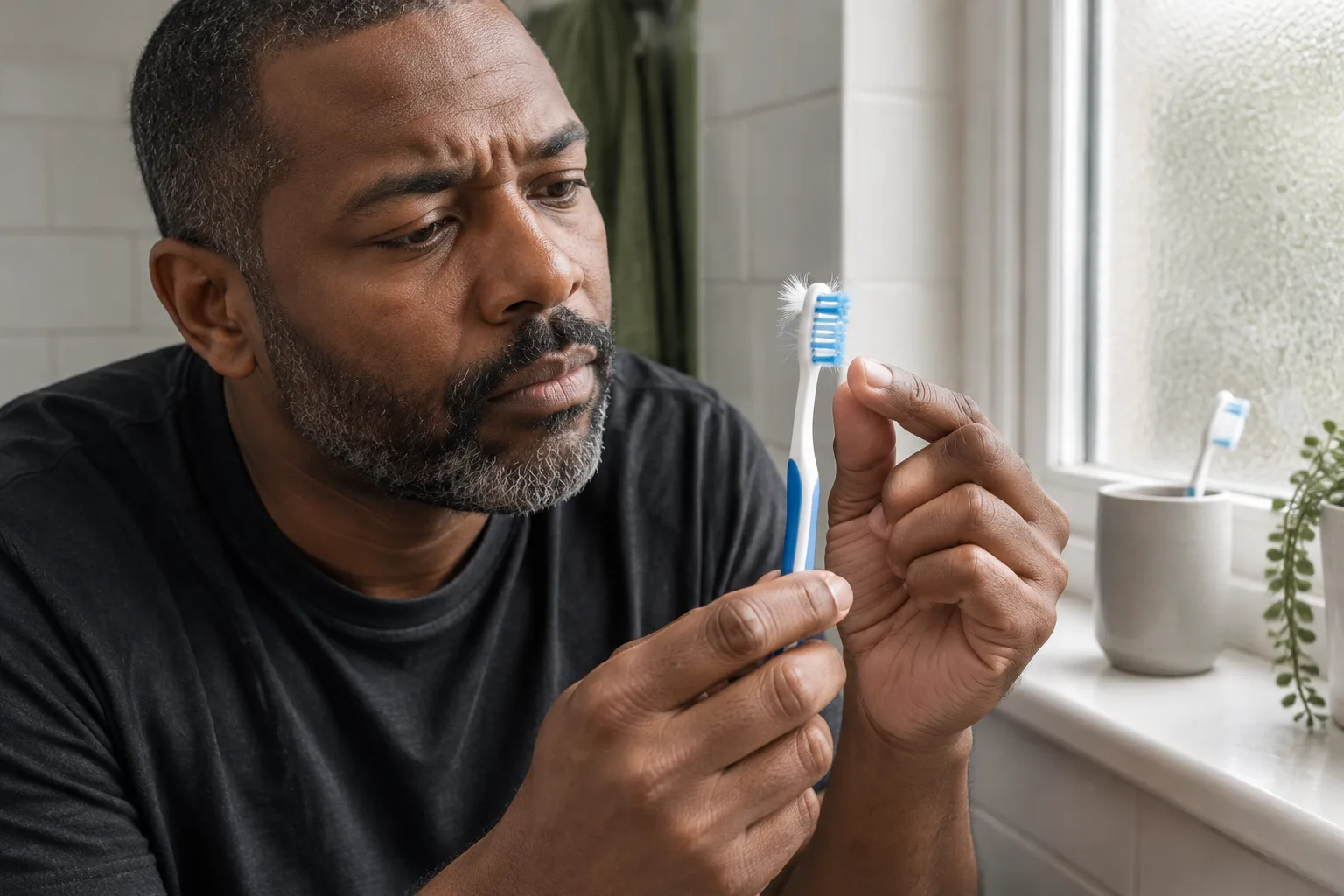
Replacement is simple upkeep. Swapping brush heads regularly maintains bristle shape and cleaning power; worn, splayed bristles clean less effectively and can be harsher on gums.
If the grooming drawer is due a sort‑out, your beard toolkit deserves the same logic: pick tools that suit what’s underneath. Our explainer on the best beard brush for different beards breaks down what to use for coarse, straight or curly growth.
What people are saying
Dentist Dr Joseph Field has put it plainly: “There are very few reasons not to go electric.” That aligns with the broad professional preference for powered brushing.
Clinicians point to pressure sensors for protecting enamel and gums. Overbrushing is common, especially with a heavy‑handed manual scrub first thing. Alerts train you to ease off, improving comfort for sensitive mouths.
Timers and quadrant pacing are among the most‑cited wins. They solve the real‑world problem of under‑brushing by quietly extending sessions to a full two minutes with even coverage.
App‑connected models add coaching. Real‑time maps show where you’ve missed, and session histories help you spot patterns — the kind of feedback that upgrades a habit without a dentist hovering over your shoulder.
On hardware, dentists frequently highlight reliable ranges with sonic or oscillating heads, multiple intensity settings and strong battery life. They also mention more sustainable designs that reduce reliance on petroleum‑based plastics via recyclable or plant‑based heads.
For anyone finessing the rest of their morning line‑up, adding texture and lift up top can be as simple as the right spray. We’ve tested the best sea salt sprays for men to see which actually work.
What happens next
If you’re buying, prioritise three things: a two‑minute timer with quadrant prompts, a pressure sensor, and a head style you’ll actually use twice a day. Those matter more than flashy extras.
Pick a softer setting to start, especially if your gums feel tender, and aim the bristles toward the gumline. Guide the head tooth‑to‑tooth; let the brush supply the motion.
Track comfort for the first fortnight. If areas feel sore, lighten pressure or drop intensity; if plaque still feels tacky at the gumline, slow down on each tooth and revisit your angles.
Replace the head regularly to keep bristles effective. If you can’t remember when you last changed it, it’s time. Fresh bristles and consistent pressure do more than another fancy mode.
Travelling? A slim handle with a travel case earns its space. For carry‑on only, some still pack a manual; the key is keeping up the two‑minute habit rather than skipping altogether.
If you’re shaving your head, don’t neglect the skin while you upgrade the bathroom cabinet. Healthy scalp care pays off — start with the best shampoo for a bald head to keep things calm and clean.
Sustainability‑minded? Look for brands offering recyclable heads or take‑back schemes. A durable handle you won’t replace yearly is better for both wallet and waste.
Finally, use your next check‑up to sanity‑check technique. Ask your dentist which areas you miss and whether your current head shape suits your mouth. Small tweaks often unlock the biggest gains.
Related: How often should you replace your toothbrush? The facts
Related: Movember: why interest is spiking and what it funds
Related: Soap for men’s private parts: do you need a special wash?
Why this matters
Oral health is style-adjacent: fresh breath, confident smiles and fewer emergencies before a big meeting all start at the sink. For UK readers weighing up a switch, electric brushes offer a clear, evidence-backed upgrade with helpful failsafes. Prioritise a timer, pressure sensor and a head that suits your mouth, then stick to two minutes. If you’re refreshing the rest of your routine, our guide to the best sea salt sprays for men is a handy next step: find one that works for your hair.
Common questions
- are electric toothbrushes better than manual
- Yes. Dentists generally favour electric brushes, with evidence of less plaque and lower gingivitis risk compared with manual brushing.
- do electric toothbrushes reduce plaque and gingivitis
- Studies link switching to electric with around 21% less plaque and an 11% reduction in gingivitis risk compared with manual brushing.
- which is better sonic or oscillating electric toothbrush
- Both outperform manual. Sonic vibrates at high frequency; oscillating spins a small round head. The best choice is the one you’ll use consistently.
- how long should i brush with an electric toothbrush
- Two minutes total. Many brushes include a timer and 30‑second quadrant prompts to spread that time evenly around your mouth.
- what features should i look for in an electric toothbrush
- Prioritise a two‑minute timer, quadrant pacing and a pressure sensor. Multiple intensities and app guidance are useful, but secondary.
- how many strokes per minute does a sonic brush do
- Sonic brushes can deliver tens of thousands of strokes per minute. Manual brushing is roughly 200 strokes per minute.
- do i need a pressure sensor on an electric toothbrush
- It helps prevent overbrushing, protecting enamel and gums. Sensors alert you to ease off, a common issue with manual habits.
- how often should i replace an electric toothbrush head
- Replace the head regularly to maintain bristle shape and cleaning power. If bristles look splayed or you can’t remember when, change it.
Sources
This article was written by The Good Cut using the sources listed above. Product mentions are editorial unless clearly marked as sponsored.