Grooming & Skincare
Best scalp serums for men: what actually works now
From anti‑shedding to anti‑grey, these are the men’s scalp serums worth knowing—plus what they can and can’t do.
By The Good Cut Editorial Team
Published · Updated · 6 min read
Quick answerScalp serums won’t regrow dead follicles, but they can improve scalp condition, reduce shedding and help hair look fuller. We rate options from Nécessaire, Patricks, Arey and Act + Acre for different goals and budgets.
Scalp serums have moved from niche to normal in men’s grooming. The promise isn’t hair regrowth from scratch, but a healthier scalp, less shedding and better‑looking density—useful if your crown’s looking spare, your scalp’s feeling tight, or you simply want stronger‑feeling hair. The key is knowing what each formula is built to do, and being realistic about timelines.
Our take: a good serum is skincare for your scalp—hydration, barrier support and targeted actives—while proven regrowth still lives with minoxidil and prescription routes. With that in mind, four launches stand out for clearly stated aims and ingredients, covering value, styling utility and specific concerns like greying.
What happened
A clutch of men‑friendly scalp serums is now easy to buy in the UK, each taking a different tack. Nécessaire’s The Scalp Serum focuses on barrier repair and density support with a peptide complex called Capixyl, alongside niacinamide (vitamin B3), panthenol (B5) and a hit of hyaluronic acid for hydration. It sits around £45 and is built as a light, leave‑in daily step rather than a sticky tonic.
The brand is clear about limits: this type of formula won’t resurrect dead or dormant follicles. What it may do is reduce shedding, bolster existing strands and improve overall scalp condition—useful if your complaint is increased fall‑out and dryness rather than smooth‑bald patches.
Patricks’ RD1 Anti Hair Loss Spray goes heavier on the hair‑density angle and daily practicality. On the label: redensyl, capixyl and caffeine, with the brand positioning it as DHT‑blocking support. It’s also designed as a pre‑styler—spritz, work through, then add your paste or clay—so it can slot into a routine without extra faff, and it’s listed at about £64.
If greying is the main concern, Arey’s To The Root takes a different route entirely. The brand says its peptide‑led formula aims at pigment preservation and uses antioxidants to reduce stress in the hair bulb. Arey reports that 88% of participants in its study saw less grey growth after six months, with more users noting fuller‑looking hair versus non‑users. It’s the priciest of the group at roughly £175.
For scalp comfort and overall vitality, Act + Acre’s Stem Cell Scalp Serum pushes a gentler brief. The brand highlights apple stem cells for protecting follicle environments, with aloe and bamboo extracts to hydrate and soothe. It also talks up “cold processing” to keep actives intact, and lists the product at $56 on its site.
As a set, these four reflect what’s now normal in men’s haircare: skincare‑style ingredients, clearer claims and formats that work day to day. Our read: Nécessaire is the best value all‑rounder for dryness and mild shedding; Patricks is the practical, styling‑friendly density play; Arey is a targeted, premium anti‑grey option; Act + Acre is a calming choice for irritation‑prone scalps.
The background
Think of the scalp as face skin under hair: it has an oil barrier, a microbiome and a tendency to get dehydrated by hot water, sweat and product buildups. That’s why niacinamide (to help barrier function), hyaluronic acid (to bind moisture) and soothing extracts earn their keep in scalp serums. Better hydration and a calmer barrier can translate into less itch, fewer flakes and, indirectly, thicker‑looking hair because strands aren’t snapping.
Where density is concerned, a separate issue looms: the androgen DHT is linked to follicle miniaturisation in male pattern hair loss. Cosmetic serums can include complexes like capixyl and redensyl or caffeine for supportive effects, but the best‑evidenced hair‑loss treatments remain topical minoxidil and prescription finasteride. If shedding, widening partings or a retreating hairline worry you, talk to a GP or pharmacist about those alongside a serum.
Timelines matter as much as ingredients. Cosmetic improvements—less tightness, calmer skin, a glossier root area—can show in weeks. Fuller‑looking hair from reduced shedding needs patience: think eight to twelve weeks minimum. Anti‑grey claims, where they exist, are typically framed around multi‑month use, as with Arey’s six‑month window.
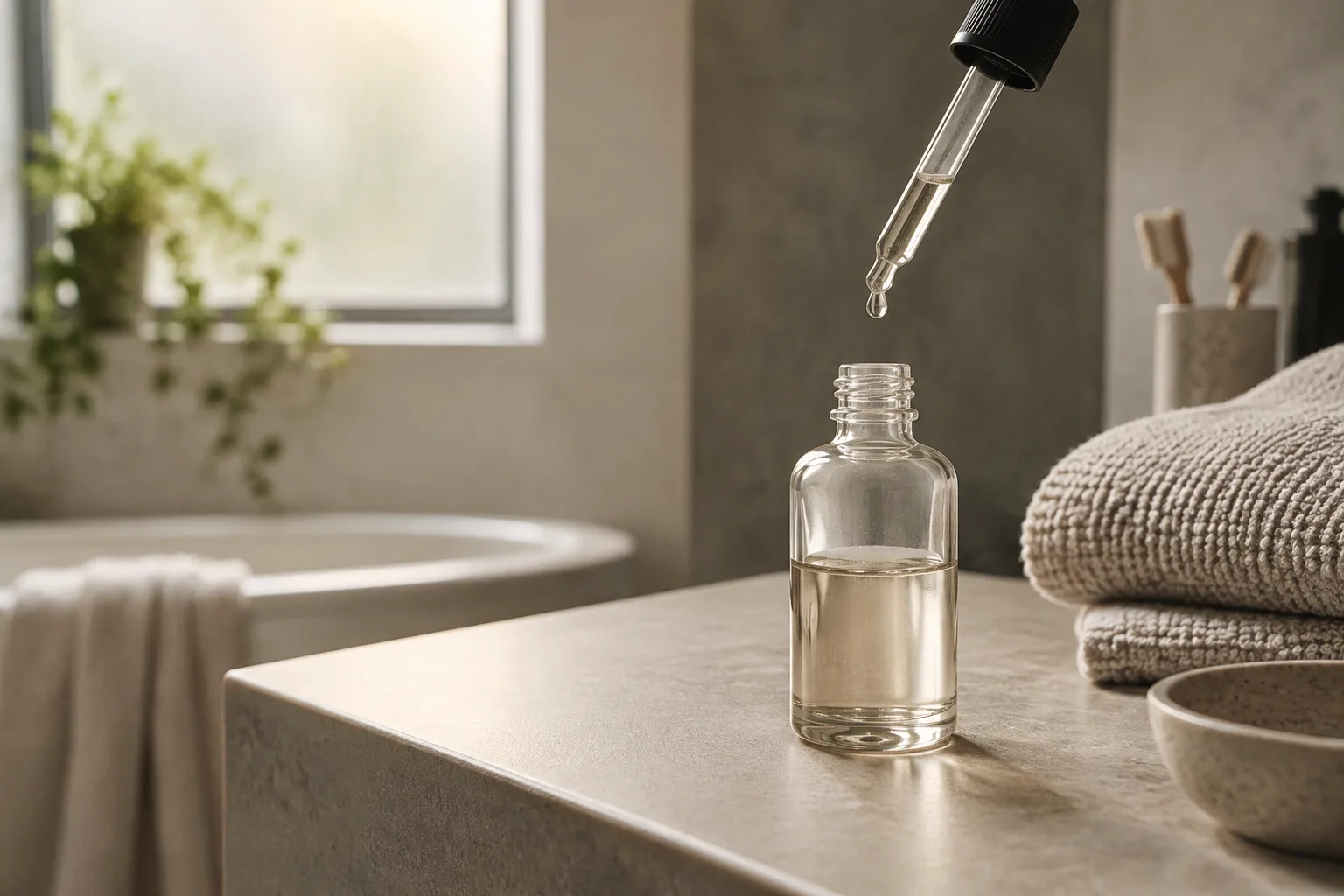
Application is simple but easy to get wrong. Use a dropper or spray directly onto the scalp, not the hair shaft, then massage with fingertips for 30–60 seconds to spread. Most formulas are fine on dry or towel‑damp scalps; always check the label for frequency. If you style, layer a pre‑styler spray first, then finish with your paste or clay (our clay picks by hair type can help you match hold to density).
Haircuts still do heavy lifting. If you’re dealing with see‑through temples or a lighter crown, a tidy taper with texture on top balances coverage and shape. We’ve broken down how to wear it in our taper haircut guide, and a softer textured cut—see our Tom Hardy haircut breakdown—can make hair appear fuller without helmet‑y volume.
Finally, expectations: serums condition the terrain; they don’t rewrite your genetics. That doesn’t diminish their use. Less inflammation, better moisture and consistent scalp care often mean hair that styles better, breaks less and looks thicker—even if the count of follicles hasn’t changed.
What people are saying
Brand messaging reflects a split: some formulas focus on hydration and scalp comfort, others speak directly to density or greying. Patricks positions RD1 as a DHT‑blocking, daily‑use spray that also adds texture—handy if you prefer quick routines and want a product that earns its place. Nécessaire leans into barrier support, packaging skincare‑familiar ingredients for the scalp.
Arey centres its case on pigment maintenance, citing a six‑month study with reduced grey growth for the majority of participants. That won’t persuade every sceptic, but it does lay out a timeline and a target user: men who are greying early and want a non‑dye approach.
From the professional side, dermatology guidance tends to be pragmatic: maintain scalp health, manage expectations, and consider evidence‑based treatments for actual regrowth. Barbers, meanwhile, keep it visual—less flaking means cleaner lines and better texture, and a hydrated scalp tolerates styling products more comfortably. If that’s your goal, a pre‑styler spray under clay or paste is an easy win, and our hair clay guide by hair type explains how to pick the right finish.
On routine building, you’ll hear near‑universal advice to patch test new actives and introduce one product at a time. If your scalp is inflamed, very flaky or you have conditions like psoriasis or seborrhoeic dermatitis, speak to a professional before layering actives. For styling ideas that complement thinner areas, textured, wearable shapes like a modern faux hawk keep height and movement without exposing scalp; our faux hawk explainer shows how to get the balance right.
What happens next
Pick a lane, then build a simple plan. If dryness and irritation are top of the list, start with a hydrating serum such as a niacinamide‑plus‑HA blend and reassess after eight weeks. If shedding is front and centre, consider a density‑angled formula (capixyl, redensyl, caffeine) and speak to a GP about combining with minoxidil or finasteride for stronger evidence.
If greying is your focus and you’re dye‑averse, a pigment‑support approach like Arey’s is the current niche option—just budget for the long game and track progress with regular photos under the same light. For daily practicality, a pre‑styler spray that also targets density is a tidy two‑birds solution under your usual matte clay or cream.
Routine‑wise, aim for consistency: daily or near‑daily use, massage into the scalp, and don’t overload—more drops won’t speed results. Keep shampoo gentle and infrequent enough for your scalp type; product buildup can throw off even the best serum. Ask your barber to add light texture and a taper to disguise any see‑through areas; our taper haircut guide has the key talking points to take to your next appointment.
Finally, set a review point. If there’s no visible improvement in shedding, comfort or styling after three months, re‑evaluate: tweak the formula type, adjust frequency, or discuss medical options. If you do see gains, keep going—scalp care works like skincare: results stick when the habit does.
Related: Best men’s moisturisers 2026: what to buy and why it works
Related: Best head shavers for men 2026: what to buy now
Related: Men’s grooming gifts 2026: the picks that actually land
Why this matters
Hair loss anxiety is common, but not every solution needs a prescription. A sensible scalp serum can calm irritation, cut shedding and help hair style better while you explore evidence‑based options with a GP. Start simple, be consistent, and pair the habit with a smarter cut; our taper haircut guide is a solid place to begin the conversation with your barber.
Common questions
- what do scalp serums actually do for men
- They support scalp health—hydration, barrier care and soothing—and can reduce shedding for fuller‑looking hair. They don’t regrow dead follicles or cure baldness.
- can scalp serums regrow hair
- No. Serums can improve scalp condition and help reduce shedding, but regrowth is best pursued with minoxidil and prescription options such as finasteride.
- which ingredients should i look for in a scalp serum
- For comfort: niacinamide, hyaluronic acid, aloe and bamboo. For density support: capixyl, redensyl and caffeine. For greying concerns: peptide‑led, antioxidant formulas.
- how long until i see results from a scalp serum
- Expect scalp comfort changes in weeks; reduced shedding and fuller‑looking hair typically take 8–12 weeks. Anti‑grey approaches are usually measured over about six months.
- can i use a scalp serum with minoxidil or finasteride
- Usually yes, but separate applications and follow label advice. Speak to a GP or pharmacist to build a routine that avoids irritation and overlaps sensibly.
- does patricks rd1 work as a styling product
- Yes. RD1 is a spray that also acts as a pre‑styler, adding texture before you apply your usual paste, clay or cream.
- do any scalp serums help with grey hair
- Arey’s To The Root targets greying with peptides and antioxidants. The brand reports reduced grey growth after six months of use.
Sources
This article was written by The Good Cut using the sources listed above. Product mentions are editorial unless clearly marked as sponsored.