Grooming & Skincare
Best beard trimmers 2026: what’s new and what we’d buy
2026’s beard trimmers lean dial‑first, travel‑ready and modular. Here’s the kit worth knowing—and the picks we’d actually buy.
By The Good Cut Editorial Team
Published · Updated · 6 min read
Quick answerThe standout shift in 2026 is towards built‑in length dials, modular multi‑groom systems and clearer battery readouts. For most guys, a simple dial‑adjust trimmer or a compact multi‑groomer will handle stubble, short beards and tidy edging at home.
The beard‑trimmer aisle has had a proper refresh. 2026’s crop leans heavily on built‑in length dials, longer runtimes and clever multi‑groom systems that shrink your wash‑bag. There’s still a time and place for a barber, of course, but more men are keeping everyday stubble and tidy cheek lines in‑house—and the latest gear reflects that.
We’ve sifted through the new and notable hardware, separated features that actually help from those that don’t, and laid out the sensible buys by how you’ll use them. If you’re maintaining short stubble, shaping a short beard or just cleaning a neckline, you don’t need a drawer full of guards any more; one well‑specced tool can do the lot.
What happened
A wave of dial‑adjust trimmers has arrived, letting you flick between cutting lengths without juggling plastic guards. Braun’s latest all‑in‑one units headline this approach, building a precision wheel into the body so you can move through small increments for stubble and short beards without swapping parts.
Travel‑friendly designs have stepped up too. Philips’ OneBlade Pro 360 is pitched as a hybrid—part trimmer, part electric shaver—with a display that shows battery percentage on the front. It’s a compact, carry‑on solution for maintaining stubble, tidying a moustache and knocking back the neckline between barber visits.
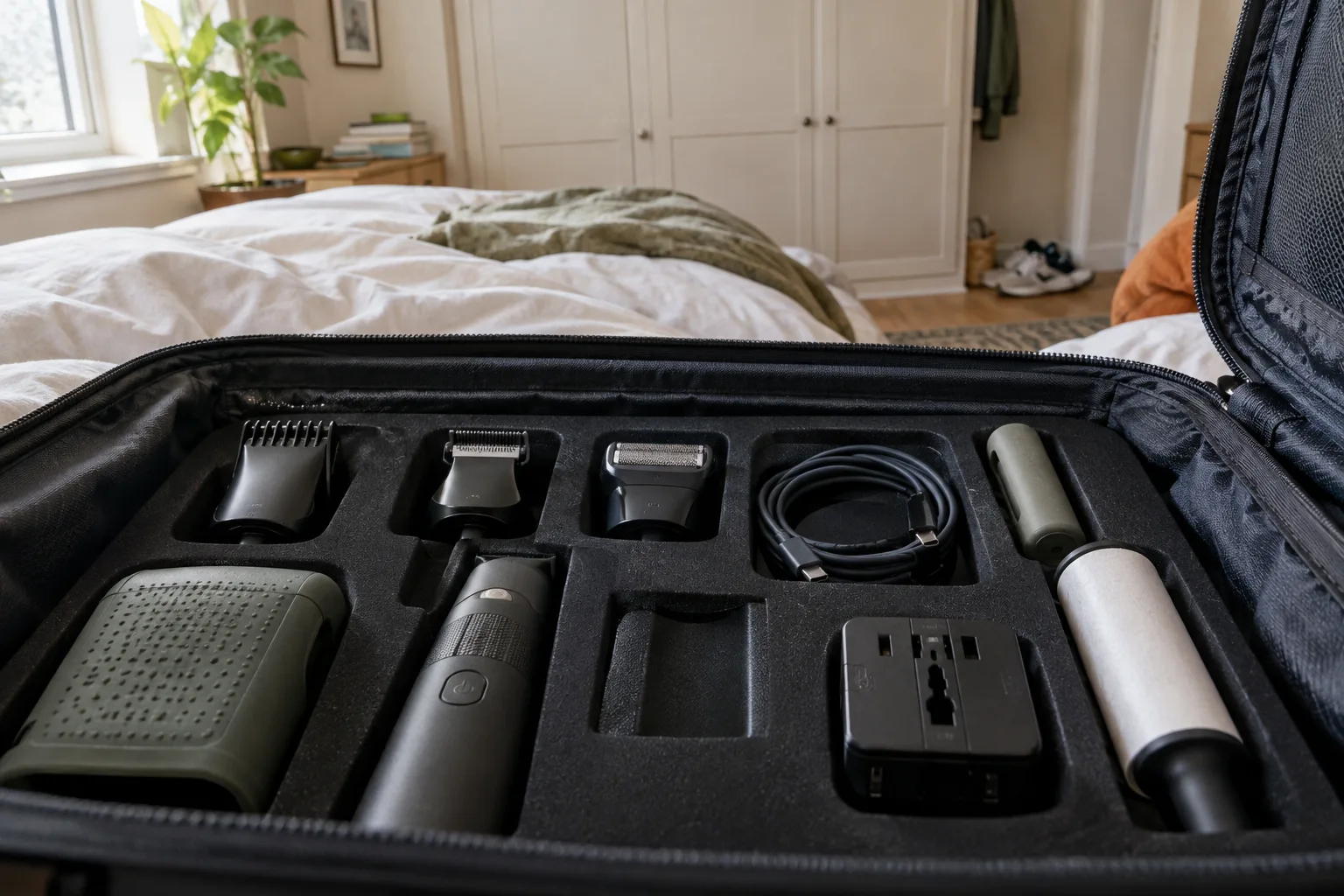
Modular systems have gone properly mainstream. Panasonic’s ER‑CKL2 MultiShape centers on a single rechargeable core with interchangeable heads for beard trimming, shaving and more. If you like the idea of one handle and a small pouch of heads for trips, it’s one of the most versatile layouts on the market.
Detailing tools haven’t gone anywhere. Andis’ compact trimmers—such as the inSIGHT and Slimline Pro Li—use T‑blade heads for clean, straight edges on the cheeks, ’tache and neckline. That blade shape helps draw lines accurately, which is why you’ll see them used for crisp outlines and light shape‑ups.
Endurance remains a headline spec for bigger kits. Multi‑groomers from the likes of WAHL place an emphasis on long battery life for families or house‑shares, where the trimmer does double duty on hair and beards. Conversely, lighter units such as BaByliss’ metal‑bodied compact trimmers prioritise low weight without awkward balance.
At the budget end, a stack of value models is fighting for space under £30. King C Gillette’s Style Master sits in that bracket with a small footprint and simple length options, while beginner‑friendly kits from Remington aim to include everything a first‑timer needs in one box.
Prices across current mainstream models run from around £19 for simple budget options up to roughly £149 for multi‑groomers with bigger batteries and more heads. Most sit in the £60–£110 sweet spot where you’ll find solid build, stainless‑steel blades and proper sealing for wet‑area cleanup.
The background
Why the dial obsession? Adjustable wheels and on‑body sliders eliminate a faffy packet of guards and make it easier to keep consistency across the face. For short beards and stubble—where a 0.5mm change shows—those fine increments are genuinely useful.
Water resistance has become table stakes. Look for models you can rinse under the tap, because hair builds up behind the blade and in the drive housing; a detachable head makes that two‑minute clean far easier. Keep a tiny brush handy and, if your unit requires it, a drop of oil every few weeks.
Blade materials matter less than consistency and replaceability. Stainless‑steel blades stay sharp for ages and many designs self‑sharpen as they run. Still, they’ll dull eventually, so check replacement availability before you buy—and how easily the head pops off when it’s time.
Length range is a practical decider. If you wear close stubble, anything from 0.4mm to 5mm with small steps will do. If your beard sits in the 6–12mm zone, make sure the trimmer can actually reach that without flimsy clip‑on combs. Anything beyond 12–15mm and you’re usually better off with proper guards, or even hair‑clipper attachments, for an even take‑down.
T‑blades versus standard blades comes down to what you trim most. T‑blades excel at edging and drawing lines along the cheeks and neck. Standard straight blades are fine for bulk reduction and all‑over passes. Many multi‑head kits bundle both so you can switch after the main trim for clean definition.
If you’re keen on a tidy neckline fade into your haircut, a trimmer that holds detail at short lengths helps. The same goes if your cut has a defined silhouette—think the cleaner edges you might pair with a faux hawk haircut. Precision attachments make that junction between beard and hairstyle look intentional rather than accidental.
Battery indicators are more than a nicety. Percentage readouts remove guesswork, especially if you only charge at weekends. Quick‑charge functions—10–15 minutes for a finish pass—are worth having if you often remember to trim five minutes before you leave.
What people are saying
Among grooming editors and barbers, there’s broad agreement that tools should match routine rather than hype. As grooming journalist Adam Hurly puts it on his channel: “There’s no single winner for everyone.” That’s the right lens—beard length, density and how often you shave your neck will dictate the tool.
Hurly also points to the barber‑favourite status of compact Andis trimmers with T‑blades for line‑ups and outlines. In practice, that means anyone who wants visibly sharp cheek lines or precise ’tache edges may benefit from a dedicated detail head rather than trying to do everything with one standard blade.
Hybrid and travel‑ready tools get praise for simplicity. One‑piece units like the OneBlade‑style hybrids suit minimalists who want an easy stubble pass plus a quick dry‑shave on the neck. Percentage battery displays resonate with frequent travellers who don’t want to pack a charger for a two‑night work trip.
Modular kits draw attention from space‑savvy buyers. A single power core with several heads—like Panasonic’s MultiShape concept—means you can bring beard, shave and body attachments without bulking out your dopp kit. It’s also neater on the bathroom shelf.
Finally, budget buys under £30 are landing in more wash‑bags, often as a second tool: one dial‑adjust unit for the weekly beard pass, plus a cheap compact for travel or gym. It’s a practical split if you want to keep your main trimmer at home.
What happens next
Here’s how we’d pick in 2026, based on features that actually help day‑to‑day.
– For short stubble up to 5mm: choose a dial‑adjust trimmer with small increments and a reliable battery indicator. That combo keeps your length consistent and your timing honest.
– For sharp cheek and neck lines: add a T‑blade detail trimmer (Andis style) to draw straight edges after the main pass. You’ll get cleaner definition than forcing it with a bulk head.
– For one‑handle convenience: consider a modular multi‑groomer such as Panasonic’s ER‑CKL2 MultiShape. One battery core plus heads for beard, shave and body keeps travel light.
– For a do‑everything kit at home: a classic multi‑groomer from the big brands will cover beard, hair and nose trimming, and often lasts longest on a single charge.
– For strict budgets or a first trimmer: a simple compact under £30 can handle stubble and a short beard; upgrade later with a dedicated detailer if you start shaping more.
A smart routine still beats specs. Trim the bulk first (longer guard), then work shorter on the cheeks and beneath the jaw to create contour. Swap to a detail head to outline the neckline just above your Adam’s apple, and feather it up to the jaw with a longer setting for a soft blend. If you wear a moustache, trim it fractionally shorter than the beard so it sits neat; a tiny smear of matte clay helps keep flyaways in check—our best hair clay guide explains what to use by hair type.
Keep the tool healthy: tap out clippings after each use, rinse if the body allows, and brush around the blade mount weekly. Replace heads when they tug or leave stragglers. If your beard’s on the fuller side, plan your trim alongside your haircut—our best hairstyles for men with thick hair piece shows how dense hair and a solid beard can work together.
Finally, if November has you experimenting with a standalone ’tache, treat it as its own project. A dial‑adjust trimmer can keep the bulk even, while a detailer sorts the edges; our look at why Movember interest is spiking also covers moustache maintenance basics.
Related: Best electric toothbrushes 2026: what to buy and why
Related: Men’s grooming gifts 2026: the picks that actually land
Why this matters
UK guys are trimming more at home, and 2026’s kit genuinely makes that easier: dials for precision, modular heads for travel, and better battery feedback. Start with a dial‑adjust trimmer for weekly stubble control, add a T‑blade for crisp edges, and keep a light hybrid for trips. If your beard meets a defined haircut, talk to your barber about tapering the sideburns into your beard or shaping a faint cheek line to complement it—our faux hawk explainer shows how cleaner edges sharpen bolder cuts.
Common questions
- what are the best beard trimmers in 2026
- Look for dial‑adjust trimmers with small increments, clear battery indicators and stainless‑steel blades. Modular multi‑groomers and compact hybrids are great for travel.
- is the philips oneblade pro 360 good for beards
- It suits stubble and short beards. It also doubles as an electric shaver and displays remaining battery percentage on the device.
- what is a t blade trimmer used for
- A T‑blade excels at edging and line‑ups. It helps draw straight cheek and neck lines and tidy moustache edges after your main trim.
- are modular multi groomers worth it
- Yes if you travel or want one handle with several heads. A system like Panasonic’s MultiShape keeps beard, shave and body grooming in a compact kit.
- how much should i spend on a beard trimmer
- Good units typically sit between £60 and £110. Budget options start around £19, while larger multi‑groomers with long battery life reach about £149.
- do i need waterproofing on a beard trimmer
- It helps. Rinseable bodies and detachable heads make cleaning faster and keep cutting performance consistent over time.
- how do i keep beard lines sharp at home
- Trim bulk first, then use a T‑blade to outline cheeks and neck. Fade up from the neckline with longer settings for a softer, barber‑style blend.
- what length should i trim my moustache
- Usually a fraction shorter than your beard so it sits neat. Finish with a dab of matte clay to control flyaways.
Sources
- Men's Health UK: 8 Best Beard Trimmers for Men in 2026: Tested & Reviewed
- youtube.com: BEST BEARD TRIMMERS 2026: Complete Buyer's Guide (GQ Grooming Editor) - YouTube
This article was written by The Good Cut using the sources listed above. Product mentions are editorial unless clearly marked as sponsored.