The Good Edit
Types of jackets for men: what each style actually does
The Good Edit sorts the useful outerwear distinctions from the wardrobe clutter, with a practical guide to fabric, fit and British weather.
By The Good Cut Editorial Team
Published · 6 min read
Quick answerThe most useful types of jackets for men cover three jobs: rain protection, warmth and everyday layering. Choose by construction rather than name: a parka can be uninsulated, a puffer is not automatically waterproof, and denim describes fabric rather than shape.
Autumn outerwear shopping comes with a vocabulary problem: jacket categories mix fabric, shape and function as though they mean the same thing. A suede jacket might also be a bomber; a parka might provide rain protection without much warmth. Those distinctions matter when you are buying something for a British commute rather than a changing-room mirror.
Our take for The Good Edit is straightforward: build around the jobs your existing wardrobe cannot do. That could mean a proper waterproof, a warmer coat or a light layer that works with trousers rather than just gym kit. Here is how to tell the main options apart before paying for another handsome near-duplicate.
What happened
The outerwear choice now stretches from compact truckers and utility-led chore coats to technical shells, padded jackets and long wool coats. But a long shopping list is not a shopping strategy. We would start by separating weather protection, insulation and appearance, then decide where one garment can sensibly cover two needs.
Start with rain, not the silhouette
A rain jacket earns its place through its construction. Look for an explicit waterproof claim, sealed seams and a hood that adjusts without blocking your view. Water-resistant fabric can handle some exposure, but the description alone does not promise protection through sustained rain. A hood is useful; it is not a certificate.
Windbreakers prioritise reducing wind penetration and are often lightweight enough to carry easily. An anorak commonly uses a pull-on shape with a partial front fastening. Neither name guarantees waterproofing. For a walk to the station, check the specification rather than assuming anything sporty-looking can handle a soaking.
Parkas create another potential misunderstanding. The longer, usually hooded shape offers coverage, but versions range from lightweight rainwear to heavily insulated winter coats. Puffers use filled compartments to provide insulation, yet their outer fabric may offer only limited rain resistance. If cold and wet are your main problems, both functions need checking.
Then consider smarter coverage
A trench gives more coverage than a waist-length jacket and can sit comfortably over tailoring. Traditional cotton gabardine versions offer a different proposition from a technical waterproof shell. We rate the shape for an office wardrobe, but would not buy on heritage or appearance alone if daily downpours are the brief.
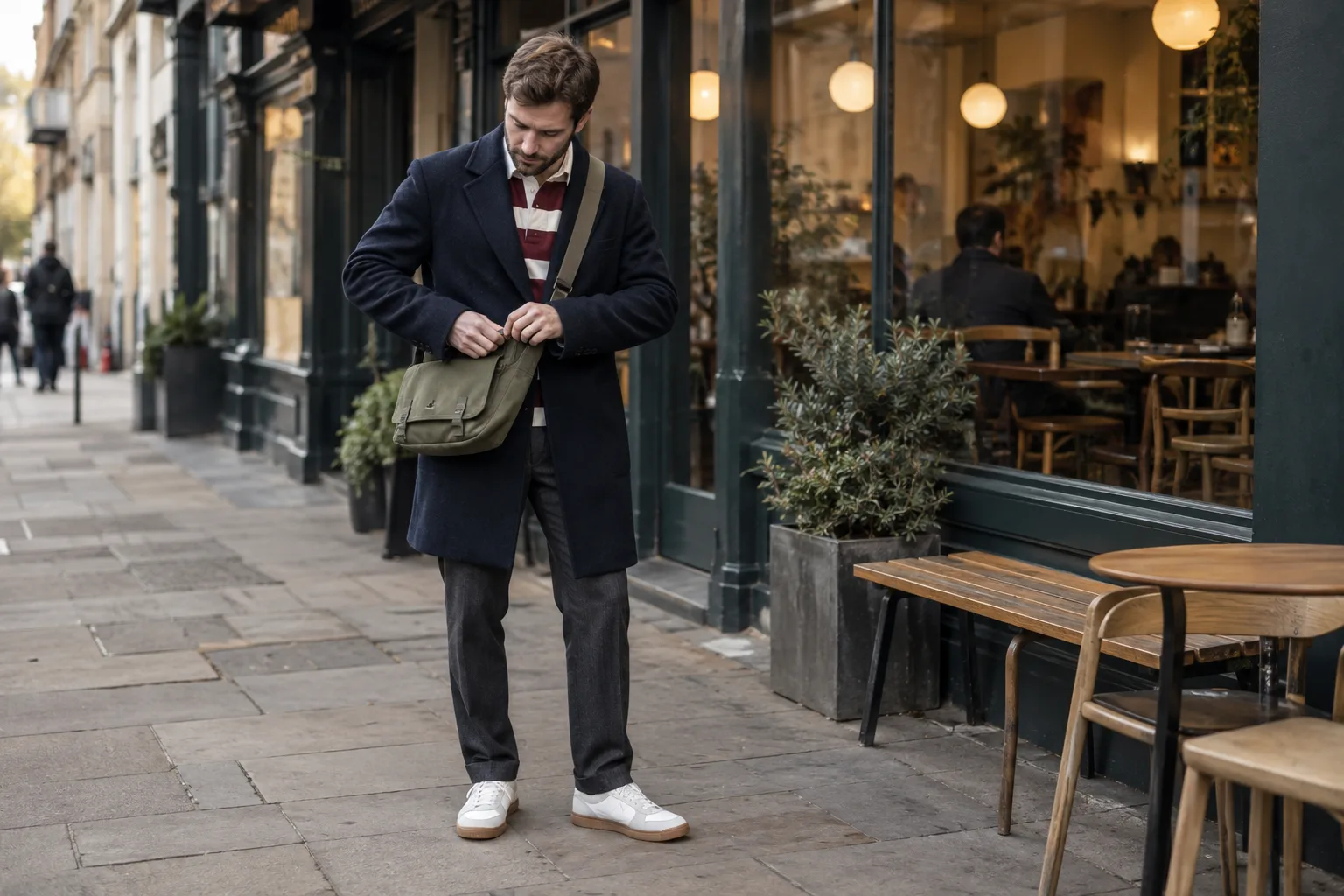
A wool overcoat serves colder, smarter dressing; a peacoat is generally shorter, double-breasted and broad-collared. Weight, weave and lining vary, so neither label tells the whole warmth story. For the wider styling picture, our autumn/winter 2026 menswear guide is a useful companion, but weather requirements should set the shortlist first.
The background
Many familiar jackets began as clothing for work, sport or service. That helps explain details still present in everyday versions: accessible pockets, adjustable cuffs, shorter hems for movement and collars that close against the elements. Those details remain useful even when the most demanding part of your day is carrying lunch home.
Shape and material are different decisions
The trucker is a good example. Its relatively short body, front fastening and chest-pocket detailing are associated with denim, but the shape also appears in suede, canvas and corduroy. A denim trucker supplies structure without the bulk of a winter coat. It is an everyday layer, not dependable rainwear.
A chore coat usually has a straighter, roomier body and practical patch pockets. Cotton twill and canvas versions are useful over a shirt or knit, although heavier cloth does not automatically make them winter-ready. Our preference is for enough room to layer without the shoulders appearing to slide down your arms.
Harringtons and bombers both offer compact alternatives, but their detailing differs. A Harrington typically has a stand collar and a fitted hem; bombers draw on flight-jacket shapes and often use ribbed cuffs and waistbands. Check the lining: visually similar jackets can feel very different on a cold morning.
Texture does not tell you everything
Leather and suede describe materials, not a single jacket design. A plain zip-front leather jacket can look restrained, while multiple buckles and angled pockets make a stronger statement. Suede’s napped surface needs particular care around moisture and staining. We would choose either for its appearance and feel, not as a substitute for waterproof clothing.
Genuine shearling is sheepskin with the wool still attached. Sherpa fleece imitates that woolly texture, commonly using synthetic fibres. Ordinary fleece provides insulation but can allow wind through unless it has additional wind-resistant construction. A waxed cotton jacket offers another route to weather resistance, with maintenance requirements that deserve reading before purchase.
What people are saying
The familiar promise of a jacket that works with everything is worth challenging. Versatility depends on your clothes, your routine and how much weather you actually encounter. Our view: the best everyday jacket is the one that fits your ordinary outfits without demanding a supporting cast of new purchases.
For a mostly casual wardrobe, we rate a chore coat as a useful starting point. Its collar and pockets give a T-shirt some definition, while its relaxed construction sits naturally over knitwear. Navy or olive can work with several trouser colours; the important test is what you already own, not an abstract list of essentials.
For something sharper, a restrained Harrington avoids the formality of an overcoat without looking like outdoor equipment. Wear it with straight trousers and a knitted polo, keeping the waistband comfortably at the hips. A short jacket can emphasise leg length, but one that rides up whenever you reach forward is simply too restrictive.
A puffer needs a different approach to proportion. We prefer enough width in the trousers to balance a bulky upper half, rather than making the whole outfit taper abruptly below the waist. Simple footwear helps; our guide to cleaning white trainers without damaging them covers keeping that part presentable.
The buying mistake we would avoid is treating a premium material as proof of usefulness. Heavy shearling can be excessive for heated trains; a beautiful unlined suede jacket may leave a winter gap untouched. Price and polish cannot fix a mismatch between the garment and the day you need it for.
What happens next
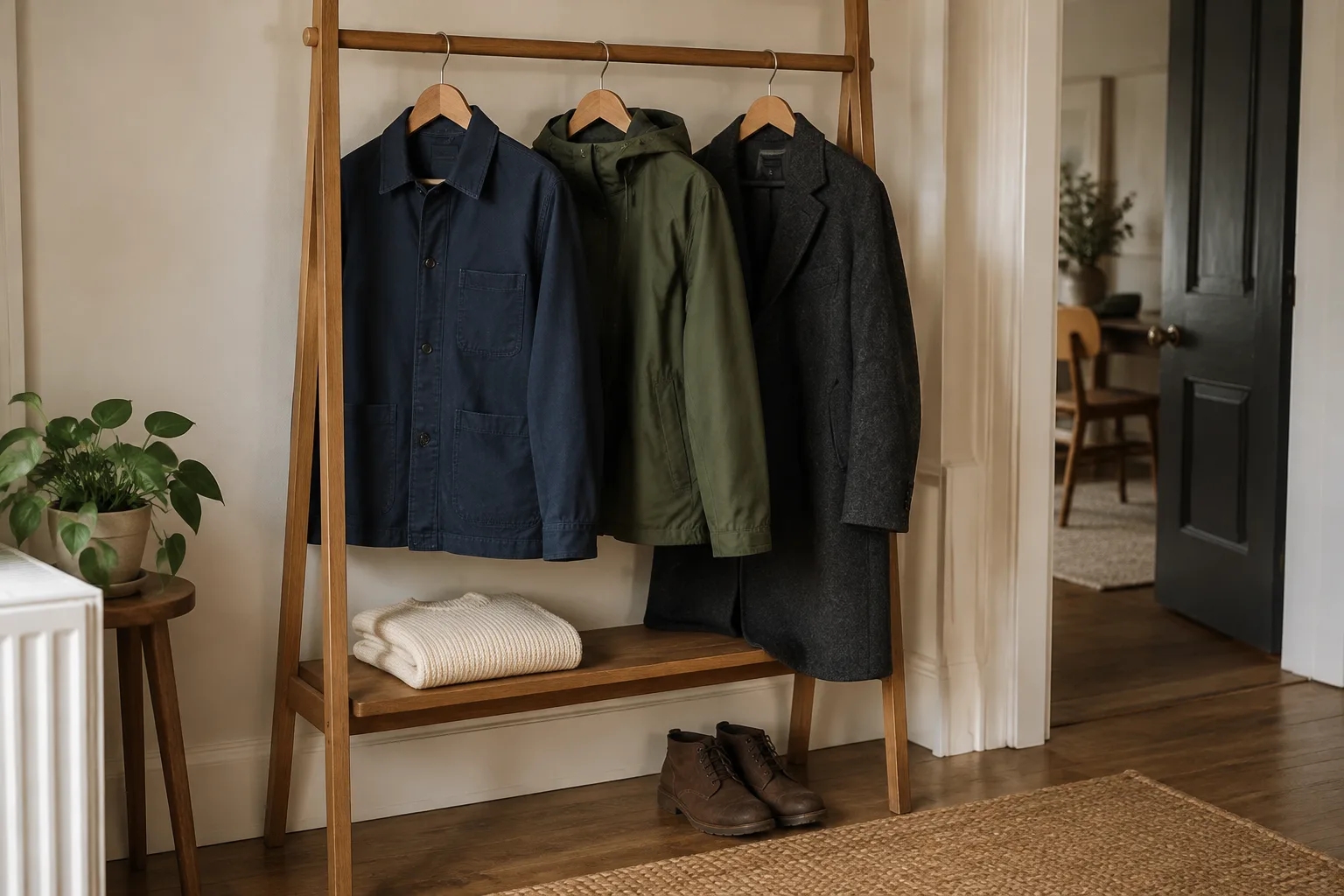
Before shopping, put your current outerwear on a rail and assign each piece a job. Identify the actual failure: getting wet, feeling cold, lacking a smart option or struggling to layer. If several jackets already do the same thing, the next purchase should solve a different problem.
Try candidates over the clothes you will wear beneath them. Fasten the front, sit down and reach forward. Look for pulling across the upper back, compressed padding or cuffs that expose too much wrist. With tailoring, check that the coat covers the jacket beneath rather than leaving its hem dangling out.
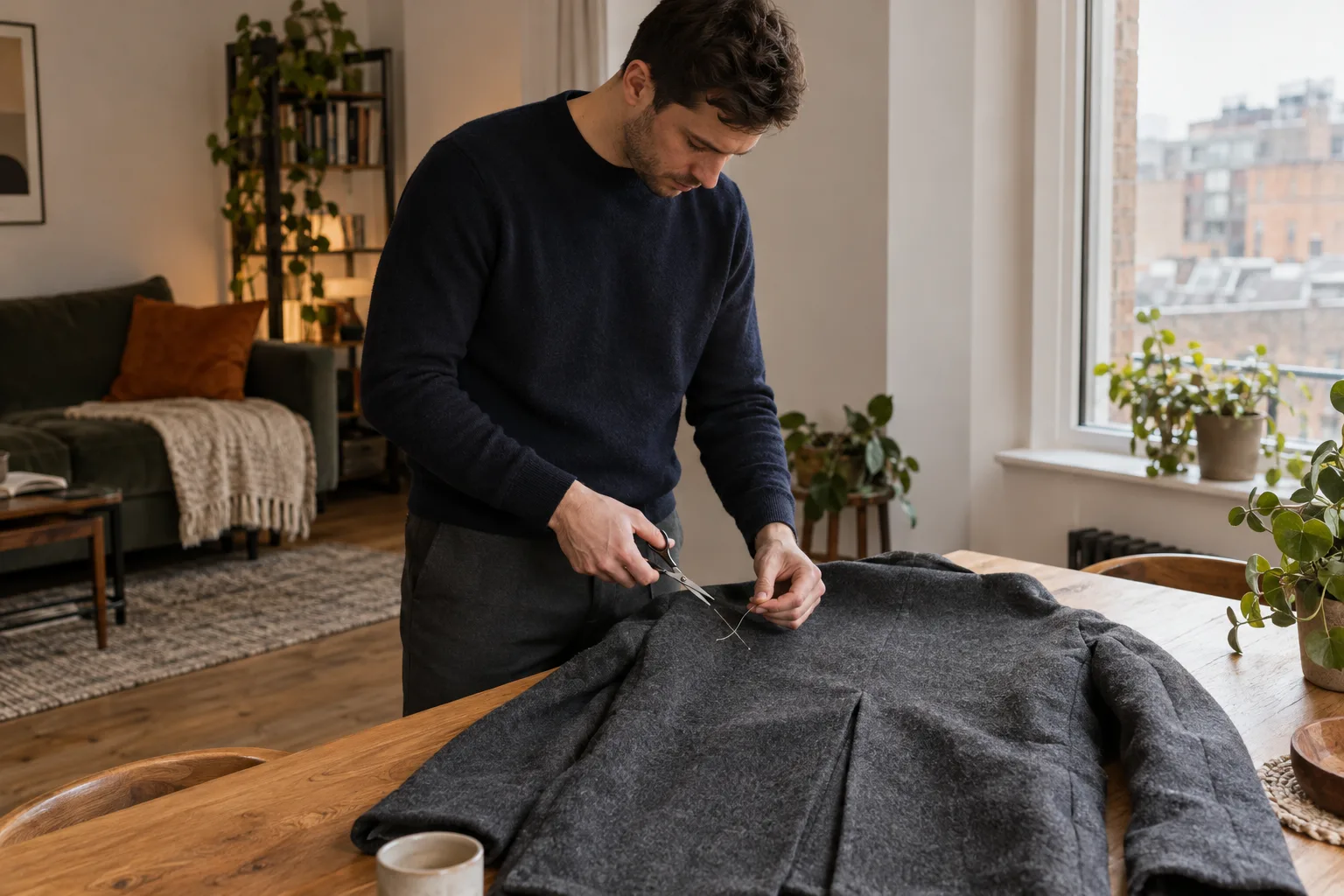
Inspect the less photogenic details too: pocket access, zip operation, hood adjustment and care instructions. On a new tailored coat, temporary stitching may hold the rear vent closed. Our guide to coat vent tacking stitches explains what to remove without attacking a structural seam.
Finally, check maintenance against your patience. Follow the garment label for technical fabrics, use appropriate care for leather and suede, and check whether waxed cotton needs specialist treatment or reproofing. A jacket you can realistically look after is a better purchase than one you are afraid to wear.
Why this matters
For UK readers, the useful distinction is between looking ready for the weather and actually being ready for it. Before buying, decide how long you spend outside and what you need underneath: a suit, a sweatshirt or little more than a shirt. Check waterproofing separately from warmth, then test the fit with those layers on. Our autumn/winter menswear guide can help with the outfit; the jacket itself should earn its space by solving a practical problem.
Common questions
- What types of jackets do men actually need?
- Start with your needs for rain protection, insulation and everyday layering. These may require separate garments, although some jackets combine functions. Check what your current wardrobe lacks before adding another style.
- Is a parka always a winter coat?
- No, a parka can be lightweight rainwear or a heavily insulated winter coat. The name mainly describes its longer, usually hooded shape, so check the lining and insulation before buying.
- Are puffer jackets waterproof?
- Not automatically: puffers provide insulation, but their outer fabric may offer only limited rain resistance. Look for an explicit waterproof specification if you need protection in sustained rain.
- What is the difference between a trucker jacket and a denim jacket?
- Trucker describes a jacket shape, while denim describes a fabric. Truckers typically have a short body and chest-pocket detailing, and can also be made in suede, canvas or corduroy.
- What is a chore coat?
- A chore coat is a workwear-derived jacket, usually with a straight, roomy body and practical patch pockets. Cotton twill and canvas versions work well over shirts or knitwear, but are not automatically warm enough for winter.
- Is sherpa fleece the same as shearling?
- No, genuine shearling is sheepskin with its wool attached, while sherpa fleece imitates the woolly texture, commonly with synthetic fibres. Check the composition label rather than judging by appearance.
- How should a jacket fit over a jumper?
- It should fasten comfortably without pulling across your upper back or restricting movement. Try it over your intended jumper, then sit and reach forward; padding should not feel compressed and cuffs should still cover your wrists.
Sources
- FashionBeans: 18 Types of Jackets for Men In 2026 | FashionBeans
- gq.com: 16 Best Jackets for Men 2023: Truckers, Chore Coats, Trenches, and More | GQ
This article was written by The Good Cut using the sources listed above. Product mentions are editorial unless clearly marked as sponsored.