Men's Style
James Bond’s Tomorrow Never Dies Coat Still Gets It Right
Brosnan’s Hamburg overcoat makes a persuasive case for longer outerwear — and you don’t need a tailored suit underneath to make it work.
By The Good Cut Editorial Team
Published · 6 min read
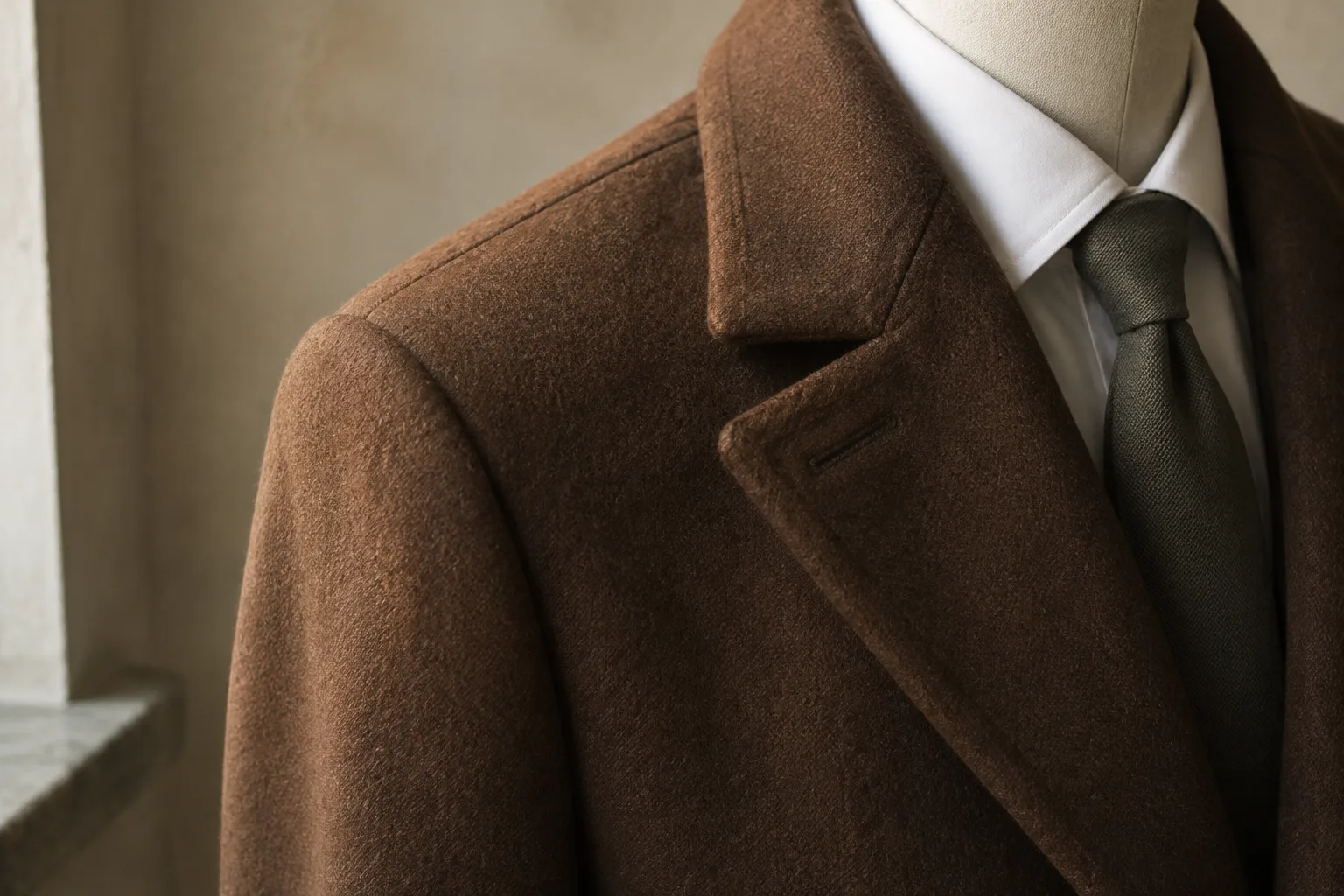
Quick answerPierce Brosnan wears a long, structured brown overcoat in the Hamburg scenes of Tomorrow Never Dies. We rate it as a useful menswear reference: borrow the generous proportions and rich colour, rather than trying to recreate Bond’s entire outfit.
James Bond’s wardrobe offers plenty of expensive distractions. The brown overcoat Pierce Brosnan wears in the Hamburg scenes of 1997’s Tomorrow Never Dies offers something more useful: a clear lesson in proportion. Long and structured, it gives his tailoring an outer layer with enough presence to hold its own.
Our take is that this is a better reference for everyday winter dressing than another search for a screen-matched accessory. You can borrow its length, colour and sense of purpose without dressing as a fictional intelligence officer. The interesting question isn’t how to become Brosnan. It’s how much better your existing clothes might look beneath a properly considered coat.
What happened
In Tomorrow Never Dies, Brosnan’s second outing as 007, Bond heads to Hamburg as the plot involving media magnate Elliot Carver develops. The overcoat belongs to that city-based stretch of the film, placing it firmly in the character’s dressed-up wardrobe rather than his action-ready kit.
Its effect comes from the outline. The coat extends the outfit down the body, while the structured upper section frames the shirt, tie and tailoring beneath. Instead of stopping abruptly around the hips, it creates a longer shape. That distinction matters more to our reading of the outfit than any hunt for an exact replica.
Brown is doing useful work, too. Dark outerwear needn’t default to black or navy, and this coat shows how a deep brown can look formal without appearing especially severe. We like the contrast between that warmer colour and the businesslike clothes beneath it: polished, but not quite boardroom uniform.
There’s also a practical principle hiding inside the film wardrobe. A coat worn over tailoring should accommodate it, not squash it. If the jacket underneath bunches at the shoulders or its skirts protrude below the outer layer, the two garments are fighting each other. Bond’s look is a reminder to consider them as one outfit.
The background
Brosnan played Bond across four films, beginning with GoldenEye in 1995 and finishing with Die Another Day in 2002. His wardrobe included formal tailoring alongside more casual and action-focused clothes. This particular coat captures the dressed-up end of that range: substantial outerwear over an already complete tailored outfit.
An overcoat is designed to be worn over other clothing, traditionally including a suit. That explains why its fit cannot be judged like a shirt’s. Room through the chest, upper arms and back is functional, not necessarily evidence that you have bought the wrong size. The trick is distinguishing useful allowance from excess cloth that collapses around you.
Length changes the whole outfit
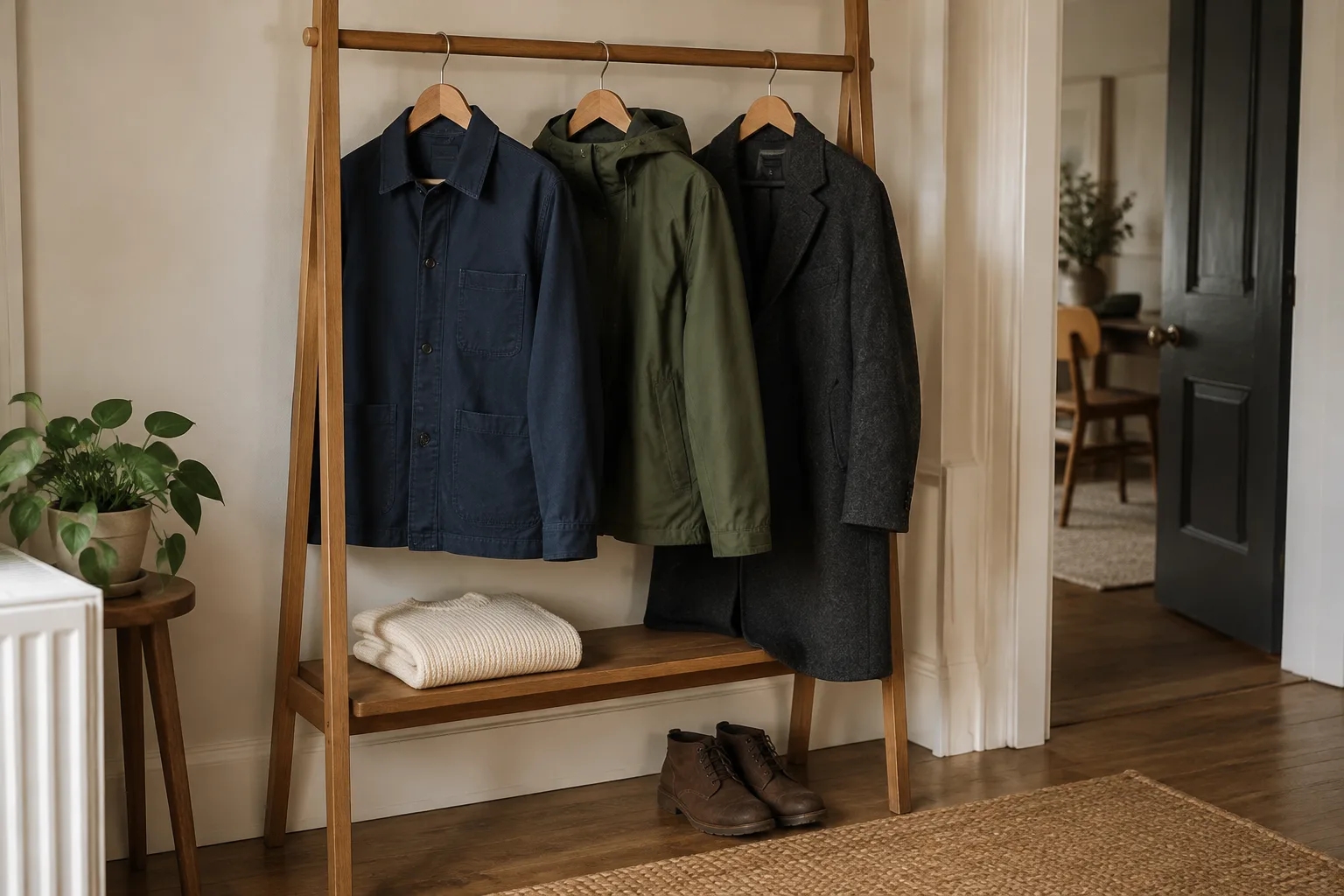
A longer coat can cover a suit jacket and more of your legs, while giving the eye an uninterrupted vertical line. Shorter outerwear offers a different balance and can be easier for some daily routines. Our guide to the different types of men’s jackets explains why those categories deserve separate jobs rather than one vague brief to keep you warm.
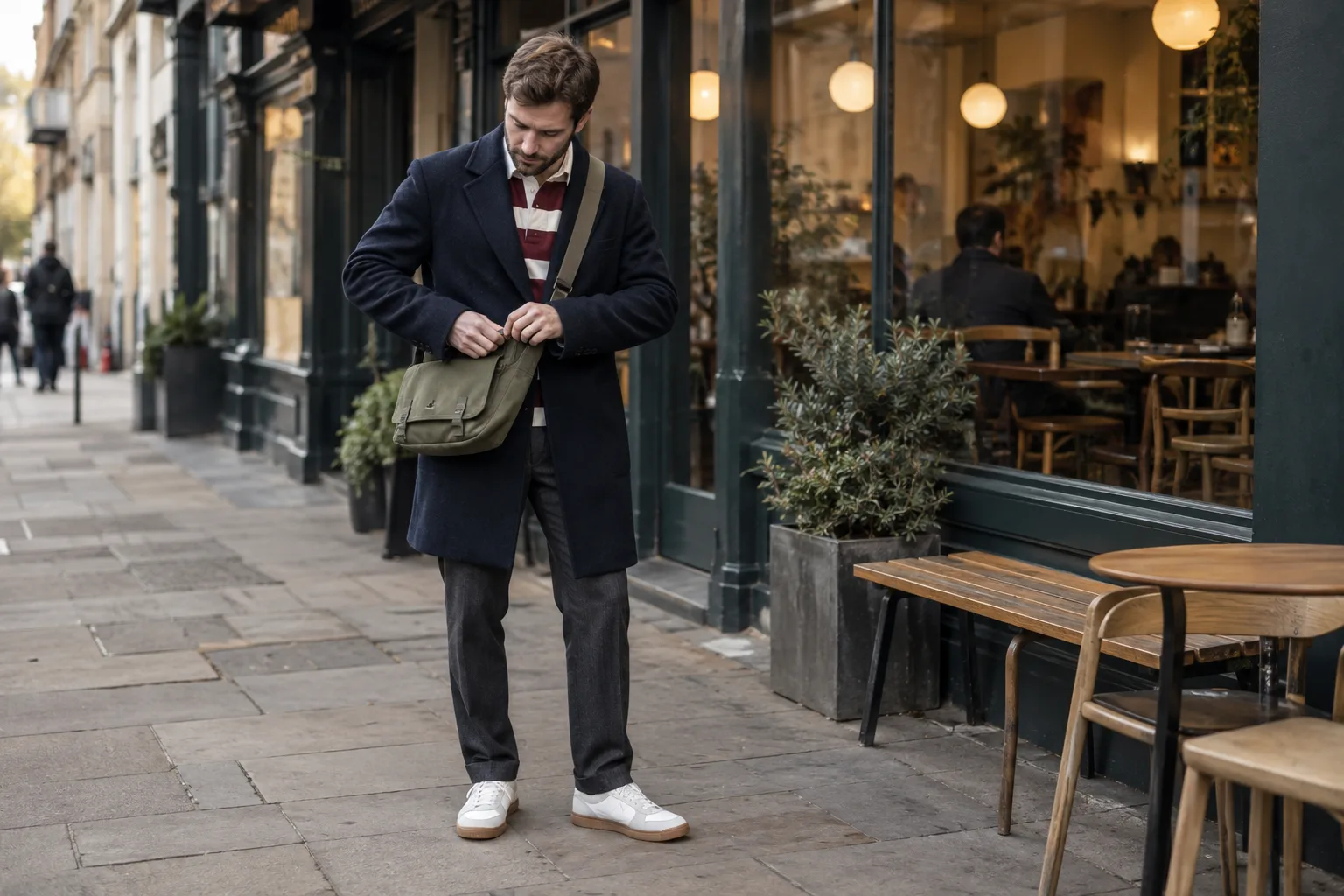
For a wearable interpretation of Brosnan’s silhouette, we would start around knee length and adjust from there. This is a fitting suggestion, not a universal rule. Your height, the coat’s width and the clothes beneath all affect the result. A shorter man does not automatically need a short coat; he needs proportions that look intentional.
Fabric changes how that length behaves. A substantial wool cloth can provide insulation and help a coat hold its shape, but fibre content alone does not tell you how warm or durable a garment will be. Weight, weave, construction and lining matter as well. Handle the cloth and read the care information before letting a luxurious-sounding description make the decision.
What people are saying
Our argument for this coat is about the clothes, not a blanket endorsement of Nineties Bond. A film’s humour or characterisation can date while an individual wardrobe choice remains useful. Here, the transferable idea is the relationship between a broad upper shape, a long hem and restrained colour. You can appreciate that without buying into the whole fantasy.
We rate the coat most highly when treated as the dominant piece. Trying to match its presence with conspicuous shoes, a patterned scarf and a statement watch would make the outfit busier than it needs to be. Give a substantial coat reasonably quiet company and the shape has room to register.
Borrow the principle, not the costume
For work, our pick would be a deep brown overcoat with charcoal trousers, a pale blue shirt and dark leather shoes. Navy tailoring is another straightforward partner. Brown and navy are not competing neutrals; their difference can give an outfit more depth than matching every large piece to the same colour.
Off duty, we would lose the tie rather than replace it with another decorative flourish. An ecru crew-neck jumper, straight dark jeans and plain boots give the coat a less formal setting. Straight trousers are our preference here because they provide some visual weight beneath the longer outer layer, rather than making it appear top-heavy.
That approach also informs our take on what men can borrow from Claudia’s wardrobe in The Celebrity Traitors: screen dressing is most useful when you identify the working idea rather than duplicate every item. With Brosnan’s coat, that means proportion first. The shirt, tie and impeccably arranged hair are optional extras, not admission requirements.
What happens next
The next step is a fitting room, not a prediction about what a future Bond might wear. Bring the thickest layer you realistically expect to use beneath the coat. If you commute in a suit, try it over your jacket. A coat that feels generous over a T-shirt can become restrictive once proper winter clothing enters the equation.
Fasten it, reach forward and sit down. The front should close without pronounced pulling, and you should be able to move your arms without feeling trapped across the back. Check the sleeves with your arms relaxed. Take a full-length look as well: a flattering shoulder cannot rescue a hem that feels wrong to you.
Check the unglamorous details
Second-hand shopping is one route to this kind of silhouette, but condition deserves more attention than the romance of an old label. Examine the lining, underarms, cuffs and pocket edges. Look for moth damage and check every fastening. Get an alteration quote before buying something that needs major work; changing shoulders is not equivalent to moving a button.
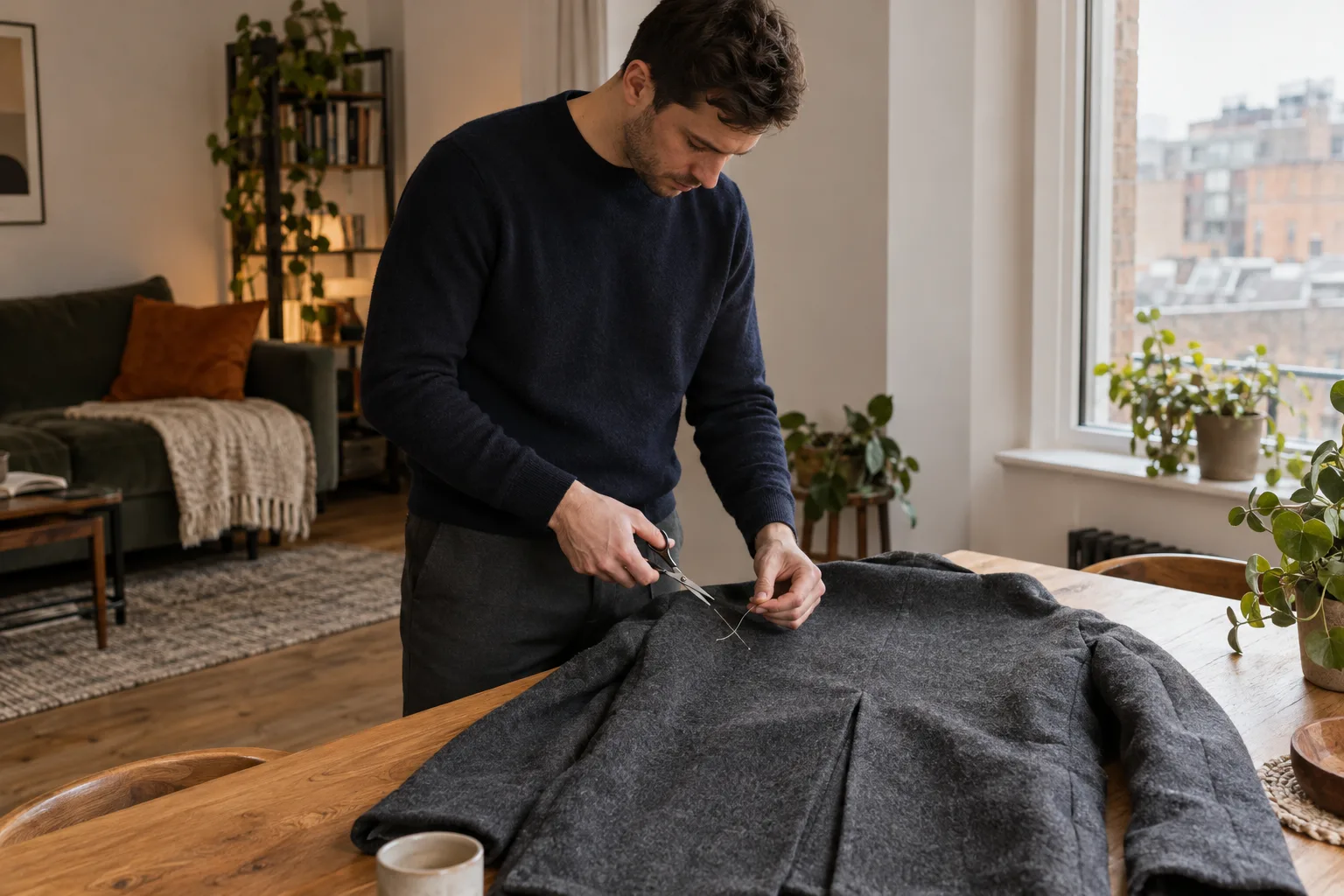
On a new coat, inspect the rear vent before wearing it out. Temporary securing stitches may need removing, but permanent construction stitches should stay put. Our guide to coat vent tacking stitches explains the distinction. It is a small check that helps the coat move as intended.
Finally, build around the weather you actually face. Wool outerwear is not waterproof; persistent rain calls for suitable protection. Use a supportive hanger, follow the care instructions and let a damp coat dry away from direct heat. If you pair it with casual footwear, cleaning white trainers without damaging them is a more useful finishing touch than adding another accessory. The aim is a coat you wear, not a prop you preserve.
Why this matters
For UK wardrobes, a longer overcoat earns its place by working across the journey to work, dinner out and cold weekend errands. Start with the layers you already own, then judge length and room together rather than chasing a film replica. Our guide to autumn/winter menswear trends worth wearing offers a broader wardrobe perspective, but this decision is personal: can you move comfortably, does it suit your routine, and will you reach for it when the temperature drops?
Common questions
- what coat does Pierce Brosnan wear in Tomorrow Never Dies?
- Brosnan wears a long, structured brown overcoat during the Hamburg scenes. Its defining features for our purposes are the substantial shape, extended length and deep colour.
- when did Tomorrow Never Dies come out?
- Tomorrow Never Dies was released in 1997. It was Pierce Brosnan’s second appearance as James Bond, following GoldenEye.
- how long should a men’s overcoat be?
- Around knee length is a useful starting point for this look, not a fixed rule. Judge the hem alongside your height, the coat’s width and the trousers you plan to wear.
- how should an overcoat fit over a suit?
- An overcoat should close comfortably over your suit without pronounced pulling or bunching. Check movement through the shoulders and back, and make sure it covers the jacket beneath.
- what colours go with a dark brown coat?
- Navy, charcoal, pale blue and ecru are straightforward partners for a dark brown coat. Our workwear pick is charcoal trousers and a pale blue shirt; for weekends, try an ecru jumper and dark jeans.
- can you wear a long overcoat with jeans?
- Yes, a long overcoat works with jeans. We favour straight dark jeans, a simple crew-neck jumper and plain boots to give the substantial outer layer a relaxed setting.
- is a wool overcoat waterproof?
- A wool overcoat is not a substitute for waterproof outerwear in sustained rain. Follow its care instructions and let it dry away from direct heat if it gets damp.
- what should I check when buying a second-hand overcoat?
- Check the lining, underarms, cuffs, pocket edges and fastenings, and look for moth damage. Obtain a quote before committing to major alterations, especially changes to the shoulders.
Sources
This article was written by The Good Cut using the sources listed above. Product mentions are editorial unless clearly marked as sponsored.